President Lazarus Chakwera has expressed government’s commitment to turn visions into reality saying it is the only way for Malawi to move forward in innovation and technology for improved economy.
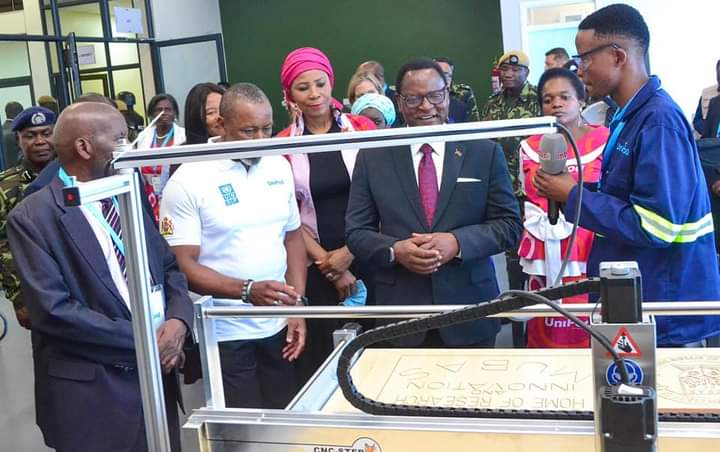
Chakwera said this Wednesday at the Malawi University of Business and Applied Sciences (MUBAS) in Blantyre during the official launch of the University Innovation Pod (UniPod).
The primary goal of UniPod is to provide vital support to young innovators by offering state of the art infrastructure for innovation prototyping, experimentation and doing small scale manufacturing.
The President said the opening of the hub will help many university students, youth outside universities and other Malawians with innovative ideas to prove their capacity in venturing into technology thereby making them productive and self-reliant.
“We commend United Nations Development Programme (UNDP) for providing US$2 million for UniPod. Though it has been established at the institution of higher learning, the hub is for everyone with skills for different products.
“I, therefore, urge youths in the country to make use of the facility. Turn your ideas and skills to a final product that can be sold out there,” he said.
Minister of Education, Madalitso Kambauwa Wirima, said the hub will turn Malawi into an innovative solution country where its landscape will change for the better.
Wirima said the hub will enhance economic growth and enable the country achieve the Malawi 2063.
“This will provide inclusivity since it will not only look at education but also creative ideas and innovations,” she said.
Vice Chancellor for MUBAS, Associate Professor Nancy Chitera, said UniPod is a significant innovation in Malawi that will provide several solutions the country has been lacking for long.
Chitera said the launch is a clear indication that Malawi has capabilities to do more in innovations as the initiative has potential to open opportunities for entrepreneurs and several stakeholders.
She disclosed that, through digital technology, MUBAS started with small scale manufacturing that are, currently, used in Malawi, adding that with the new development, people will no longer send innovations outside Malawi for design.
Assistant Secretary General and Africa Regional Director for UNDP, Ahuna Eziakonwa, said the initiative follows President Chakwera visit to New York two years ago where he asked for the innovation hub which her organisation assured to do.
Eziakonwa said UNDP will continue to work hand in hand with Malawi as it has demonstrated seriousness in technology and innovations.
“UNDP believes ideas come from people and there is need for such to be fulfilled. Universities like MUBAS should be equipped.We believe this can transform lives and Malawi at large. The launch today marks the prosperity for Malawi,” she said.
UniPod comprises of several key spaces including collaborative ideation space, design laboratory, business nursery, among others.
Civil Society Education Coalition (CSEC) has hailed government for recruiting and promoting 9,753 teachers across the country saying the move will assist in improving quality of education in the country.
CSEC Executive Director, Benedicto Kondowe, expressed excitement with the move saying it will significantly contribute to positive strides towards improvement of education standards in the country.
“The infusion of 9,753 educators, alongside promotions, reflects a steadfast commitment to addressing the critical shortage of teachers nationwide which is essential for nurturing academic excellence and fostering effective teaching and learning environments,” he said.
Kondowe said, to further empower education standards in the country, CSEC advocates for sustained recruitment efforts, which is equitable distribution of teachers and strategic review of resource allocation between training and employment, in order to ensure that every student receives the much needed guidance to unlock their full potential.
Ministry of Education Public Relations Officer, Mphatso Nkuonera, said hiring and promotion of teachers will narrow down to proper teacher-student ratio in secondary schools.
“You are aware that in secondary school a teacher is supposed to handle 40 students per class but due to insufficient number of teachers, sometimes the ration goes to 50 students which is not a recommended standard.
“Government saw the need and decided to recruit a huge number of teachers to cover the gap,” he said.
Nkuonera pointed out that government promoted teachers as one way of motivating them thereby improving service delivery.
In an interview, Glory Kamwela, a teacher of Mnjiri Community Day Secondary School in Mzimba said work promotion is a motivation and recruiting new teachers minimises workload in schools thereby increasing performance.
In a separate interview, one of the promoted teachers, Joseph Silweya, was excited for the promotion saying it will go a long way in improving teaching and learning as teachers are motivated.
Ministry of Education recruited and promoted 9,753 secondary school teachers; 2,681 have been recruited and 2,259 promoted at TI and TJ grades while 3,997 teachers have been promoted as senior teachers, grade TH and 316 teachers to the position of heads of department which is grade TG and 500 teachers as head teachers (grade TG).
The Indonesian government, represented by the Directorate General of Higher Education, Research, and Technology and the Indonesian Consulate in Malawi, is inviting Malawian students to apply for the Kemitraan Negara Berkembang (KNB) Scholarship for 2024, which commenced last month.
For 2024, the Indonesian Ministry of Education, Culture, Research, and Technology, in collaboration with 31 KNB Scholarship host universities in Indonesia, will welcome 222 KNB Scholarship applicants, comprising 30 Bachelor awardees, 162 Master awardees, and 30 Doctoral awardees.
Tariq Kidy, Indonesia’s consul in Malawi, urges Malawian students to seize this opportunity, emphasizing its transformative impact on those pursuing these academic opportunities.
“Education is a potent driver of development and one of the most effective instruments for poverty reduction and improvements in health, gender equality, peace, and stability. The Republic of Indonesia acknowledges the significance of education in developing countries and extends this opportunity for Malawian students to apply for these scholarships. This is a commendable initiative that further bolsters bilateral relations with Malawi,” said Tariq Kidy, Indonesia’s consul in Malawi.
The scholarships align with the Indonesian Government’s commitment to enhancing human resources in developing countries, serving as a crucial initiative to promote the internationalization of Indonesian Higher Education by increasing the participation of foreign students in Indonesian universities.
Available to international students from developing countries, the KNB Scholarship encompasses bachelor, master, and doctoral programs at Indonesian universities, with financial support provided by the Indonesian Government through the KNB Scholarship.
The program has expanded to various developing countries in Asia, the Pacific, South America, Africa, and Eastern Europe, with the primary aim of fostering people-to-people relations between Indonesia and recipient nations, nurturing future leaders.
The KNB Scholarship Programme is offered at 31 universities in Indonesia, including but not limited to Institut Pertanian Bogor, Institut Teknologi Bandung, Universitas Gadjah Mada, and Universitas Negeri Yogyakarta.
Prospective scholarship students must fulfill administrative and academic requirements and register online through the website www.knb.kemdikbud.go.id. Online registration began last month and concludes at the end of this month.
“In this regard, we encourage applicants to reach out to the Indonesian embassy offices to request a letter of recommendation from the Indonesian Embassy. This step serves as the initial verification process for identifying prospective students, facilitating monitoring, and ensuring the successful implementation of future scholarship grants,” Kidy said.
Last week, the Indonesian ambassador to Mozambique and Malawi, Herry Sudradjat, accompanied by a delegation, visited Malawi to expedite strategic economic cooperation between Indonesia and Malawi.
The delegation engaged with corporate leaders in various sectors, including renewable energy, mining, and agriculture.
“Productive meetings were held, and opportunities were explored for outbound investment, export potential, and development cooperation. Indonesia has identified Malawi and other African countries as potential investment destinations,” he explained.
The National Council of Higher Education (NCHE) has hailed its partnership with listed NBS Bank on digital payments for students applying for public universities selection saying it will foster innovation while improving efficiencies in their processes.
NCHE Chief Executive Officer (CEO) Dr. Ambumulire Phiri said the partnership will help simplify the application process.
“In our continuous efforts to enhance accessibility and convenience for prospective students, we are delighted to partner with NBS Bank again this year. This collaboration will boost the application process by enabling applicants to conveniently pay their application fees through the Bank,” said Phiri.
Phiri added that the partnership with NBS is one of NCHE’s ways of fostering innovation and efficiency in their processes.
“Our major aim is to facilitate easy and inclusive access to higher education for all eligible candidates and this is one way of ensuring that,” said Phiri.
The Banks Head of Corporate Banking, Frank Nakoma, said with the partnership, the ‘Caring Bank’ anticipates more usage of digital banking platforms.
“As we all know, the world is moving towards a digital direction especially where payments are concerned. Customers usually use their cards to make online payments or pay for their goods through a point-of-sale machine in a shop. As one way of responding to an ever-evolving climate, NBS Bank has decided to partner with NCHE to ensure that students across the country can easily pay their application fees using the digital platforms we have dubbed ‘EazyBank’,” he said.
Nakoma further said the Bank believes that the process speaks to the Bank’s slogan of the ‘Caring Bank’ by providing convenient ways of transacting.
This is one of the other partnerships the Bank has made that require digital transactions.
NCHE, which harmonizes the selection of students into all public universities in the country, will this year start receiving these applications from February 19 to March 19.
Managing Director of Joyce Banda Foundation International (JBFI) Edith Akridge has paid examination fees for all needy students who were yet to pay by close of deadline 12:00 midnight of Friday, January 12.
A total of 45 students expected to sit for the Junior Certificate of Examination (JCE) and Malawi School Certificate of Education (MSCE) were likely to miss the examination for failure to pay for examination fees.
Akridge intervened to save the situation saying the students deserve better if we are to build good foundation for social economic development of our country.
“Education is the key to our success as a country. When I heard that our JCE and MSCE students were to miss the deadline, I was so touched and felt obliged to do something, so we have paid and our officials at Joyce Banda Foundation are working with officials from the Ministry to make sure that all students from Zomba Malosa are able to sit for examinations regardless, ” said Akridge.
A total of K1,030,750 has been deposited into Malawi National Examination Board (MANEB) examinations account for the 45 students from various schools in Zomba Malosa.
Following revelations that 29,817 candidates risk not sitting for Malawi National Examinations Board (MANEB) examinations this year over failure to pay examination fees, the examination body extended the fees payment period to midnight of January 12, 2024.
Madalitso Kambauwa-Wirima, the Minister of Education, has announced that Inkosi Ya Makhosi M’mbelwa University’ s in Mzimba will open its doors in August 2025 with an initial intake of 500 students.
He remarks comes after the contractors, Dec Construction Company and Paramount Holdings Limited have assured the public that they will complete construction works within eighteen months.
The first to be opened will be the school of basic sciences.
Formerly known as Mombera, the university will also have a school of veterinary medicine and a school of animal science.
During her visit to the construction site on Monday in Mzimba, Wirima revealed that the first phase of construction works had begun and would be completed by June 2025.
This includes building the school’s basic sciences department along with ancillary structures such as administration blocks and staff housing facilities. In addition to these buildings, there will also be hostels for both male and female students along with other amenities such as cafeterias, auditoriums and sports facilities.
The estimated cost for completing the entire university is K450 billion which is expected to enroll up to 10,000 students upon completion in 2027. According to Wirima’s statement during her visit at the construction site on Monday morning:
“Government is committed to seeing through this project so that we can absorb more young people who are looking for higher education opportunities.”
Managing Director for Paramount Holdings Limited Prakash Ghedia assured Wirima that his company was ready to complete their portion of work before deadline.
He said that all the required equipment and materials are ready.
Ghedia further said the construction work alone will offer employment opportunities to more than 600 people in the district.
Mzimba District Commissioner, Rodney Simwaka expressed excitement over how this development could positively impact job creation opportunities among local residents once it opens its doors next year.
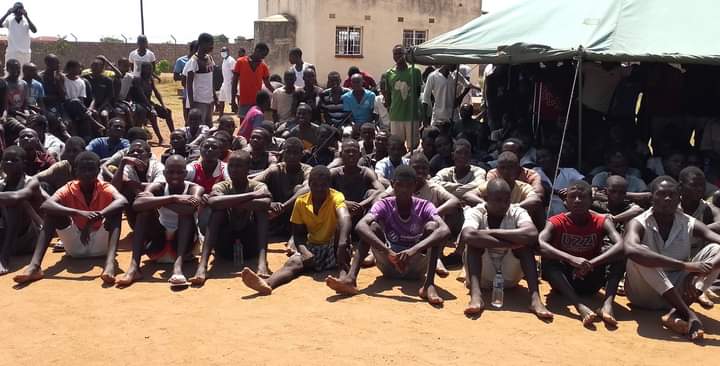
Maula prison has transferred 58 young offenders who are preparing for their Primary School Leaving Certificate, Junior Certificate of Education and Malawi School Certificate of Education examinations to Bvumbwe Young Offenders Rehabilitation Centre in Thyolo district due to lack of learning facilities at the prison.
Malawi Prison Service Public Relations Officer Chimwemwe Shaba confirmed the development on Tuesday in an interview with Malawi News Agency.
Shaba said initially, Maula prison is not supposed to be keeping young offenders, but for those who would like to continue with their education, the arrangement is to send them where there are learning facilities.
One of the Leaders of the young offenders at the prison Dominic Sadick said all students that are supposed to write their examination this year, have not been learning for a long time due to lack of learning facilities at the prison.
“It is a pathetic situation even though we are in prison, we do believe that we still have a right to education as every young Malawian out there. It is disappointing to see that the prison here [Maula] doesn’t have learning facility for young offenders,” he said.
Sadick said the situation has been there since August, 2023 when the MPS moved the young offenders from Kachere Rehabilitation Centre to Maula prison.
Malawi Human Rights Commission (MHRC) Secretary Habiba Osman thanked the MPS for considering moving the young offenders where they can pursue their education while in custody.
However, Osman said there is need for MPS to identify a proper facility where they can inhabit young offenders to avoid such situation in the future, which lead to violation of their right to education.
Malawi continues to be challenged by near dysfunctional and often under resourced education facilities. The image one meets at most primary schools is one that casts doubt if the country is to ever move itself from the socio-economic misfortunes that lack of education is attached to. And education is the key to overturning Malawi’s scenario.
The United Nation’s (UN) Sustainable Development Goal No. 4 (SDG4) on Quality Education paints it well: ‘to…ensure inclusive and equitable quality education and promote lifelong learning opportunities for all.’
That for now remains a tall order, despite the positive strides here and there, for a poor country like Malawi.
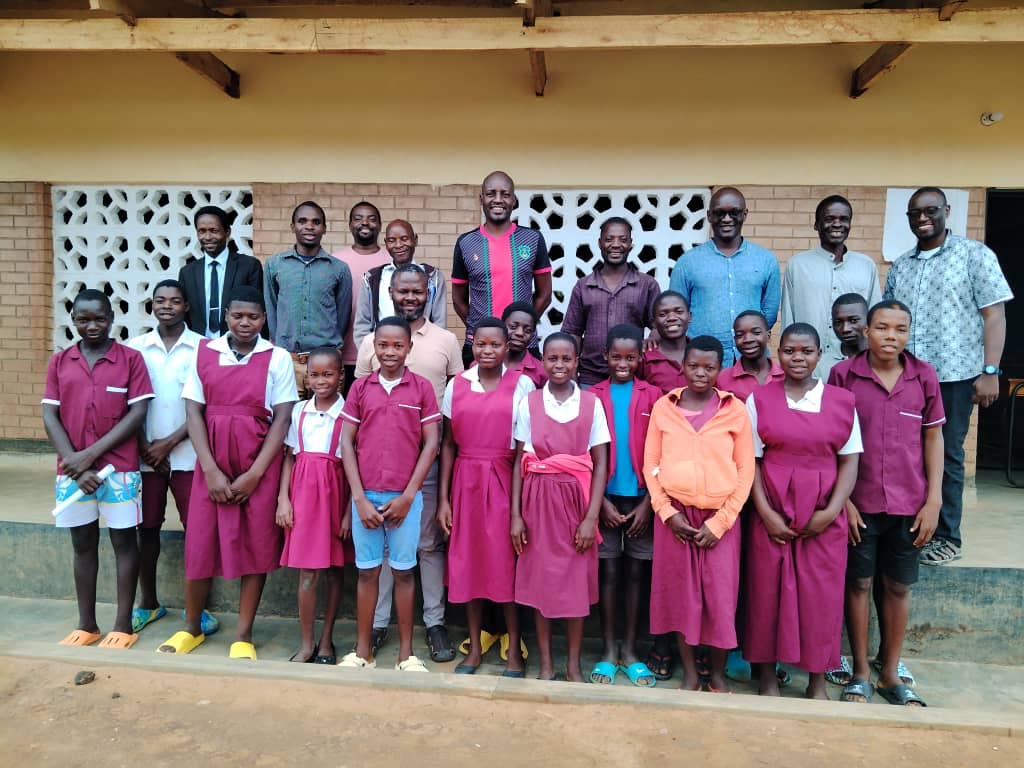
At least for Kabumba Primary School, under Senior Group Village Headman Kaphatika in Ntchisi District, the University of Malawi Social Sciences Class of 1999 (BSOC99) has stepped in to provide the much needed relief.
Thanks to Father Dumisani Nkhoswe who linked up with the grouping through Dr. Chikondi Maleta to forge a unity that has seen a flatteringly furnished and electrified school block raised, and a pre-school structure resourced.
The School has an interesting history, and of course, a trajectory that promises a better future, for generations to come in the area. Malawi stands to benefit even better if others emulate the gesture by the social scientists in the BSOC99 grouping.
Fr. Nkhoswe came to Kaphatika Parish within Malomo, Ntchisi, two years ago, only to be met by a site that was both deplorable as it was concerning.
The staff room, before and after
The school, despite resounding memories of some of Malawi’s great names having attained part of their primary education there, such as Chief Lukwa of Kasungu, and other notables gracing the corridors of influence in both public and private sectors, was a structure of ram shackled grass thatched structures roofed with see-through, grass and stick roofs.
“I couldn’t believe my eyes when I first saw the structures used as classrooms and staff room. There was literally no protection from both the sun and the rains.
Even the wind. Mere grass thatched suspended rafters over the head. Nothing else.
Learning and teaching was almost impossible.
Such a pathetic picture,” explains Fr. Nkhoswe, who from 1st January this year has seen and witnessed real transformation.
BSOC99, a grouping of 45 graduates from the Chancellor College, have turned the picture into one that promises an atmosphere of quality education. And a promising future for the people in the area.
Handing over the school block before the Catholic Priest, head teacher, school committee and the Parents Teacher Association (PTA) representatives, chairperson for the group, Aubrey Dothi, says this was part of giving back to the community. Part of the selfless spirit that has united the Class over the years and seen it perform with purpose.
“We started off some 20 years ago in 2003 after graduating in 1999. We have supported various initiatives within the country, including the Malingunde School for the Blind, among others. Kabumba is one of our major initiatives as at the same time we also are celebrating 20 years’ post-university, and the New Year, 2024. For us, this bears a great feeling of a complete festive season, where giving is a tradition,” he explained.
Feeling relieved, Fr. Nkhoswe also owes it to the graduates for helping to paint and resource the nursery school at the area.
“I have made it an emphasis to our pupils, parents, and community that there is strength in unity. All these people that have made this possible, are not from this area. They are Malawians who care.
They helped us raise the structure from where we stopped at window level, and have supported us throughout. Today we are proud and happy to also receive the 36 desks. They will go a long way in encouraging the community to send their children to school, and the pupils to work extra hard and succeed in their education.”
The support, to the tune of over K8 million, will also help to inspire the nine teachers at the school, as they had to dismiss classes whenever it rained.
The school only has two teachers’ houses.
Kabumba Primary School, ran by the Catholic Church, was closed years back and had to reopen only when Father Murray of the Pallottines mission first came and built a school block which still stands today.
With the block supported by BSOC99, the school now boasts of two school blocks translating into four classes, for standards one to eight. The school has since introduced school feeding from nursery to standard 8, propping up pupil numbers.
Fr. Nkhoswe had to convince chiefs and parents, who had put up a foundation but ran out of funds to complete the school block, to contribute a 5kg bag of soya for each pupil at the school.
“They were challenged by trust issues when I first sold them the idea in 2022. However, seeing the Parish was to administer the funds, they agreed. Against 400 pupils, we raised around K960,000 in sales and bought cement.
The community provided sand, bricks, and women drew water until window level. BSOC99 finalized the entire structure including provision of the desks. We have since, in the two years, seen some students progress beyond secondary education, beating school dropout rates,” says Fr. Nkhoswe.
The old structures were a problem especially during rains, that left parents and pupils with no choice but drop out and opt for early marriages, farming activities, and piece work at nearby Malomo Trading Centre, Ntchisi boma, and elsewhere in search of life’s needs.
At the meantime, with support of the Pallottines, the Parish is working towards fundraising for boarding facilities so that pupils can concentrate on their education and minimize parental disturbances at home. Currently, pupils are using small teacher rooms at the one end of the school block as dormitories. The two small rooms – split one for boys and the other for girls.
Despite such a gloomy picture, ironically, in May 2014 Ntchisi emerged as one of the best districts having quality education standards. Malawi News Agency (Mana) reported the district had ‘…the highest quality of classroom blocks under the Education Sector Wide Approach Programme (ESWAP) funded by the Local Development Fund (LDF) in the Ministry of Local Government and Rural Development.’ Whilst news is good but can be contested, Kabumba Primary School remains one of the oldest schools in the district which has been ignored for a long time.
Efforts by Fr. Nkhoswe, the chiefs, and the community that have rallied behind to support him, and especially UNIMA’s BSOC99 grouping which have taken the school a bar above, need to be sustained as long term interventions everywhere, as Malawi continues to struggle alongside the international community in meeting the aspirations of the SDG 4.
The UNIMA’s BSOC 99 grouping has members working with both the private and public sector in Malawi and abroad. During the handover, BSOC99 representatives included those working for the World Bank, Banja La Mtsogolo, Press Trust, and at the Southern Africa Development Community (SADC) secretariat in Botswana.
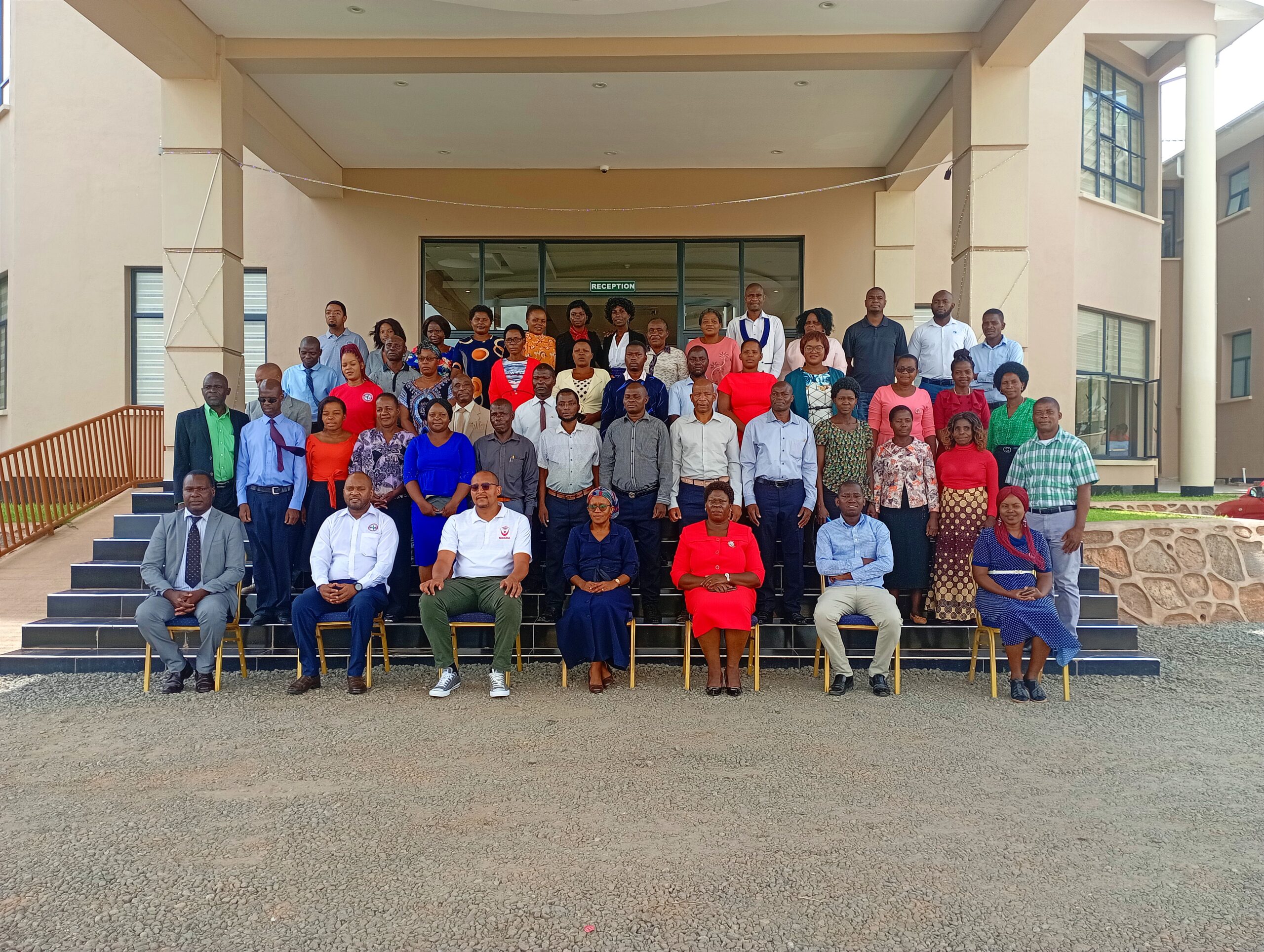
The Malawi Communications Regulatory Authority- MACRA has said it is committed to promote inclusiveness in the communication sector by funding the Directorate of Inclusive Education through the formation of sign language clubs.
Speaking at the launch of a week long training for trainers, MACRA Director General Daudi Suleiman said the regulatory body is set to review all broadcasting licences for television stations in the country in order for them to include mandatory sign language interpretors in their programming.
Suleiman said it is from this background that they want to train more sign language interpretors in the country.
“Communication services per the 2016 Communications Act are supposed to be enjoyed by everyone regardless of their geographical location or any inabilities, therefore the use of sign language interpretors in key in television programming. As a regulator we are fostering an inclusive environment for all. The next step will therefore be to encourage each and every television station in the country to have well trained sign language interpretors in order to close that gap that is there at the moment between the source of information and the impaired audience”, said Suleiman.
The project which is being implemented through the Ministry of Education is in its first phase which will cover 12 districts in the country.
Principal Secretary for basic education at the Ministry of education, Rachel Chimbwete Phiri called upon teachers who will be trained in sign language interpretation training to take up the opportunity to learn sign language interpretation to promote inclusiveness in the communication sector.
Phiri said currently there is a gap that needs to be closed to achieve what the 2016 Communication Act stipulates.
“At the moment we are facing challenges in Communication with those that have hearing impairments. Therefore this training is very important as it will train the trainers who we teachers from both primary and secondary schools, we therefore intend to promote sign language interpretation in the country. This i feel is a catalyst yo closing the communication gap”, she said.
Currently, there are 178 schools that are supporting learners with special needs in Malawi.
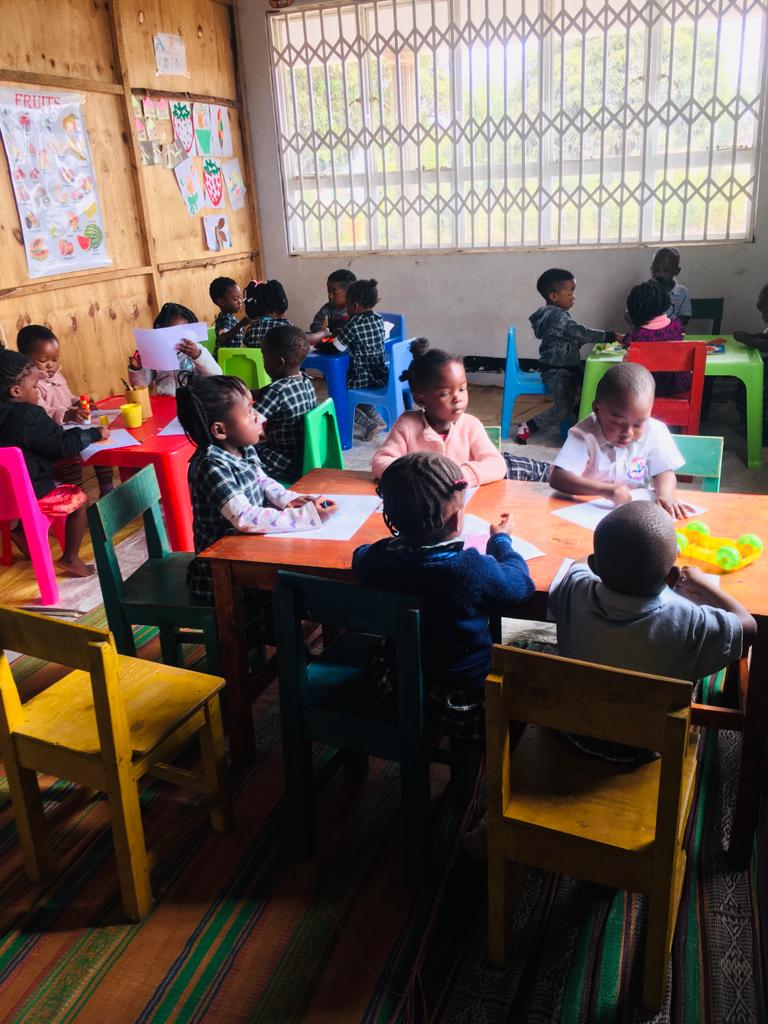
Managing Director and founder of TIMCHIMAC nursery and junior primary schools in Lilongwe Catherene Nkuntha, has urged parents to send their children to pre-schools to give them a strong foundation in life.
TIMCHIMAC school is located in Area 46 behind CK Cold Storage just adjacent to the by-pass road.
The school has modern facilities, well qualified and experienced teachers, it is fenced, has a large playing ground, ample parking space and offers both Cambridge and MANEB syllabuses.
In an interview Nkuntha said he has always had a passion to provide quality education to children hence opening the school in the area.
She said.”I am happy with the progress we have made so far. We started small but now the number of students is steadily rising. All the parents who have their kids here are satisfied with the way we are handling their kids and we know next term we will have many students. Our fees structure is also very competitive because we take into account the challenges parents face to raise fees.”
Nkuntha explained that pre school is very important for any kid because when starting primary school the student is always confident and ready for any challenge ahead.
“I have a vision of having a secondary school in the near future and funds permitting we will also purchase a bus so that students coming from far can be picked and dropped in their respective homes. I am challenging all parents around Area 46 to give us a try and they will not regret their decision,” she promised.
Nkuntha is also a proud owner of Msanjama Secondary School in Machinga and Little Angels Primary School at Malosa.
She has vast experience in the education sector spanning over 16 years.