Category: Education

  • Pemphero Mphande speaks on his fake honorary doctorate

    Pemphero Mphande speaks on his fake honorary doctorate

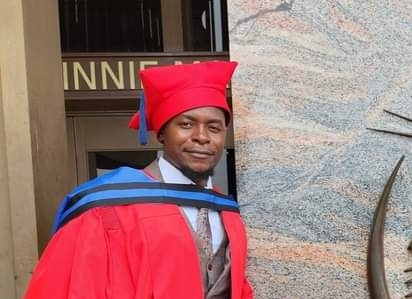
    Malawian socialite Phemphero Mphande has spoken on the controversy surrounding his fake honorary doctorate, which he claimed was awarded to him by the University of South Africa (Unisa).

    A few days ago, Mphande told the local media that he has been awarded an honorary doctorate in community development by Unisa.

    His reaction comes a few hours after Unisa issued a statement refuting claimed that it coffered honorary doctorate degrees to Mphande, musician Patience Namadingo and Mansoor Sharif Karim.

    Unisa has said relevant officials within the university have been directed to look into this matter and ensure that ‘these individuals’ are held to account and also made to retract any false claims

    Mphande said earlier this year, he was contacted by individuals who have been awarding honorary Doctorates on behalf of UNISA and that they felt they could recognise our work.

    These individuals, according to him,have previously recognised others at ceremonies held at UNISA campus and other campuses.

    “I was recognised at ceremony alongside other individuals from Zimbabwe, Botswana, Congo, South Africa and Nigeria. This ceremony was organised and conducted by the same individuals that have been doing this for years

    “If UNISA is denying this today, either they are a part of the scam or they too are being scammed. I personally would be happy to work with UNISA to get to the bottom of this. Our team will investigate and would love to meet with officials from UNISA to understand how this has happened under their nose for years.

    “Pemphero Mphande and others are not scammers, criminals or otherwise. If anything they are victims of a scam that UNISA can explain better. I believe in my work and its impact. It is valid and evident to all. To this effect, until UNISA can explain how this has been allowed to happen for years, I reserve any further comments on the matter,” reads part of the statement

    According to a statement signed by Unisa Acting Registrar, Professor Moloko Sepota states that it has no conferred any such degrees on the trio and that any assertion to this effect is simply not true.

    “These three individuals are also not amongst the candidates considered and approved for the awarding of honorary doctorates in 2020, 2021 and 2023.

    “Neither have they ever been nominated, considered or approved for such honours at any period whatsoever. No honorary degrees were awarded in 2022 Furthermore, the certificates displayed by Messrs Mphande and Namadingo respectively are definitely not Unisa degree certificates”, said Sepota.

  • NBM fulfils promise: Delivers 3 braille machines to Nazombe School for the Blind

    NBM fulfils promise: Delivers 3 braille machines to Nazombe School for the Blind

    National Bank of Malawi (NBM) Plc on Wednesday lived up to its promise by handing over three braille machines worth K9 million to Phalombe-based Nazombe School for the Blind.

    The donation is a response to the call made by former cabinet minister, hiker, and renowned author, Ken Lipenga to the corporate world to assist in acquiring braille machines for the school earlier this year.

    According to Lipenga, only NBM responded to his call, until Wednesday when it was time for the Bank to physically give the students the machines.

    NBM Marketing and Corporate Affairs Manager Akossa Hiwa said National Bank looks out to give to communities that are in need in the areas it serves.

    “As National Bank of Malawi, we were approached by Dr [Ken] Lipenga and he emphasized to us the need that Nazombe School for the Blind has in terms of shortage of braille machines, and when he did that in line with our corporate social investment policy, we thought it wise to come to Nazombe and present the Braille machines,” said Hiwa.

    The Resource Centre’s teacher-in-charge Nickson Chikapenga, thanked National Bank for being the only corporate entity that responded to the plea made on behalf of the school.

    “This year we are accommodating 29 learners 15 boys and 14 girls and among the challenges we are facing are inadequate teaching and learning materials like braille typewriters, to cater for 22 learners who need this kind of typewriter.”

    “I am very excited that National Bank has come to assist these learners. The three braille machines are going to assist us in examination preparation, by reducing teachers’ workload, and they help learners improve typing speed, accuracy, and efficiency,” said Chikapenga.

    Lipenga also appreciated the kind gesture by NBM.

    “I know that all companies know about the concept of corporate social responsibility and a lot of them do make an effort in that direction but not everyone gives back to the community, so National Bank is setting a very good example,” said Lipenga.

    Nazombe School for the Blind, an appendage of Nazombe Full Primary School at Chiringa, Phalombe was established in the 1970s. The school also has some children living with albinism. 

  • CSEC calls for collaborative efforts towards improving E-tech

    CSEC calls for collaborative efforts towards improving E-tech

    Civil Society Education Coalition (CSEC) has called upon private sector to make their contributions towards investing in education technology in order to improve access as well as quality of education services in the country.

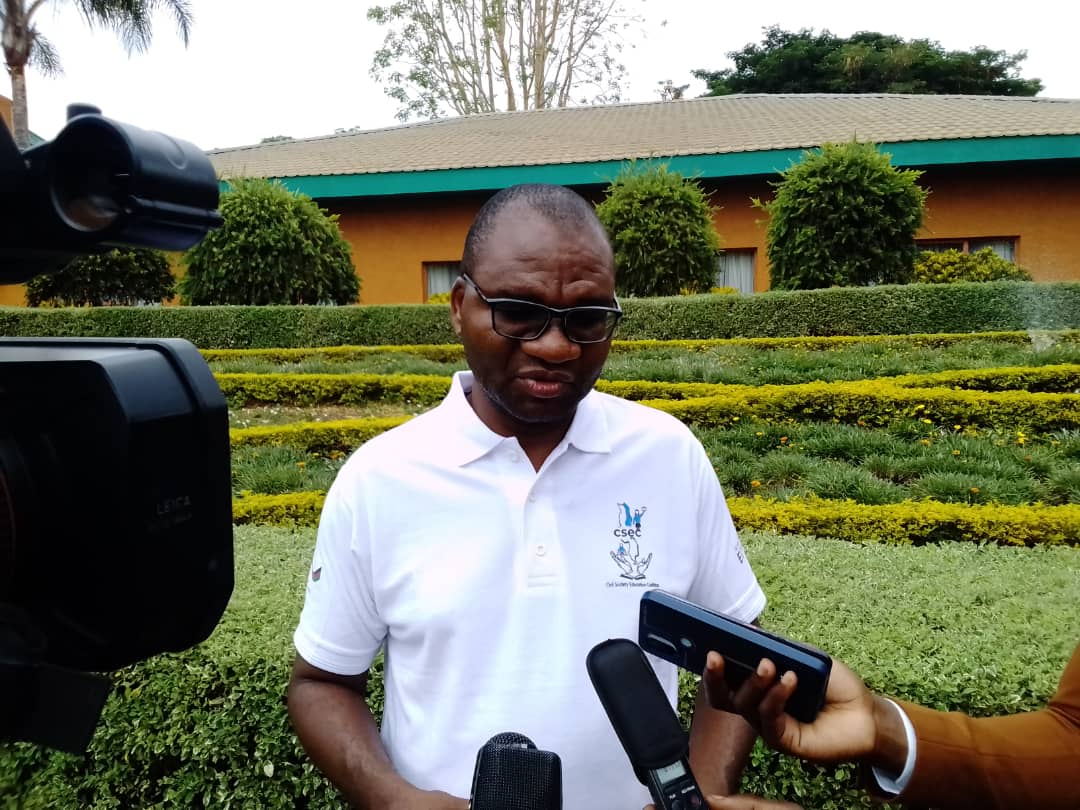
    CSEC chairperson Dr. Limbani Nsapato made the calls on Thursday in Lilongwe during private sector engagement focusing on responsive corporate social responsibility through E-tech in Malawi.

    According to Nsapato, despite Government’s efforts to ensure that digitalization is implemented in all the schools but there’s still limited access to internet and use of technology in schools due to lack of funds in the ministry of education hence the calls to private sector to bridge the gap.

    “As CSEC we have noted that there’s limited access and use of technology in schools and emis study of 2022 showed that only 1.9 percent of the schools are offering lessons in ICT but also only two percent of schools have connection to internet so it means there’s limited access and yet government would like to ensure that we have digitalization that is implemented in all schools”

    “Again we have noticed that the ministry of education has limited funding to invest in technology and especially E-tech and we feel that the private sector can bridge and minimize that gap by making their contributions towards investing in education technology in that way we can improve access as well as quality of education services” said Nsapato

    Furthermore, Nsapato said since we are in 21st century where Edu-tech us currency, having limited access it means there’s also limitation of capacity of human resource that is needed to ensure social economic development.

    He added by appealing to various stakeholders including the private sector to play their rightful role to build the capacity and ensure that there’s more access and build the human power needed to engineer the development that is required in Malawi 2063 and other socio-economic issues.

    On her part, Director for Secondary Education Florida Banda said despite challenges but government is working tirelessly to improve access to technology in schools.

    Banda said the ministry of education has set up open distance and e-learning directorate which is focusing on issues of Edu-tech as well as establishing laboratories with support from partners that are going to enhance edu-tech in the country.

    Banda further advised all partners to invest into education sector through the ministry of education for the monitoring purposes of resources.

    “There’s need for us to monitor if the resources that are put in there are used for the intended purposes, what we need to do is to strengthen the coordination between the ministry and partners that are working with us so everybody who goes into education sector is known, we should know the resources that they have invested but at the same time we need to know by the end of the year how much the private sector has invested interms of Edu-tech” she said

    Employers Association of Malawi (ECAM) through Director George Khakhi said it’s the duty of the corporate world to ensure that the citizens of the country are educated by pouring support to different initiatives in the education sector such us edu-tech.

    The private sector engagement on responsive corporate social responsibility was attended by several organizations including Save the Children, Teachers Union of Malawi, World Vision International, Girls activist youth organization , FAWEMA, Oxfarm, and Action Aid Malawi.

  • NBM powers University games with K3.5 million 

    NBM powers University games with K3.5 million 

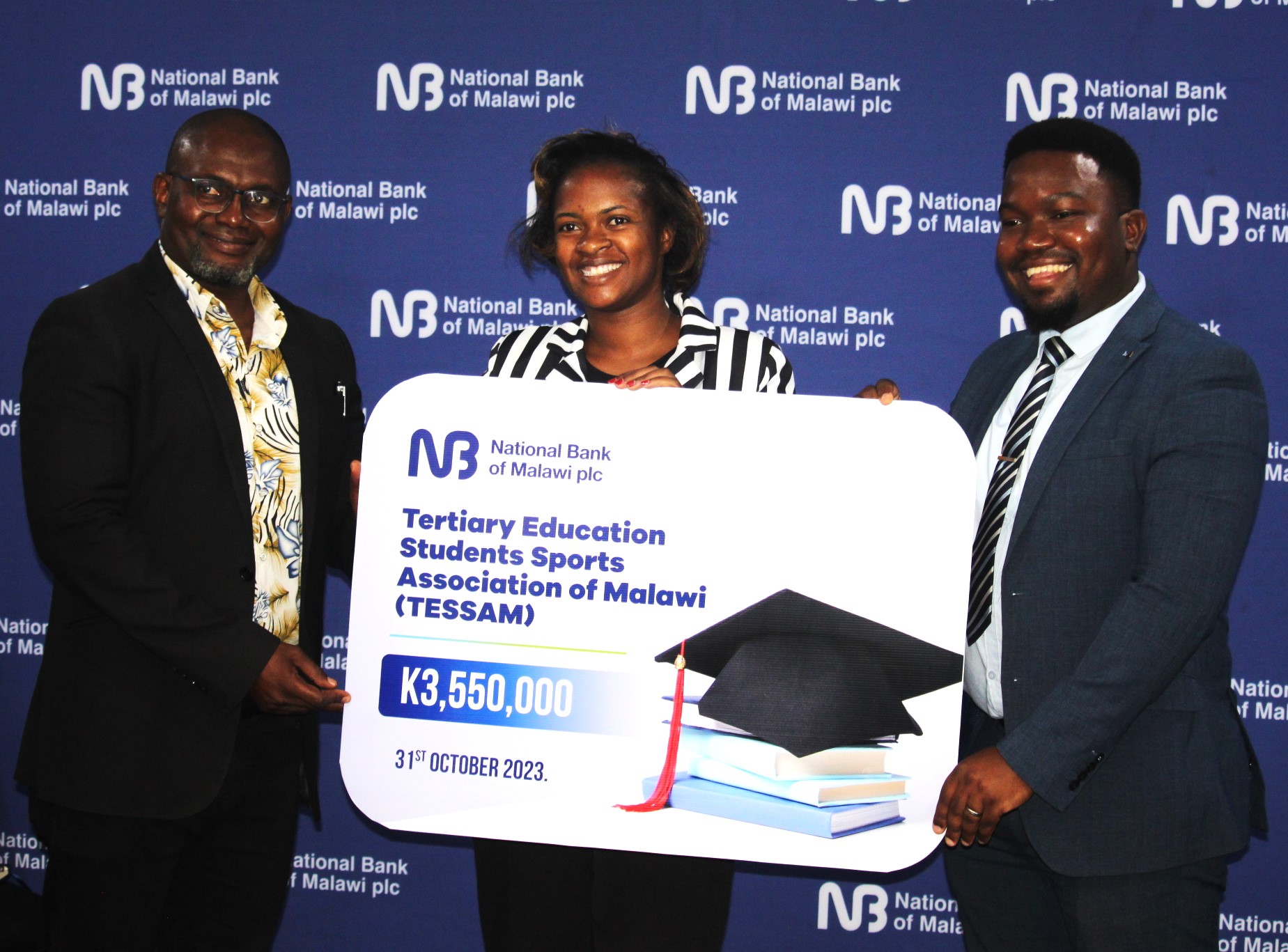
    National Bank of Malawi Plc (NBM) has boosted the morale of the Tertiary Education Students Sports Association of Malawi (TESSAM) 2023 games with a donation of K3.5 million.

    Students from about 20 tertiary institutions in the country will converge in Lilongwe this weekend for various sports activities including football, volleyball, tennis, netball and others.

    NBM Projects Manager Chimwemwe Lipato presented the cheque to TESSAM officials on Tuesday where he said the Bank believes that giving the youth a platform to develop skills through sports helps the country’s development.

    “National Bank believes that the youth have a big role to play, and we are not just a financial Institution but part of the Malawian community. Giving the youth a platform to develop their skills will allow them to maximize and realize their potential from a sports perspective, but overall, it will give them a platform for mental stimulation and their contribution to this country,” said Lipato.

    TESSAM technical member, Victor Chikoti thanked National Bank for always being a true partner.

    “The Different Universities participating in these games get funding from their institutions but it is not adequate. There are usually cases where we come to the grounds and still need a hand. We knew we had a gap and needed a partner. We could not think of any other way but to go to National Bank as a trusted partner that has invested a lot, especially in uplifting the standards of education in Malawi.”

    “So, they were kind enough and indeed very faithful to their promise to come in and say they would not allow students at the national level to come together in these different sporting codes without the Bank featuring at that particular stage, for that, we appreciate this type of support,” said Chikoti.

    The annual sports festival will also be used to identify champions in various disciplines that will represent the country at the Confederation of Universities and Colleges Sports Association (CUCSA) tournament in South Africa next year.

  • Mchinji commemorates day of girl child with a call for inclusive education

    Mchinji commemorates day of girl child with a call for inclusive education

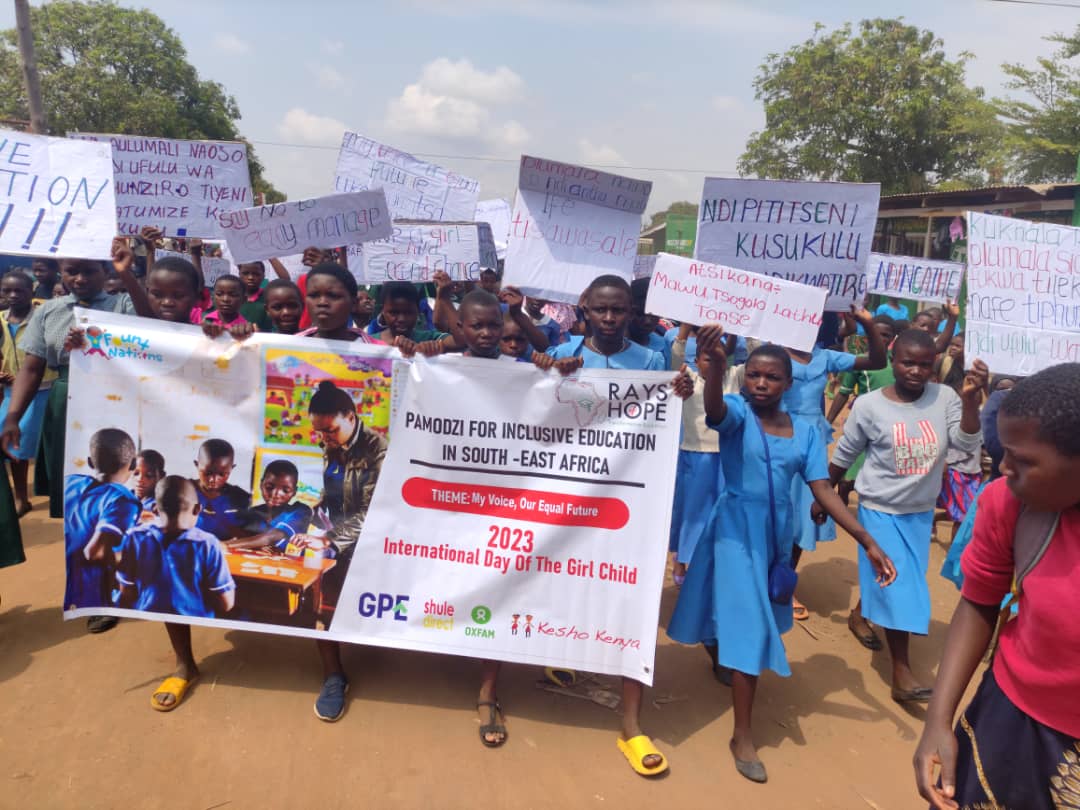
    Pamodzi for Inclusive Education Project has called on stakeholders in the sector to advocate for inclusive education so that all citizens, regardless of their natural being, access education in the country.

    The call was made Saturday at Waliranji in Mchinji during the event to observe the International Day of the Girl Child. 

    Pamodzi for Inclusive Education Project is implemented in Malawi by Rays of Hope and Fount for Nations. 

    The event aimed to bridge the gap between existing policies for inclusive education and their practical implementation.

    Director of Rays of Hope and the Head of Pamodzi Project, Kamwana Muyaya, stressed the need for inclusive education, saying there are a lot of things that need to be done to bridge the existing gap. 

    “There is still much work to be done in the realm of inclusive education. In Malawi, we often have specific schools for children with various disabilities, such as schools for the deaf and the blind, where students are isolated. 

    “However, there is a pressing need for inclusive education where all children can learn together just as they live together in their communities,” Muyaya explained.

    Member of Parliament for Mchinji South Constituency, Agnes Nkusa Nkhoma, appealed to chiefs and parents to take a leading role in ensuring that children who have disabilities are sent to school.

    “Chiefs should make sure that rights of children are safeguarded. There are children who are always kept home just because they have some form of disability.

    “It is, therefore, the responsibility of chiefs to make sure that all parents do not hide children with disabilities in their houses,” advised the legislator.

    The parliamentarian also advised chiefs to come up with by-laws to protect the rights of children.

    On her part, a Special-Needs teacher at Waliranji Primary School, Patricia Zigodo, said all children have rights to education regardless of their background that is why, as special-needs teachers, they go around the communities to look for children with disabilities that are kept idle in homes.

    “We try our best to get these children to school, however, there are usually problems when we do not have resources to support children with disabilities, which makes them keep away from school,” said Zigodo.

    The International Day of the Girl Child is officially recognised on October 9 each year, but this year Malawi commemorated the occasion on October 21 in Mchinji.


  • NBS Bank motivates girl learners at Stella Maris Secondary School

    NBS Bank motivates girl learners at Stella Maris Secondary School

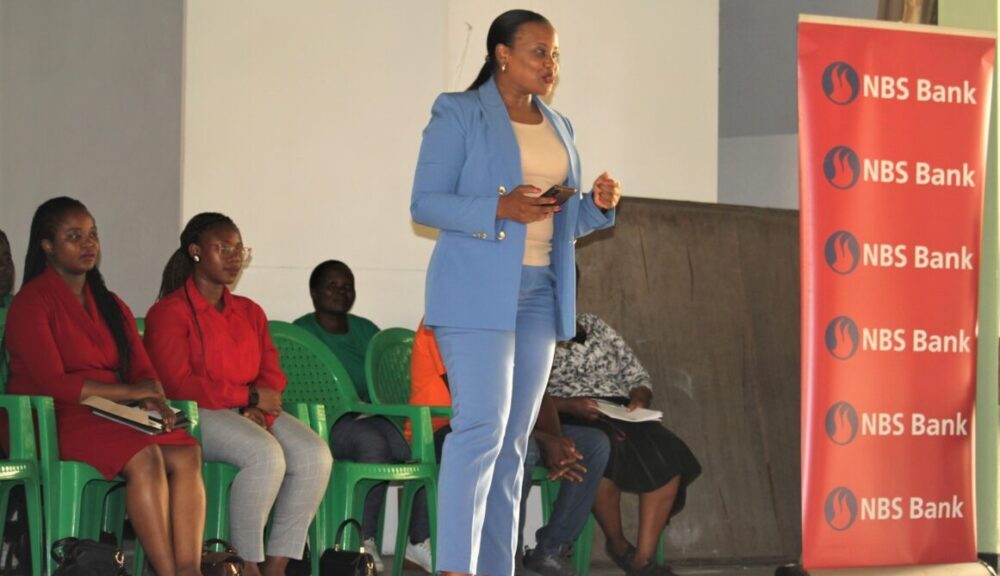
    NBS Bank Plc in collaboration with Shaping our Future Foundation joined the world in commemorating International Day of a Girl Child with a motivational talk at Stella Maris Secondary Girls School in Blantyre.

    The day was set aside by the United Nations to recognize and promote the rights and well-being of girls worldwide.

    Speaking during the motivational talk, NBS Bank Head of Marketing and Customer Experience Tamanda Ng’ombe said in 2021 the Bank decided to partner with the foundation to promote education by cushioning the girl child school dropout rate.

    “We do know that the dropout rate for the girl child in terms of education is very high in both primary and secondary school. We focused on those in secondary school and we are sponsoring and also mentoring twenty girl children across the nation using Shaping Our Future Foundation.”

    “So, the organization does not only give bursaries in terms of school fees but we have attached two children to a senior executive in the Bank at the moment, going forward we intend to partner further with them to mentor more girls because they need encouragement, it’s not easy to fulfill full education as a girl child in Malawi and we do recognize that and we want to support it,” said Ng’ombe.

    Shaping Our Future Foundation Education Programs Coordinator Lawrence Kayesa said the foundation believes that girls have a future if given the necessities needed.

    “Together with our partner NBS Bank, we thought it wise to come here at Stella Maris Girls Secondary School to give our girls because the foundation believes that young girls have a future and we can only support them by giving them the necessities they need. So, what we have provided today to the girls is to help them stay calm in school and maintain high levels of hygiene,” said Kayesa.

    The girls were gifted with a pack of reusable sanitary pads, soap, and undies, besides being taught how to use and take care of sanitary materials.

    Stella Maris Secondary School Head girl Chisomo Senzani, thanked the Bank and the Foundation for the help rendered.

    “Some girls cannot manage to buy sanitary pads so this donation is timely, aside from being motivated to always aim high and dream big,” said Senzani.

    The day falls on October 11, and this year was commemorated under the theme ‘Invest in Girls’ Rights; Our Leadership, Our Well-Being.’

  • High dropout, repetition affecting foundation learning

    High dropout, repetition affecting foundation learning

    A research fellow at University of Malawi (UNIMA) Centre for Education Research and training, Esme Kadzamira says high repetition and dropout cases are the main challenge affecting foundation learning. 

    Kadzamira made the remarks in Lilongwe Wednesday, during a key note address she made to the 2023 Joint Sector Review meeting for education stakeholders with the theme “Transforming Education: Investing in Foundation learning and skills development for a wealthy, self-reliant and resilient nation 

    She also said low learning outcomes in foundational learning (literacy, numeracy and socio emotional skills) shows that most learners do not have the acquired minimum skills that they were supposed to have, after completing certain levels of education.

    “A recent early grade reading and mathematics assessment revealed that if you assess a standard 4 child using materials that are from standard 1 to standard 4, most learners fail to correctly answer materials, which means that a child progresses to standard 4 without acquiring   the foundation learning skills.

    “My concern is that this is causing problems in the education sector, because it means when such a child reaches secondary school he would have reached that without mastering the minimum skills required for him or her to perform well at secondary level and such students go on to university without mastering the minimum skills that are required for them to perform better,” she said.

    Kadzamira noted that there is a low enrolment of learners accessing secondary and tertiary education.

    She however said there are several factors that can be solved to improve learning outcomes such as monitoring teacher deployment in schools, teacher and student attendance among other things.

    “Most teachers teach a classroom of 200 learners and this is not recommended for children who have just started learning, because such children need special attention from teachers,” she said

    Secretary for education Chikondano Mussa said the joint review meeting was organised to enable stakeholders such as development partners, Civil societies organisations and education authorities unearth things that are not working in the education sector.

    “The forum seeks to improve learning outcomes and strategies deployed to solve critical areas which can improve education in the country

    Government vision is resolute: no one shall be left behind on our educational journey, government has taken a decisive stand to provide education to all, irrespective of their background or circumstances,” she said.


    Mussa said government has intensified provision of textbooks in primary schools to help learners read and write.

    Speaking on behalf of development partners, European Union delegation social sector Team leader Michele Crimella said there is a strong commitment from stakeholders to develop and improve education sector in the country.

    “The partnership that we have in supporting education in Malawi has enabled the sector to bear some fruits in the long run, improving education is a long term process and we are motivated to address some challenges affecting education” he said

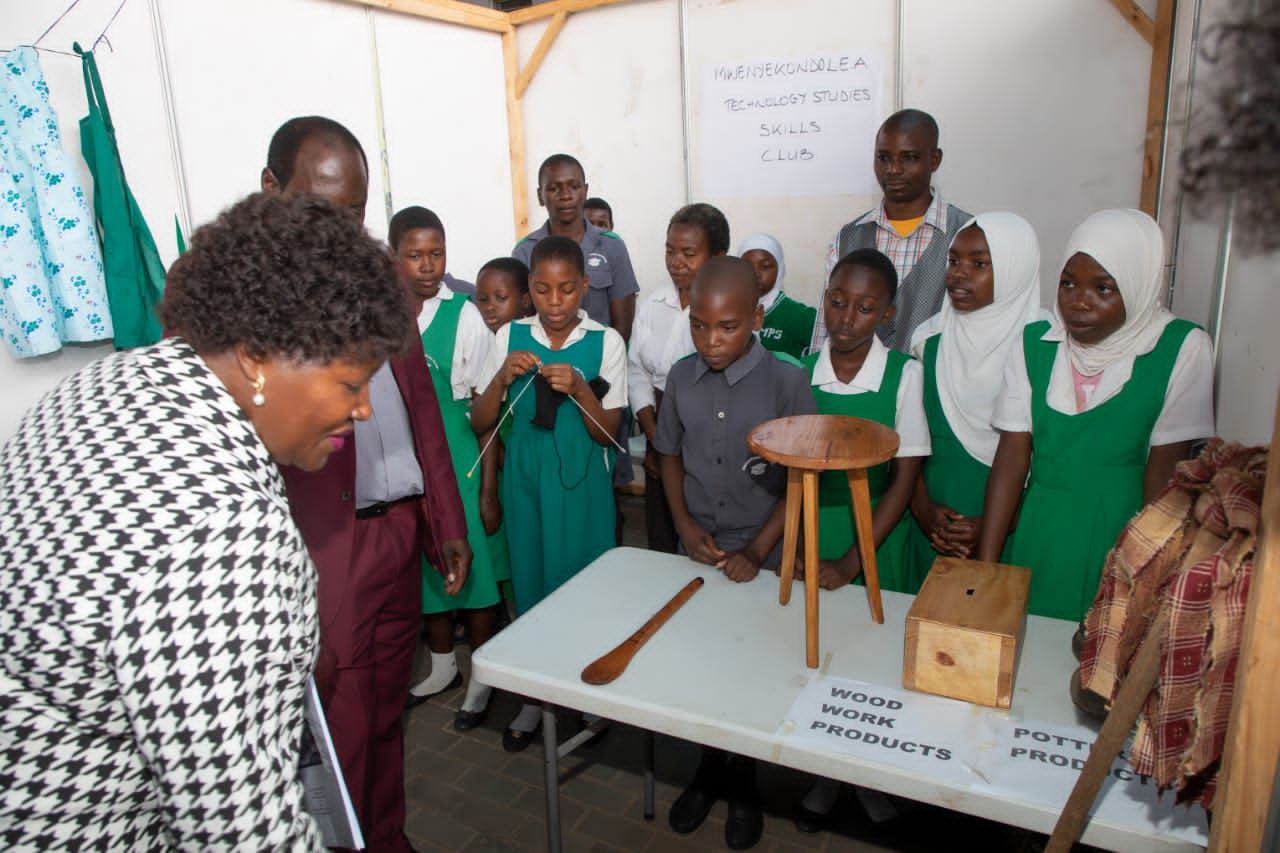
    During the meeting organizations in the education sector mounted displays showcasing their activities.

    The meeting was also attended by parliamentarians, development partners, district education managers, CSO’s, teachers and students, among other people.

    Reporting By Sarah Munthali


  • Chakwera promise more infrastructural support to Unima

    Chakwera promise more infrastructural support to Unima

    President Lazarus Chakwera has reaffirmed the government’s  commitment towards improving university education by among others putting up new and modern teaching learning structures for the advancement of tertiary education.

    Speaking Wednesday in Zomba during the graduation of 360 students at the Great Hall, University of Malawi (Unima) campus, Chakwera said when he ascended to power, he made a commitment to support Unima by ensuring that better educational facilities are put in place.

    ” When we took office, I and the Vice President, Dr. Saulos Chilima made a commitment that we must change the face of the university by among others improving the infrastructure. We will continue to do this until a greater change is achieved, ” the president who is also a Unima alumni said.

    He therefore commended Unima leadership for taking a greater interest in ensuring that all infrastructural developments are on course to meet current tertiary education requirements.

    Focusing on the day’s graduation, Chakwera said Malawi was not supposed to experience leadership gaps while universities are well equipped to produce good leaders in both public and private sector.

    “I don’t expect any department, agency or any organisation to suffer from leadership gaps because Unima is here,” the president said and advised graduating students to become agents of change and instrumental in various fields.

    He further advised newly graduated students to desist for immoral behaviours at any cost, so that they should be relevant and meaningful in the society, adding that their tertiary education and lifestyle should make them models to aspire and inspire those around them.

    The president said he is saddened by the conduct of some graduates  who engage in corruption and other unethical undertakings.

    “I expect that you will maintain standards and ethics and you will avoid shortcuts and corrupt practices. Stop milking the poor and stop being greedy. Avoid being takers but rather be givers. Be producers and entrepreneurs,” the president who is also Chancellor of the Unima added. 

    Vice Chancellor of the University of Malawi, Professor Samson Sajidu said the university has within years established good partnership with other universities both within and outside Malawi as one way of improving education standards. 

    Prof. Sajidu added that Unima has embarked on various resource mobilisation strategies to ensure that the university continue to offer improved and quality education. 

    On challenges facing Unima, the Vice Chancellor said accommodation is the main challenge citing that only 1,000 out of 11,000 are accommodated on campus.

    “Teaching space is another big challenge facing the university. Currently we have a teaching space of 2,700 students against 11, 700 such that our teaching staff of 313 translate to 33 teacher- student ratio.

    Unima Chairperson, Dr. George Patridge said apart from infrastructural development, plans are under way to internationalise the university to allow the university to compete with other universities in the region and beyond Africa.

    ” We are also intending to improve access to tertiary education by increasing enrollment from the current 11,000 to about 15,000 by 2025,” he said while commending government for continued financial support which has seen Unima implementing various development activities both academic and non-academic. 

    The Unima Chairperson therefore urged government to continue with the loan grants to needy students which he said will allow more needy students to access and attain university education.

    The graduation has seen 360 students, 183 males and 177female graduating with diplomas, bachelors, masters and doctorate degrees.

    Before the graduation, the president toured some infrastructural development being undertaken by the Unima such as construction of modern office complex and newly constructed school of economic within the Unima campus.

    By Solister Mogha

  • ‘Malawi Girls Can Code Too’ launched

    ‘Malawi Girls Can Code Too’ launched

    The Embassy of Ireland in Malawi, UN Women, and the Malawi government have joined forces to launch an empowering initiative known as ‘Malawi Girls Can Code Too’ in Lilongwe.  

    Speaking at the launch, Dr. Rachael Chimbwete Phiri, Principal Secretary for Basic Education in the Ministry of Education, commended UN Women and the Irish Government for their dedication to this project.

    “The Irish Embassy and UN Women signed an agreement on July 19, 2023, setting the stage for the implementation of this initiative from August 2023 to July 2024. This underscores the value of teamwork in addressing persistent digital inequalities in our society,” she remarked.

    Chimbwete Phiri also emphasized the significance of inclusivity in achieving Malawi’s Vision 2063, stating, “technology is the driving force behind innovation, economic growth, and global progress in an ever-changing world. To fully participate in the digital revolution, we must empower every segment of our population.”

    Ambassador Séamus O’Grady, representing the Irish Embassy, underscored the Irish Government’s strong commitment to promoting gender equality in Malawi.

    “In Ireland, we firmly believe that gender equality is crucial for overall development. Addressing gender inequality is a pivotal component of our strategy for Malawi. We have deliberately sought ways to support women, and this initiative is one of them,” he said.

    During the event, UN Women Country Representative to Malawi Letty Chiwara explained that the project’s central aim is to bridge the gender digital divide.

    “Statistics reveal that men in Malawi have better internet access and computer skills than women. Approximately 17% of Malawian men possess internet skills, while only 7% of women do,” she explained.

    This is a four-year project, targeting 6,500 young girls and 1,500 boys and funded by the Irish Embassy to a tune of €2 million (over K2 billion).

    Reported By Praise Alemekezeke Dzenza 

  • World Teachers Day: Salute to African Teachers

    World Teachers Day: Salute to African Teachers

    There is no gain saying the fact that teachers are crucial to the process of education. In appraising the nexus between teaching and learning, teachers rank highest in importance because they organically facilitate the most critical part of education.

    Strictly speaking, the ecosystem, which comprises children, parents, teachers, government, writers, publishers, and now technology innovators, is brought to life by teachers. They not only facilitate learning, but also provide guidance and inspire learners. Some teachers have been known to exert greater influence on children’s development than some parents. They create a supportive environment within and outside the classroom for learning and development. At a personal level, I wonder where I would have been today without the caring and supportive intervention of my teachers, at various levels of my academic endeavor. Teachers are great mentors.

    So, on this occasion of World Teachers Day, I remember and pay tribute to my teachers, and indeed all teachers in Africa and across the world, especially those who do great work for insufficient pay and, often, without acknowledgment and recognition. There is a common saying that “Teachers’ reward is in heaven”. This is an unfortunate statement, given that teachers, like other professionals, have responsibilities, including children who require shelter, food, clothing, healthcare, and other necessities of life. So, teachers deserve to be rewarded, both here and hereafter. This tribute, therefore, is my little token of appreciation and recognition of the important role that teachers played in my life, and continue to, in the lives of current and future political and business leaders.

    Indeed, as American historian, Henry Adams rightly stated, “A teacher affects eternity; he (she) can never tell where his (her) influence stops.” I doubt that my primary school teacher, Mrs. Ala, could ever imagine that her effort in making me fall in love with mathematics would be the driving force for me to become a science student, an Electrical/Electronics Engineer, a Chartered Accountant, and the Chief Executive of a telecommunications company operating in 14 African countries. Such is the span and strength of the influence of teachers. As beneficiaries of their patience, dedication and support, we must never take them for granted, much less forget their service to us.

    Over the years, teaching and learning have undergone seismic changes in methodology particularly with the advent of modern technology. This has completely transformed education, as we previously knew it. Modern education has embraced digital technology, which features the internet, data-enabled devices, and online resources. Digital tools and internet connectivity provide both teachers and learners with incredibly vast resources, which make research, teaching and learning a lot easier. Beyond the ease, it also bridges the educational gap between advanced and developing countries, as well as between privileged and disadvantaged children, especially those in hard-to-reach locations.

    Emphasis has been disproportionately placed on empowering children with devices and internet connectivity to enable them to get on the superhighway of online education and catch up with their peers around the world. This is rather counterintuitive, considering teachers’ important role in supporting learners. So, teachers must also be provided with access to the internet and digital devices. More importantly, they must be trained (continuously) on how to use these resources because, as they say, you cannot give what you do not have. For effective and productive global collaboration between teachers and students in Africa and their peers across the world, teachers must be motivated, equipped and empowered.

    I am proud to state that as part of our $57 million collaboration with UNICEF, Airtel Africa is empowering both children and their teachers in the countries we do business in. Aside from providing devices, connecting schools to the internet and zero-rating hundreds of online learning platforms, we are training teachers on how to utilize these modern educational resources to teach Africa’s future leaders. In Tanzania, for example, over 2500 teachers have been trained in preparation for the connection of 50 schools, besides providing desktop computers, laptops, tablets and smart television sets. The story is the same, in varying scale, in the other countries. Eventually, Airtel Tanzania will cover the entire 5000 schools in the country and train all the teachers!

    During a recent visit to one of the schools adopted by Airtel Africa in Nigeria with some members of the Board and Senior Leadership, I was delighted to see how our contribution has enhanced teaching and learning. The teachers assisted their students to log on to the Nigerian Learning Platform (NLP) to access lessons. In fact, the NLP also contains an online training series for teachers, peer review and continuous assessment modules. This is the right, and only, direction that education should be headed to realistically transform the lives of children and promote innovation at early stages.

    We acknowledge teachers’ crucial role in the ecosystem and we continue to seek partners for collaboration in expanding the scope of this intervention. The Covid-19 pandemic ironically did one important good: highlighted the deficiencies in our education systems across the African continent. These include infrastructure, funding and curricula, which are now being addressed by many governments, with varying degrees of success. As a matter of fact, the obvious gaps identified during the pandemic inspired Airtel Africa’s decision to invest in digitization of education with UNICEF, the most experienced international organization in matters affecting children.

    A World Bank study on Learning Poverty rate in sub-Saharan Africa, indicates that only one out of every 10 children aged 1-10 years can write and solve basic mathematical problems. This dire situation cannot be reversed without highly skilled, trained, and motivated teachers. So, while I give a shout out to all the teachers on their day, I add my voice to the calls on governments to invest more in education generally, and teacher education, in particular. The annual budgetary allocation to education should aim to achieve the 20% recommended by the United Nations. Also, policy makers should consider removing all bottlenecks to digitizing education systems including exempting data and digital devices from duty and taxes. Countries like Nigeria, Kenya, Rwanda, Malawi, and Madagascar have done well in this regard.

    Finally, I call on other corporate organizations, especially tech companies to invest in teacher education and empowerment. Perhaps, we should also establish credible award platforms to identify and recognize teachers who excel in their call of duty. That way, teachers would feel a greater sense of accountability and pride in their work. Once again, I celebrate African teachers today and will always do!