Category: Education

  • Lipunga Primary School: A beacon of resilience in the hard-to-reach areas

    Lipunga Primary School: A beacon of resilience in the hard-to-reach areas

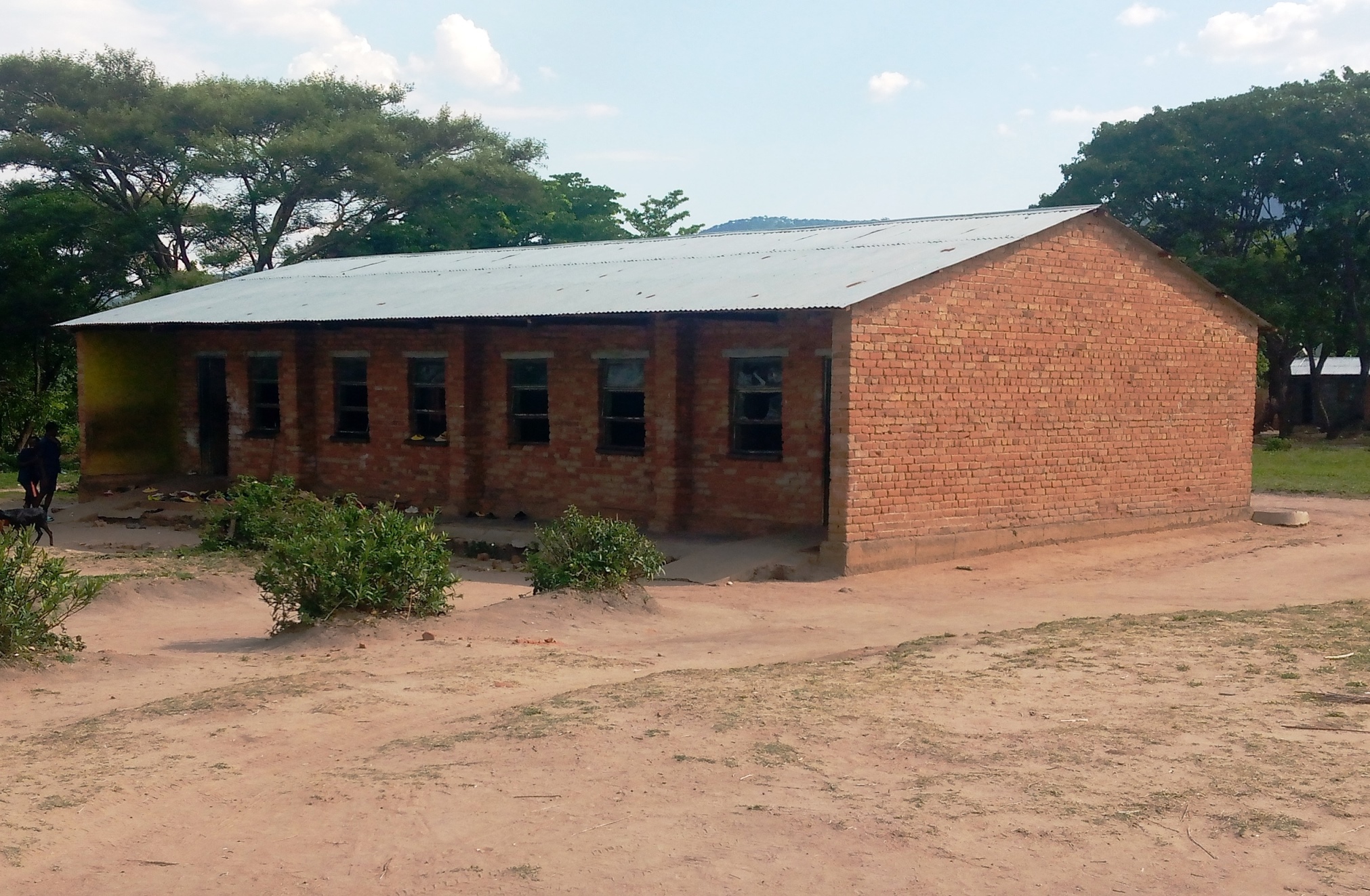
    Lipunga Primary School lies in the remote area of Mchinji in sub-traditional authority (STA) Kapunula on the hills bordering Malawi and Zambia.

    The humble institution is nestled over 60 kilometres from Mchinji Boma and faces the challenges of a poor road network.

    The school sits in the middle of the hills and some other social amenities are not there apart from the school itself.

    It takes the members of the community hours to access the nearest hospital at Mkanda Trading Centre.

    Lipunga Primary School with 1008 learners, currently faces challenges with inadequate teaching and learning resources and to cap it all the classes from standard one to eight have no desks.

    Despite the school, finding itself in the face of adversity, has emerged as a shining example of resilience and success by defying the odds.

    At Lipunga Primary School, the bond between the community and teachers is a beacon of inspiration. 

    Safali: The relationship between the community and the teachers has been a motivation for teachers to stay at the school

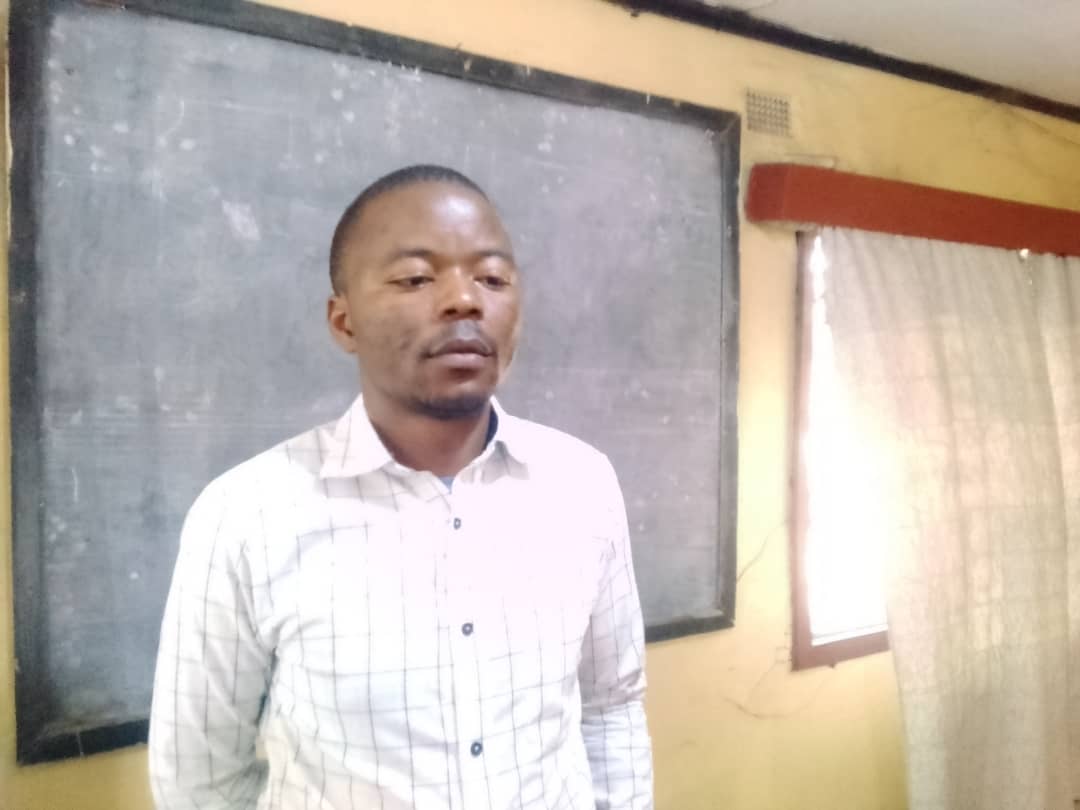
    Headmaster Nephtari Safali, proudly shares: “The relationship between the community and the teachers has been a motivation for teachers to stay despite being in a hard-to-reach area.” 

    The community’s commitment goes beyond words, ensuring the teachers have a place to call home, giving rewards to teachers when students excel, and even providing pieces of land for teachers to cultivate crops.

    The awesome gesture from the community has made it possible for teachers to be retained in the hard-to-reach area unlike in other schools.

    However, the community’s warm-heartedness to the teachers is not for nothing, there has to be a favour the teachers have to return to the community too.

    Azele Zimba, the Parents and Teachers Association (PTA) chairperson, emphasizes the community’s commitment to education. 

    “We sit down with teachers and understand their needs. In return, we support them, knowing this area lacks basic amenities. We aim to ensure teachers are happy so that our children receive a quality education,” explains Zimba.

    It is common for teachers to write the district education office to be moved from hard-to-reach areas to places close to towns and trading centres, but not for one, Dyson Jereman, a teacher at the school.

    Despite being at the far end of the country on the borders of Malawi and Zambia with fewer amenities, Jereman has stayed for 12 years and feels at home.

    Jereman says he is motivated to stay at Lipunga because the community is accommodative and understanding.

    “I cherish the unity here between the community and among ourselves as teachers. The loving community provides us with necessary needs and we feel we are welcome so there is no need to leave,” says Jereman.

    He boasts that he has a dimba given by the community which affords him to grow various crops to support his family.

    Blessings Khumalo echoes Jereman’s sentiments saying the community at Lipunga is just pure at heart to the extent that she feels at home in the area.

    Khumalo who is one of the two female teachers at the school says they are treated well and this serves as motivation to reciprocate the gesture by making sure the learners are given full support.

    “The bond is just tight, this is what keeps us going despite some challenges,” says Khumalo who has even gotten married to a man from the same area.

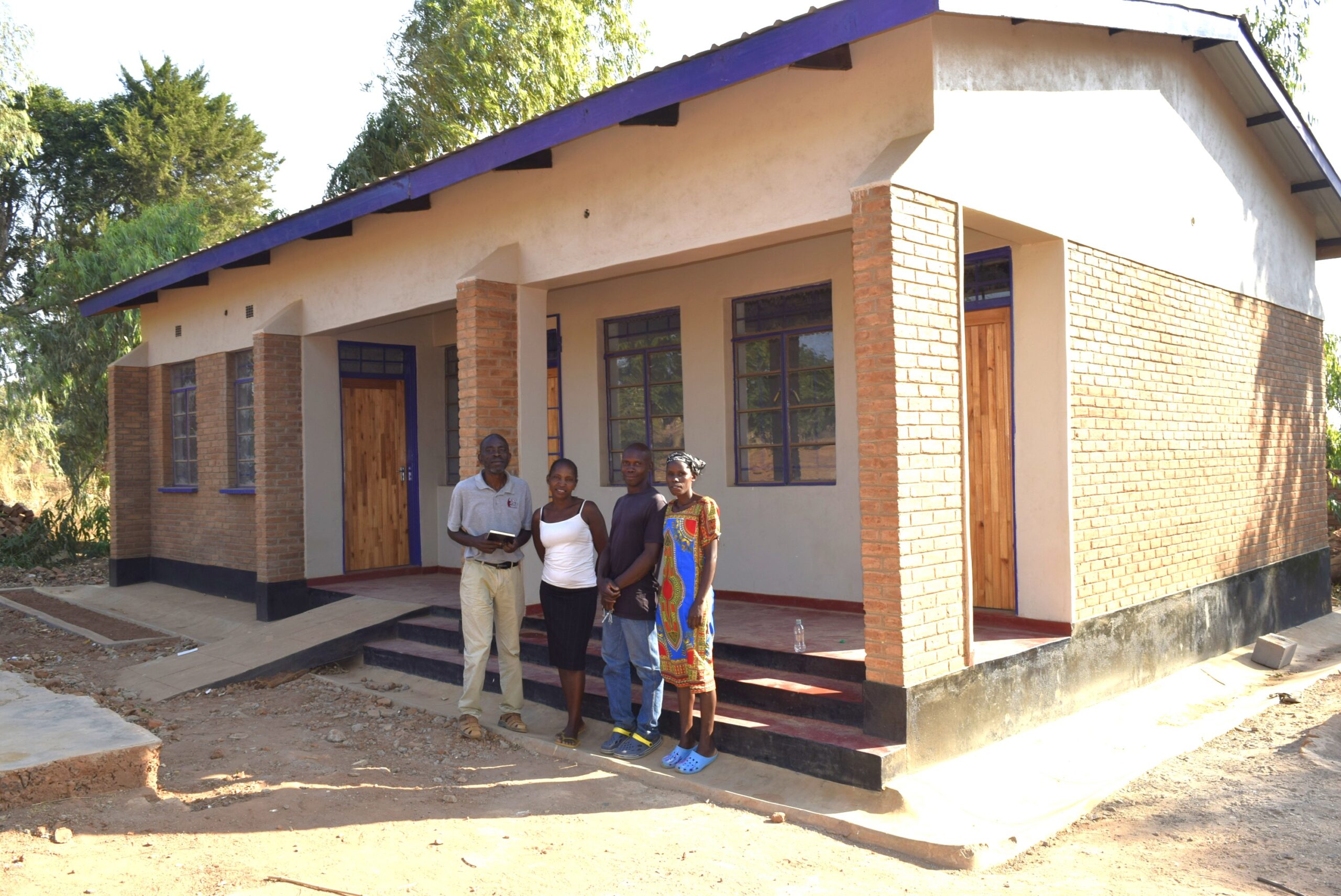
    The school has eight teachers’ houses and the community on its own constructed five of those.

    The commitment of Lipunga’s community and its educators has yielded remarkable results. 

    In both 2022 and 2023, the school achieved a 100 percent success rate in the Primary School Leaving Certificate Examinations (PSLCE). 

    What’s more, in 2023, 64 out of 110 learners secured places in secondary schools.

    With only 11 teachers, this number is considered adequate compared to other schools in such remote areas which usually have fewer teachers since they run away to other better schools.

    Lipunga School, however, continues to provide quality education against all odds.

    News of Lipunga’s triumphs has spread beyond Mchinji.

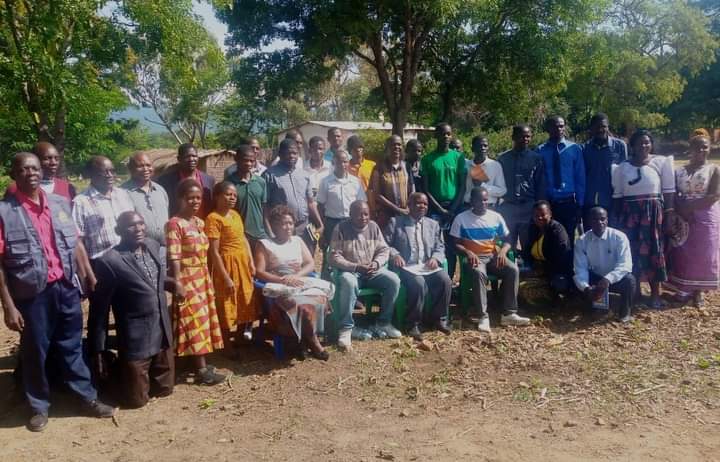
    The delegates from Karonga pose with parents and teaching staff at Lipunga

    A delegation from Karonga comprising head teachers, school management committees (SMC) members, district education network (DEN) members, PTA members, primary school education advisors (PEAs), and other educationists visited Lipunga School just to learn a few things. 

    The trip was facilitated by Governance for Solutions (GFS).

    William Ngwira, the Chairperson of Karonga DEN, expressed his admiration. 

    “Karonga has many hard-to-reach areas, but it’s difficult to retain teachers, compromising education quality. We came to learn from the inspiring news from Lipunga, to understand what they do differently and see if we can replicate it,” said Ngwira.

    The fact that the Karonga delegates travelled over 600 km to Mchinji to learn from a school in the far-flung areas of the district has excited Samson Kawiya, Mchinji’s principal education officer.

    Kawiya has praised Lipunga’s approach and stressed the importance of community-teacher collaboration.

    “This is the kind of mutualism we need between the community and professionals if we want to realize quality education,” he remarks. 

    Mchinji education office oversees other schools in hard-to-reach areas like Kazyozyo, Kavunguti, Katonda and Gumba Zones.

    However, it is not the first time Lipunga has been associated with success as the head teacher, Safali, was chosen to be the best head teacher in Mchinji and received an award and a bicycle at the World Teachers Day celebration in Mzuzu on 18 October 2023.

    In Mchinji, Lipunga Primary School stands not just as a school but as a testament to the remarkable heights that can be achieved when communities and educators join forces to defy the challenges of a hard-to-reach landscape.


  • Recruit more teachers in new financial year – Government told

    Recruit more teachers in new financial year – Government told

    Unemployed teachers under the Initial Primary Teacher Education – EPTE 13 and 14 cohorts have demanded that the Ministry of Education increase the number of teachers to be recruited in the 2024/25 national financial year.

    Their representative Nation Banda made the remarks on Wednesday in Lilongwe during a press briefing.

    “We want the government through the ministry responsible to consider increasing the number of teachers being recruited in the 2024/25 financial year to improve service delivery in public schools where there is an acute shortage of qualified teachers. This will facilitate the teaching and learning process and reduce the number of unemployed IPTE teachers” said Banda

    Banda also asked the ministry to correct some irregularities that marred the just-ended recruitment process.

    “We noted a lot of irregularities during the recent recruitment process, especially in councils, we think in the forthcoming process, those things will never be repeated,” he said.

    Among others, he said some teachers were multiple times because councils conducted several interviews for the same post, which in turn denied others a chance to be employed.

    “We therefore suggest that for the proper recruitment procedures, Interviews should be planned in such a way that all recruitment Interviews be done on the same day and time across all district councils” he added

    On the creation of more space in the establishments, he suggested that the government should expedite the completion of the Functional Review process for Primary education.

  • Lipunga school becomes a beacon of success in Mchinji’s hard-to-reach areas

    Lipunga school becomes a beacon of success in Mchinji’s hard-to-reach areas

    The school in Mchinji’s remote and hard-to-reach area, Lipunga Primary School, has become a shining example of what can be achieved when a community comes together to prioritise education by not only retaining dedicated teachers but also achieving remarkable success in national examinations.

    Head teacher Nephtari Safali attributes the school’s success to the strong bond between the community and the teachers.

    “The relationship between the community and the teachers has been a motivation for teachers to stay at the school despite being in a hard-to-reach area. The support goes beyond mere words, with the provision of housing for teachers, rewards for exceptional student performance, and the allocation of land for teachers to cultivate crops,” said Safali.

    Safali shared the astounding achievements of Lipunga Primary School in the Primary School Leaving Certificate Examinations (PSLCE).

    “The school produced a 100 percent success rate in 2022, and we repeated this feat in 2023. Not only did all the students pass, but 64 out of the 110 learners were selected to do secondary education,” he said.

    Azele Zimba, the Parents, Teachers Association (PTA) chairperson, emphasised the community’s commitment to providing a conducive environment for both teachers and students.

    “We prioritise education and make sure that the teachers are happy at the school so that the children get quality education,” Zimba explained.

    The news of Lipunga’s success has not only resonated within its district but has also attracted attention from afar.

    A delegation from Karonga district, visited the school and William Ngwira, Chairperson of Karonga District Education Network (DEN) acknowledged the challenges faced in retaining teachers in hard-to-reach areas in Karonga and expressed a desire to learn from Lipunga’s success.

    “We wanted to know what is done in Lipunga to try and replicate that,” Ngwira stated.

    Mchinji Principal Education Officer, Samson Kawiya commended Lipunga Primary School for being a source of inspiration within the district.

    “The office constantly motivates, advises and encourages teachers posted in hard to reach areas like those in Kazyozyo, Kavunguti, Katonda and Gumba Zones, just to mention a few, to ensure good relationship with the communities they are serving,” said Kawiya.

    The trip for delegates from Karonga which comprised head teachers, school management committees (SMC), mother groups, DEN, PTA and other educationists was made possible by Governance for Solutions (GFS).

  • Malawi requires $300m annually to provide minimum education standards

    Malawi requires $300m annually to provide minimum education standards

    Malawi’s minister of education Madalitso Wirima Kambauwa has said the country currently needs US$300 million per year in the next five years for the education sector to recover and provide the minimum standards of education.

    She made the remarks during a Climate Smart Education Systems for a Sustainable Future event, at the ongoing Cop 28 conference in Dubai.

    Kambauwa said the money will enable the education sector to fully recover from the effects of Cyclone Freddy.

    “Thousands of people were displaced, some injured and over 1000 died, including learners and teachers and 633 education institutions suffered loss and damage due to Cyclone Freddy,” she said

    She said, during this period Malawi experienced several challenges, citing that several schools were turned into camps for internally displaced people, accommodating the affected population and that teaching and learning was also suspended.

    She said in response to this adversity, President Lazarus Chakwera’s led administration is championing a National Disaster Recovery Plan, which emphasizes on building resilience focusing on human capital development and encourages investment in the education sector.

    She added, “Government, through the Ministry of Education, has been proactive in pursuing the climate change disaster recovery and resilience plan, by among others embarking on a Climate Smart Education Program with support from the Global Partnership for Education (GPE), and technical support from UNESCO and Save the Children.”

    The minister stated that the Climate Smart Education program will contribute significantly towards accelerated learning, learning loss recovery, increased access, and continuity of learning even during disasters.

    Kambauwa urged developmental partners to join forces with the government of Malawi in scaling up the use of tablets across the country, to improve learning outcomes and increase retention in a program called Building Education Foundations through Innovation and Technology (BEFIT).

    The minister was supported by the Global Partnerships for Education (GPE) from Washington DC to participate in the CoP28 currently underway in Dubai.

  • Exploits University deploy Police to enforce payment of fees

    Exploits University deploy Police to enforce payment of fees

    Exploits University has deployed officers from the Malawi Police in order to enforce payment of fees by students before they sit for their examinations.

    According to Assistant Academics Registrar, Wisdom Chirambo, some students would beat the system and sit for examinations before paying fees in full and this was creating confusion and unnecessary tension during examinations.

    Chirambo said though the move is temporal it is bearing fruits  because any student coming in to sit for their examinations is being given a clearance signed by the Dean, head of Department and Finance department and those without are being barred.

    Said Chirambo.”This move is temporal but very necessary. Engaging the Police is a matter of enforcing policies because for one to sit for examinations there is an order, that fees must have been paid in full. Sometimes we go into classes to remove students who have not fulfilled this condition and it was bring unnecessary disturbances to those who paid in full.”

    According to Chirambo by bringing the Police the university just wanted to show the students how serious the issue of enforcing school fees payment is.

    “The Police are not creating fear but they are just doing their job professionally. This is a business and we just want to make sure that policies are followed,” said Chirambo.

    On how business has been faring thus far, Chirambo said the number of students registering has been going up every semester because the university is accredited by the National Council for Higher Education (NCHE) and on top of that it is strategically located and employs highly qualified lecturers.

    ‘We have seen a steady rise in the number of students enrolling because we do not compromise of standards. Our lecturers are well qualified and a minimum qualification for a lectuerer for undergraduate courses is a masters degree from a reputable university as demanded by NCHE.” said Chirambo.

    Undergraduate students pay K400,000 per semester, diploma is at K275,000 per semester while those doing their matsres pay K900,000.

    Exploits alumini can pay as little as K700,000 if they are doing their masters as a token of appreciation.

    Exploits university has got campuses in Blantyre and Lilongwe and the Lilongwe campus is near to important establishments including shops, the central hospital, banks, markets as well as recreation centers like the Nature Sanctuary.


  • Triephornia Mpinganjira drums up Malawi Spelling Bee team support

    Triephornia Mpinganjira drums up Malawi Spelling Bee team support

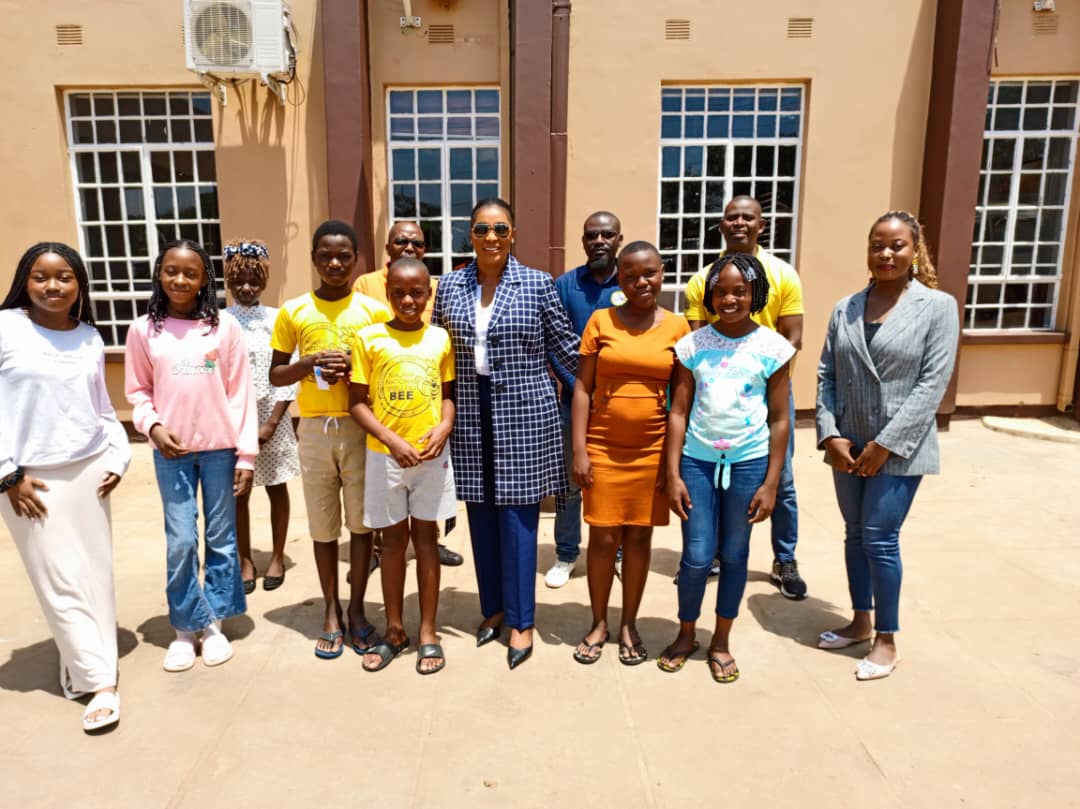
    Philanthropist and businesswoman, Triephornia Thomson Mpinganjira has drummed up support for the six young Malawian children who are going to represent the country at the Africa Spelling Bee competition in Uganda next week.

    Triephornia, wife to business mogul, Thom Mpinganjira, made a surprise visit to the Team’s camp in Lilongwe Wednesday to motivate them to do well at the competition after donating some air tickets to the travelling team.

    “I just wanted to encourage them because this is something big for the nation and I even challenged them to bring the trophy home because they can do it,” she said in an interview after the visit.

    The Malawi Spelling Bee Team who are in the age range of 8-17 leaves the country on Tuesday next week through Kamuzu International Airport to take part in the competition in Kampala, Uganda, which runs from 6-9 December 2023 and is expected back home on 11 December 2023. The team will be accompanied by officials and members of the press.

    In her motivational speech to the team, Mpinganjira pledged to give the team a ‘special convoy’ from her Diplomats Car Hire to ferry them to Airport and shuttle them back.

    “From today onwards, I would like to be part of the Spelling Bee competition. We will support it from the grassroots and to any level that it gets to in the coming two, three or even 10 years,” she said.

    One of the six children taking part in the competition, Michelle Makwelero from Kamuzu Academy said the visit by Mpinganjira has boosted their confidence.

    “I feel more confident and encouraged. I have a strong motivation that I have to bring back home the trophy. This is not only for me, but for every Malawian out there,” she said.

  • NBM plc reaches out to students on savings

    NBM plc reaches out to students on savings

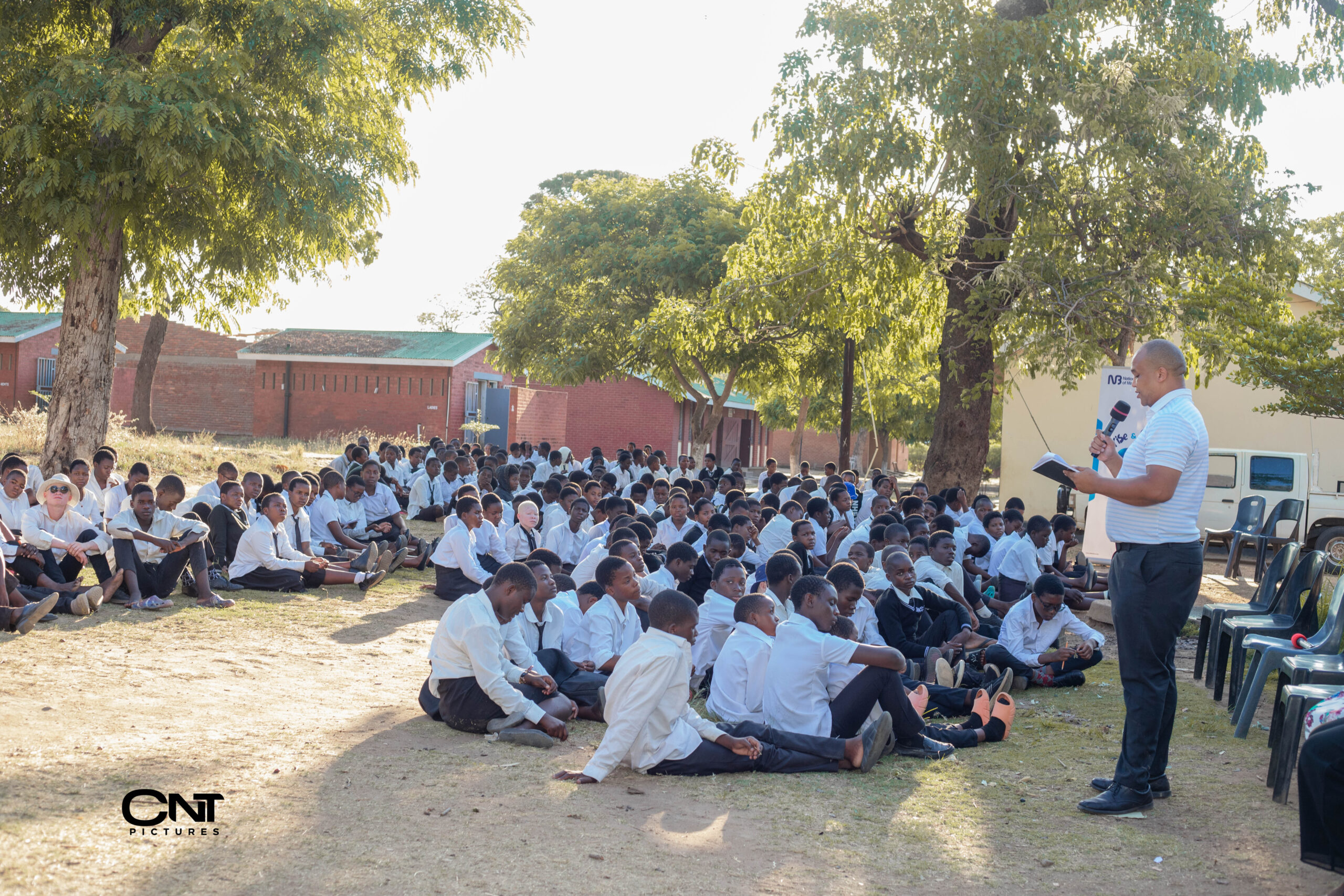
    National Bank of Malawi (NBM) Plc recently reached out to about 10 Secondary Schools across the country where it engaged students on the benefits of savings and financial literacy.

    NBM plc to reached out to 10 secondary schools in namely Bwaila, Dowa, HHI, Chiradzulu, Mangochi, Liwonde, Kaseye Girls, Mnjiri, Ngabu, and Mwanza during a savings awareness week which was held from 6-10 November 2023 organised by the Reserve Bank of Malawi (RBM) in partnership with the German Savings Bank Foundation (DSIK).

    During the campaign, RBM tasked Banks to reach out to people especially students with financial literacy and savings messages.

    NBM’s Lilongwe Service Centre Manager, Maureen Gwembere said the Bank managed to fulfil the task which also provided a chance for them to grow their brand and also opened accounts for some students.

    “We used different methods to disseminate the message to the youths and students. We interacted not only with the students, but also teachers and other staff members in the schools, where we made presentations on Personal Finance Management, Savings for a better tomorrow, and how to manage ones’ finances.”

    “Apart from the presentations, we used different approaches including a knowledge quiz based on the presentations, dance competitions and prize presentations. The dance competitions were designed to leave a lasting impression on the students that saving and partnering with financial institutions on this journey is not always formal and boring but can be mixed with fun and showcasing of one’s social talents as part of young people’s lifestyle,” said Gwembere.

    On his part, Mwanza Secondary School headteacher, Henry Saka commended NBM plc for the visit saying most students were not aware that they can own accounts and save money.

    “The impact of the visit was positive because most of the students were not aware of the significance of saving money. Even teachers benefited from the visit as, apart from having accounts with various banks, they didn’t understand the importance of saving money for the future. We are growing and definitely one day we will not be as active as we are, therefore the money we save now will save us during those times,” said Saka.

    Saka further commended NBM plc for the approaches taken to spread the message to the students, saying even the gifts they won during the competitions and quiz will always remind them of the message about financial savings.

  • PIL donates textbooks to Mchinji school

    PIL donates textbooks to Mchinji school

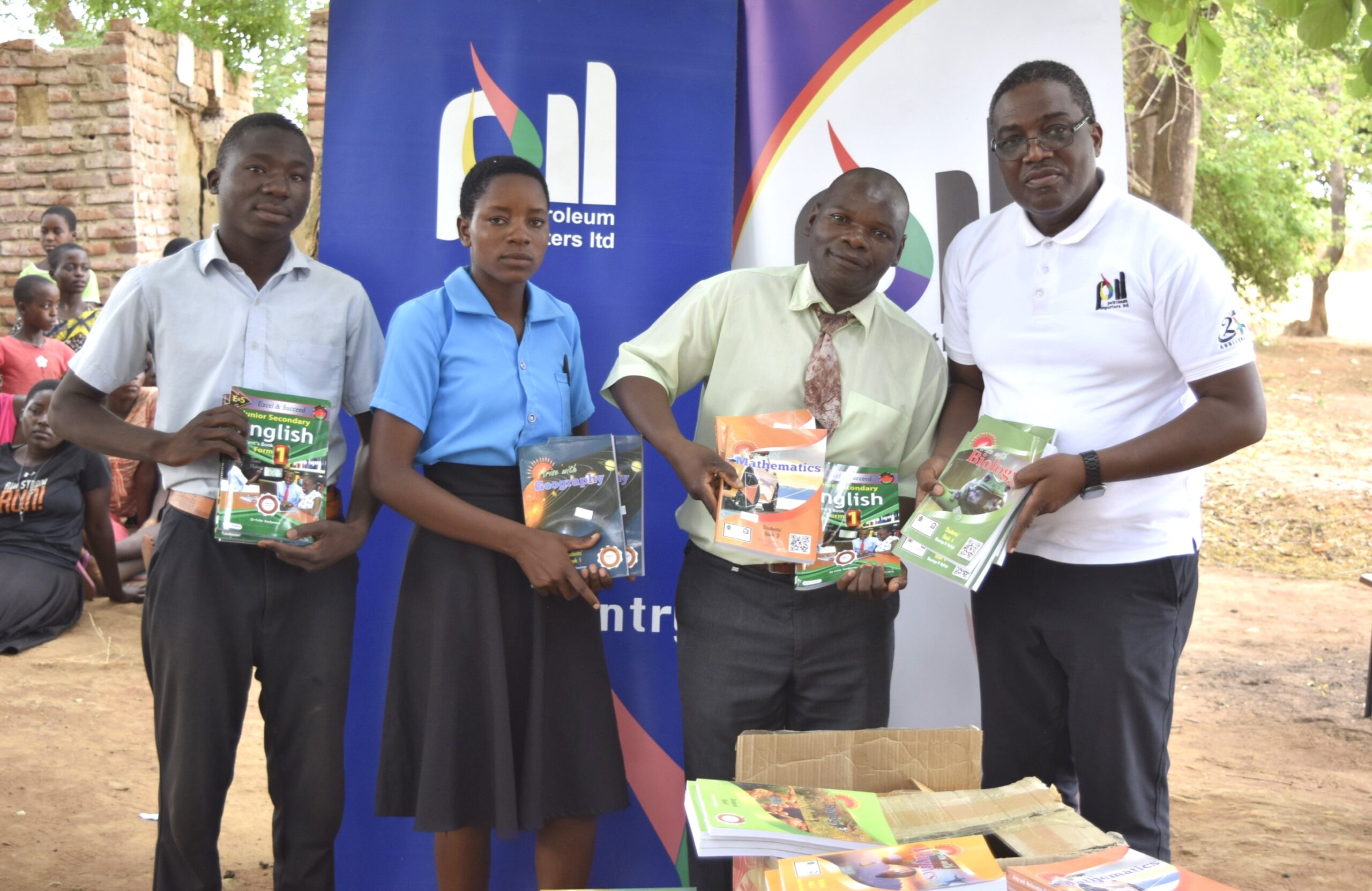
    Petroleum Importers Limited, a consortium of four oil marketing companies in Malawi, has donated 405 textbooks worth K4.5 million to Takondwa Community Day Secondary School in Mchinji.

    Speaking after presenting the books, PIL General Manager Martin Msimuko said the company which comprises Puma, Total Energies, Vivo Energy, and Petroda, felt the need to help the school as part of its corporate social responsibility.

    “As a company, we commit to supporting the health sector, education, and safety. We all know that education requires collaborative effort because the Government alone cannot manage to supply all the needs. We believe that our contribution to the development of education will go a long way in motivating these students to work hard and pass with flying colours because we have brought textbooks for different subject codes and all classes.”

    “Our hope is that the students and teachers will take care of the books so that they also benefit the other crop of students coming behind them,” said Msimuko.

    Takondwa Community Day School deputy headteacher Samson Fredrick Katchere commended PIL for the donation saying books were part of the numerous problems the school is facing.

    “We teachers are curriculum implementers, but it becomes a problem when you do not have proper and enough materials to achieve that. This support will enhance learning and teaching at our school,” he said.

    The school’s head girl, Verina Henry, also thanked PIL for the donation saying it will help girls to work hard in class.

    “We face a lot of challenges as girls, and to have proper books for our studies means we will be able to study after classes. We commend PIL for choosing to help our school,” said Henry.

    According to the deputy headteacher, Takondwa CDSS has 280 students with 16 teachers. Only four of the teachers are housed at the school, while the rest stay at Kalulu Trading Centre, a distance of about eight kilometres.

  • Good infrastructure improving ECD enrollment, NBM plc supports Yamba Malawi in project

    Good infrastructure improving ECD enrollment, NBM plc supports Yamba Malawi in project

    Some three-hour drive from Mangochi Boma to Ntonda, there lies a beautiful structure one would think is a house of the head teacher for some primary school. But it is a Community Based Childcare Centre (CBCC).

    Traditional Authority Ntonda calls the structure ‘Ku tauni’ (Town) and discloses that people around the village patronize the structure for wedding photoshoots during weekends because it has transformed the face of the village.

    Such is the case with other four centres: Kalira in Mitundu and Chilowa in Kasiya, Lilongwe, and Kapandajuba at Ekwendeni in Mzimba where new structures comprising two classes, and an office for caregivers lie some meters away from the dilapidated structures being used by the children aged between three and six.

    The four centres are part of Yamba Malawi Early Childhood Development (ECD) projects funded by National Bank of Malawi (NBM) plc to the tune of K100 million.

    Christina Izeki, a Caregiver at Ntonda CBCC, said last academic year they had 103 children. This year they have registered over 70 with more coming every day and expect the number to surpass last year’s figure.

    “The structure we were using is thatched with grass and no cement on the floor if you compare with the new one National Bank of Malawi plc in partnership with Yamba Malawi has built. It was so inconveniencing especially when it was raining because we would suspend classes for as long as two weeks until it stopped raining,” she narrates.

    At Chilowa in Kasiya, Lilongwe, chairperson of the CBCC, Henry Mponda, says they started working with Yamba Malawi in 2020 where they realized the importance of early child development.

    “The new structure has ignited interest from the children to be in class and we expect this to help improve their performance at primary school level,” he says.

    Martha Silumbu, a caregiver at Kapandajuba CBCC in Ekwendeni, Mzimba expects enrolment to increase from 42 children because the new structure is able to carry more pupils.

    Old classroom at Chilowa CBCC

    “The old structure was not suitable for a classroom because it had cracks and parents feared the room could collapse on their kids. But with this new structure, it gives confidence to the parents to send the kids to learn as we prepare them for primary studies.”

    “A kid who has attended ECD classes is different from those who haven’t, because this is a preparatory stage where we train them not only to memorize things, but also to socialize with others. So, if they graduate to primary school, they are already used to school set up,” explains Silumbu.

    At Kalira in Mitundu, Herbert Chikumbe, director of Luzi Community Based Organization where Kalira CBCC falls under, discloses that the structure is now a model for 114 other CBCCs under his jurisdiction.

    “We expect children from other villages to enroll at this school once opened because we demolished the old sub-standard one. However, I can confirm that other CBCCs have started mobilizing materials with the hope of finding funders for their projects just as Yamba Malawi did with Kalira CBCC,” he says.

    Yamba Malawi Grants Manager, Sothini Ziba commends support from NBM plc. He says the organization has 96 CBCCs in its catchment and less than eight are improved structures.

    “We support an average of 65 kids per CBCC varying around school calendar, community, incentives programs and high interest by the kids in more organized facilities,” he says.

    With the ECD week hosted by the Ministry of Gender, Community Development and Social Welfare coming early November under the theme ‘Nurturing Bright Futures: Promoting Access to Integrated Early Childhood Development Services’, the ministry’s spokesperson, Pauline Kaude also commends NBM plc for their commitment in promoting education from grassroot.

    “What National Bank of Malawi plc has done is exactly what the Ministry of Gender, Community Development and Social Welfare is expecting from the corporate world to support early childhood education in this country.”

    “If you read through our policy, it is the role of every individual, companies and government to support and promote Early Childhood Development (ECD).”

    “ECD is an investment that gives back to society. To address economic challenges, there is a need to improve educational performance as a way of building vibrant human capital in Malawi,” she says.

    National Bank of Malawi plc Marketing and Corporate Affairs Manager, Akossa Hiwa, says their commitment to aid Early Childhood Development is one among many of the Bank’s initiatives to develop the nation and give back to the clientele that help them grow.

    “We believe that the support we have given to Yamba Malawi will improve its service delivery for the development of children in need. Because Early Childhood Development is an important component of an individual’s subsequent development and education, we felt it right and proper to commence our expansion through this avenue.”

    “We value child development, because we believe that well-developed children will grow into productive citizens that will develop our country and benefit the Bank,” she explains.

    NBM plc and Yamba Malawi signed the agreement in December last year and the project is expected to benefit more than 300 children per intake.

  • NBS Bank commits to school feeding programme

    NBS Bank commits to school feeding programme

    NBS Bank has said it is committed to supporting the primary school feeding program because it believes the program can accelerate primary school education in the country.

    NBS Bank Head of Marketing and Customer Experience Tamanda Ng’ombe said in a statement that the Bank committed K20 million towards Mary’s Meals’ school feeding programme for four years because among other things, the program will help to keep children in school.

    “The dropout rate and absenteeism of school pupils reduces significantly whilst the pass rate rises when a meal is provided because it increases their concentration in the classroom,” said Ng’ombe.

    Speaking recently during the commemoration of World Porridge Day in Blantyre, Mary Meals, Head of Strategic Partnerships and Communications Mona Lisa Bandawe said the organization recognizes the magic in a cup of porridge, especially to children.

    “That cup of porridge changes the children’s lives, especially in rural areas and those in urban areas but are hungry every day. When they have that cup of porridge it makes them active in class, and also gives them the energy to do their work.”

    “Mary Meals Malawi is currently feeding over one million children, but with other partners, we are reaching up to 40 percent of school-going children which means 60 percent of children in Malawi still need to be reached with food at school,” said Bandawe.

    In his remarks, Blantyre City South Constituency member of parliament Noel Lipipa asked those interested in funding school feeding programs to join hands with Mary Meals.

    “We don’t need to have many school feeding programs, Mary Meals has demonstrated to us as Malawians that they can effectively handle this program,” said Lipipa.

    Standard Eight learner at the school, Astice Banda, thanked Mary Meals for the feeding program.

    “This cup of porridge has helped so many learners that used to abscond classes because they were hungry,” she said.

    World Porridge Day was established by Mary Meals in 2009 and is celebrated annually on October 10.