Category: News

A wonderful serenity has taken possession of my entire soul, like these sweet mornings of spring which I enjoy with my whole heart.

  • The long journey to Parliament

    The long journey to Parliament

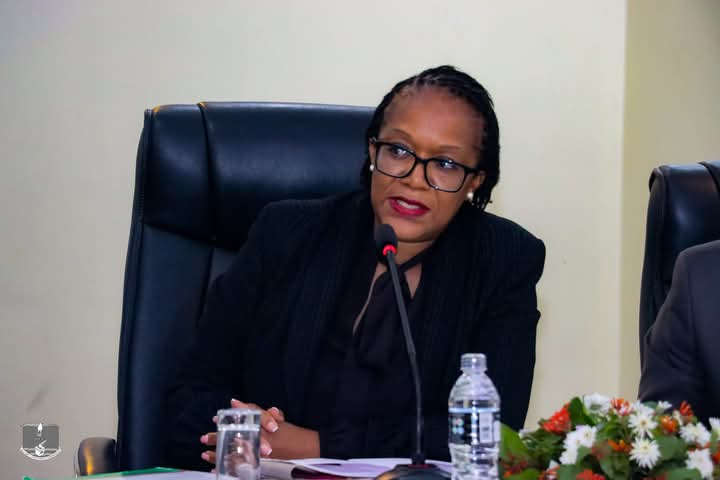
    Patricia Wiskes, a first-time candidate, beamed with pride as she celebrated her victory in Malawi’s 2025 Parliamentary elections for Lilongwe City Nankhaka constituency. Despite facing insults from some male aspirants during rallies, Wiskes’ determination and support from her political party, the Democratic Progressive Party (DPP), propelled her to success, she says.

    “I remember moments when I felt like giving up, but I knew I had the support of my community and party,” Wiskes said. “I invested less than MK 15 million in my campaign, but the support from my party and the community was invaluable.”

    Wiskes’s journey was not without challenges. She faced skepticism from some community members who doubted her ability to lead. But she persevered and focused on her message of development and change.

    “As a woman, I knew I had to work twice as hard to prove myself. But I believe in my abilities and the support of my community. I’m proud to be a role model for young girls and women in my constituency,” said Wiskes who quit her job at Parliament earlier this year to join politics.

    The motivation?

    “I was moved by the many challenges that Nankhaka [constituency] continues to face despite being a Malawi Congress Party [MCP] stronghold, poor road infrastructure, lack of access to healthcare facilities, poor sanitation in schools and market places, and lack of incentives to empower women and youth. Now, I grew up in Area 49 facing and witnessing all of these issues and I believe there has been little or no political will from our leaders. This time around, I want to be part of the team that will bring solutions to these problems.”

    Wiskes contested against six others including two women and amassed 6582 votes while the runner-up former Lilongwe City Centre MP Alfred Jiya of the MCP got 5860 votes.

    In the Central Region district of Ntchisi Central East, Olipa Chimangeni, a third time candidate, also triumphed and her optimism and development initiatives in the area paid off. She claims to have invested around MK 30 million in her campaign, which included bringing water, schools, electricity, bridges, and roads to her constituents.

    Olipa Chimangeni, Member of Parliament for Ntchisi Central East

    “I’ve always believed in myself and my ability to make a difference in my community. I’ve worked hard to develop my constituency, and the people have recognised my efforts. I’m proud to be a woman leader and to inspire other women to take up leadership roles.”

    She explains her motivation behind running for the third time. In Malawi, MPs have limitless terms.

    “I decided to contest for the third time because I’m motivated by the strong desire to serve and make a difference, pushing through challenges to achieve goals and also I want to finish the initiatives or projects that are yet to be completed.”

    Chimangeni’s message to fellow women was one of courage and resilience. “Never look down on yourself,” she advised. “Believe in your abilities and work hard to achieve your goals. Don’t let anyone discourage you from pursuing your dreams.”

    The success of these two women is a testament to the power of grassroots support and community engagement. Maggie Kathewera Banda, Women’s Legal Resources Center (WOLREC) Executive Director, noted that parties did not fully support their female candidates in this election. “The general picture is that, the support has been minimal. It’s almost like everyone within parties was focusing on their own survival. Most of the visible challenges were noted during primaries where women felt the processes were not fair and some opted to contest as independents. For a long time women have been complaining lack of general support in various forms,” she said.

    Kathewera Banda added that “Political parties should support the enactment of a law which will promote quotas for women. Countries that have done well have affirmative action in place.”

    However she was quick to point out that there were reduced cased of violence against women in the election. “In this election we have not seen much of violence. Parties committed themselves to work with their supporters to prevent violence against women in politics. This has been a success because during the campaign period we only received two cases.”

    Shadreck Namalomba, DPP Spokesperson, highlighted his party’s commitment to supporting women. “Our party understands the power of women, which is why we have a woman as Vice President of the country,” he said. “We believe in empowering women and providing them with opportunities to lead.”

    However, Emma Kaliya, a women’s activist, emphasized the need for parties to be held accountable for their support. “We need to revise party policies and ensure they prioritize women’s empowerment,” she said. “Women’s participation in politics is not just about numbers; it’s about creating an enabling environment for them to succeed.”

    Wonderful Mkhutche, a political analyst, believes the time has come to support women in all aspects of life. “We need to recognize the value women bring to politics and support their participation,” he said. “Women have a unique perspective on issues affecting their communities, and their voices need to be heard.”

    As Wiskes and Chimangeni begin their journey in Parliament, they serve as inspirations to women across Malawi. Their stories demonstrate that with determination, hard work, and community support, women can overcome barriers and achieve success in politics.

    “I hope my story will inspire other women to take up leadership roles,” Wiskes said. “We need more women in politics to ensure that our voices are heard and our perspectives are represented.”

    Chimangeni added, “I’m proud to be a woman leader, and I hope my success will encourage other women to pursue their dreams. We need to support each other and work together to create a better future for our communities.”

    The journey to Parliament may be long and challenging, but for Wisikes and Chimangeni, it’s just the beginning. With their determination and resilience, they’re poised to make a difference in the lives of their constituents and inspire a new generation of women leaders.

    According to the Afrobarometer Round 6 Surveys of 2014 in Malawi, women in Malawi face significant barriers to political participation, including cultural and social norms that discourage women from taking on leadership roles. However, the study also found that women who are supported by their communities and parties are more likely to succeed in politics, almost 6 people in every 10 in Malawi believe that women should have same chance as men for leadership positions.

    \According to the Malawi Electoral Commission (MEC) 2025 general elections official, there are 49 female Members of Parliament in Malawi’s 229-member National Assembly representing 21.3% of the total number of MPs.

    This is a slight increase from the previous parliament which had 40 female MPs.


  • False: Uladi Mussa has not resigned from MCP

    False: Uladi Mussa has not resigned from MCP

    Some online reports indicate that Malawi Congress Party (MCP) national executive committee member Uladi Mussa has resigned from the party, and subsequently retired from active politics.

    According to the reports, Mussa’s resignation is due to the party’s poor performance in the just-ended September 16 general elections.

    However, this publication has found that those reports are false.

    In an interview, Mussa stated that he remains an MCP member and has no intention of resigning from the party or retiring from active politics.

    “They are even claiming that I contested as a parliamentary candidate, but the truth is that I did not contest in the recent elections,” he said.

  • MEC nullifies Lilongwe City Bwaila Constituency’s Parliamentary results

    MEC nullifies Lilongwe City Bwaila Constituency’s Parliamentary results

    By Patricia Kapulula:

    The Malawi Electoral Commission (MEC) has nullified results for the Lilongwe City Bwaila Constituency following irregularities in handling void votes.

    The Commission has since recommended a bye-election at a date to be announced later.

    According to unofficial results, Kabambe Precious Pempho Gama of Malawi Congress Party (MCP) had 8,199 votes seconded by Hellen Zalira Chabunya of UTM who had 6,387 votes. Mike Chimzukira of Democratic Progressive Party (DPP) 7974 while independent candidate Henry Muyaya got 3,670 votes.

    Speaking during the Stakeholder Update on the Declaration of the Parliamentary Election results at the Bingu International Convention Centre (BICC) in Lilongwe Monday night, Mtalimanja said the Commission received complaints from contestants for the constituency which necessitated the nullification.

    She said handling of the polling materials at the Council, especially void votes, departed from legally set procedures relating to void votes.

    “The Council Returning Officer did not have authority to prepare any record relating to a parliamentary election in the Council, examine void votes, and open tamper evident envelopes containing void votes,” she said.

    She said the conduct of the officer in opening the envelopes was a serious misconduct which has caused an irregularity hence the nullification.

    In accordance with Section 96(1) and (2) of the Presidential, Parliamentary and Local Government Elections Act, the Commission is supposed to examine votes classified as void at the polling stations and to affirm or correct the decisions of the Presiding Officers if their total is significant to change the election results.

    The Commission is expected to announce local government elections results within 21 days from the polling day.


  • Airtel Africa’s AI Spam Alert Flags Over 205 Million SMS’ in Six Months

    Airtel Africa’s AI Spam Alert Flags Over 205 Million SMS’ in Six Months

    Airtel Africa has on Tuesday announced that its Artificial Intelligence (AI)-powered Spam Alert service has detected more than 205 million spam SMS messages across 13 of its 14 markets in just six months.

    The free service, which is automatically available to all Airtel subscribers, warns users of suspicious text messages by tagging them with a “SPAM Alert” notification.

    Since its rollout, Kenya has emerged as the biggest hotspot, with 68 million spam messages flagged, followed by Tanzania at 47 million and Zambia with 33 million. In Malawi, where the service launched in July 2025, over 8 million messages have already been identified as spam.

    Overall, Airtel Africa reports a 12% decline in spam activity, with Nigeria leading the way, having recorded an 84% reduction in unwanted SMS since the system’s introduction.

    Airtel Africa Chief Executive Officer, Sunil Taldar, said the service reflects the company’s commitment to harnessing advanced technologies for customer safety.

    “We are proud to pioneer an advanced tech solution powered by AI in tackling spam messages that are a major concern in Africa as smartphone penetration increases. This free service is yet another demonstration of our commitment to consistently innovate to deliver an unmatched experience and safer network to our customers,” Taldar said.

    The Spam Alert system, currently active in 13 countries including Nigeria, Kenya, Uganda, Tanzania, Zambia, Malawi, Rwanda, Madagascar, Gabon, Congo Brazzaville, Chad, DRC, and Niger, uses AI to analyse SMS in real time. The system classifies messages as spam based on sender behaviour, usage patterns, and frequency.

    With cyber threats and fraudulent schemes on the rise, Airtel Africa says the Spam Alert service is a key step toward ensuring a safer digital environment for its more than 150 million subscribers across the continent.

    The telecommunications company is expected to launch the service in Seychelles next.


  • MEC to conduct parliamentary re-elections in four constituencies

    MEC to conduct parliamentary re-elections in four constituencies

    By Pempho Kantayeni: 

    Malawi Electoral Commission (MEC) Chairperson Justice Annabel Mtalimanja has announced that the Commission aims to finalize the announcement of parliamentary election results by Tuesday, September 30.

    She was speaking at the National Tally Centre at the Bingu International Convention Centre (BICC) in Lilongwe Monday evening.

    Mtalimanja noted that elections in several constituencies were suspended and will require re-runs due to various issues.

    In Blantyre West Constituency, the election was halted following the death of a Malawi Congress Party (MCP) candidate, Michael Isaac Chisala.

    In Nkhotakota Liwaladzi, the process was paused after candidate Daniel Binda petitioned the court to review MEC’s decision to reject his nomination papers, citing underpayment of nomination fees.

    Similarly, in Dedza Mtakataka Constituency, Dr Charles Sandramu challenged MEC’s rejection of his nomination papers on the same grounds, prompting a judicial review.

    Meanwhile, in Lilongwe Mtandire-Mtsiriza Constituency, although voting took place, MEC has nullified the results.

    The decision followed a complaint regarding the handling of invalid votes, which were reportedly opened at the district council level contrary to MEC’s established procedures.

    “All invalid votes must be processed through a proper procedure. In this case, they were opened at the district council, which violates our rules. As a result, the Commission has resolved to conduct a fresh election in the constituency,” said Mtalimanja.


  • NICE salutes Malawi’s peaceful transition of power 

    NICE salutes Malawi’s peaceful transition of power 

    The National Initiative for Civic Education (NICE) Trust has commended stakeholders for a peaceful transition of power, calling it a momentous milestone in Malawi’s democratic trajectory.

    In a statement released on Monday and signed by NICE executive director Gray Kalindekafe, the Trust also congratulated president-elect Arthur Peter Mutharika on his victory in the September 16, 2025 General Elections.

    “This juncture is not merely a routine political transition, it is a profound reaffirmation of the sovereign will of the people, the institutional fortitude of our republic, and the indelible promise of democratic continuity.

    “We salute the citizenry of Malawi for their impressive participation, their utmost vigilance, and their steadfast belief in the sanctity of the ballot. Their voices have reverberated across the nation, illuminating the path forward with a strong commitment to democratic ideals and constitutionalism,” reads the statement in part

    Kalindakafe further saluted outgoing president Lazarus Chakwera for a “dignified acceptance of the electoral verdict symbolizes great statesmanship” which demonstrated “unmatched humility, patriotism, and reverence for democratic norms.”

    He added, “his conduct has reduced tension, enhanced national cohesion, and facilitated a seamless transfer of power, an act that shall be permanently marked in Malawi’s political history as a model of democratic maturity.”

    Further, NICE Trust commended the Malawi Electoral Commission (MEC), under the astute stewardship of its Chairperson, Justice Annabel Mtalimanja, alongside the Commissioners and staff, for their professionalism, resilience and integrity.

    “Amidst logistical complexities and heightened public scrutiny, MEC executed its mandate with commendable transparency, impartiality and procedural rigor. Their unwavering dedication has increased public confidence and established a formidable benchmark for electoral probity across the region.

    “We also acknowledge the great contributions of civil society organizations, the media, security apparatuses, and both domestic and international observers. Their collaborative vigilance and unwavering dedication ensured that the electoral process remained inclusive, peaceful and accountable. Collectively, they constitute the bedrock of a democratic ecosystem that continues to flourish and evolve with each

    “As we usher in a new dispensation, we implore President-elect, Professor Arthur Peter Mutharika to govern with magnanimity, discernment and unwavering commitment to national unity. We urge him to embrace all Malawians, irrespective of political persuasion, ethnic heritage, religious creed, or regional inclination, and to prioritize reconciliation, equitable development, and the restoration of collective hope.

    “The destiny of Malawi hinges on a leadership that listens with empathy, governs with integrity, and inspires with vision in pursuit of the goals of the Malawi 2063. In this spirit, we emphatically call upon the incoming administration to elevate civic education as a national priority.

    “An informed citizenry is the cornerstone of a resilient democracy. Investing substantially in civic education will not only empower Malawians to engage meaningfully in governance and public discourse, but will also insulate our society against misinformation, apathy and democratic erosion.

    “Civic literacy must be woven into the fabric of our national development strategy, reaching schools, communities and institutions alike. Civic literacy enhances public service delivery. We encourage the incoming administration to strengthen democratic governance, amplify civic education, and safeguard the inalienable rights and liberties enshrined in our Constitution.

    “NICE Trust remains resolutely committed to partnering with all stakeholders to deepen civic consciousness, catalyze inclusive dialogue, and empower citizens to actively shape the trajectory of our nation. Let this peaceful transition serve as a beacon to the global community, a testament to what Malawi can accomplish when unity supersedes division, principle transcends partisanship, and patriotism eclipses personal ambition,” he said


  • MEC nullifies Mtandire Mtsiliza constituency elections

    MEC nullifies Mtandire Mtsiliza constituency elections

    The Malawi Electoral Commission (MEC) has nullified the elections for Mtandire Mtsiliza Constituency, following complaints by Malawi Congress Party (MCP) candidate George Zulu.

    Unofficial results showed that Zulu lost to Democratic Progressive Party (DPP) candidate Alfred Gangata with 5 votes. He got 12 284 votes while Gangata had 12 289 votes.

    According to MEC letter to Zulu’s lawyer Pempho Likongwe, the Commission will hold a by-election in the same manner as if there was a vacancy.

    Likongwe has confirmed having received the letter.

    Among others Zulu complained of harassment of monitors by MEC officials, and demanded a complete recount of parliamentary ballot papers.

    “Kindly be informed that the Commission has had the occasion to consider the complaint and has formed the view that the handling of the polling materials, at the Council, especially the void votes departed from legally set procedure relating to the handling of void votes.

    “The Council Returning Officer did not have the authority to prepare any record relating to a parliamentary election the Council, examine void vote and open tamper evident envelopes containing void votes.

    “The conduct of the Council Returning Officer in opening the tamper- evident envelopes and purporting to examine the void votes was a serious misconduct and has caused a serious irregularity. In view of these findings, the Commission has been rendered unable determine the results with certainty and has, therefore, resolved that the parliamentary election in the constituency be nullified or cancelled,” reads part of the letter signed by MEC Chairperson Annabel Mtalimanja

  • NBM, Portland Cement partner on cement distributor financing solution

    NBM, Portland Cement partner on cement distributor financing solution

    National Bank of Malawi (NBM) plc, in partnership with Portland Cement Malawi Limited, has launched a cement distributors’ financing solution aimed at empowering retailers and distributors in the construction sector.

    The initiative, launched under the theme ‘Building Malawi Together: A Landmark Partnership for Growth’ on Friday, is set to enhance access to affordable credit in anticipation of increased cement supply from Portland Cement’s soon-to-be-commissioned Balaka Integrated Cement Plant.

    Speaking during the launch ceremony, NBM plc Head of Retail Banking Division, Oswin Kasunda, described the partnership as a significant milestone that underscores the Bank’s commitment to driving growth in Malawi’s construction industry.

    “This is indeed a landmark partnership, and that phrase has been repeated time and again for good reason. It underlines our shared commitment to stimulate growth and development in the construction sector,” said Kasunda

    Kasunda emphasised that the Memorandum of Understanding (MoU) signed between the two institutions is a strategic response to existing industry challenges such as distribution inefficiencies, cash flow constraints, and limited financial options for small and medium players.

    “This strategic partnership demonstrates our mutual commitment to foster economic growth, recognizing the critical role cement plays in the construction sector. The role of the Bank is to provide financial facilities, while Portland Cement Malawi Ltd. focuses on production, and the two institutions have signed a Memorandum of Understanding to enable distributors, retailers, homebuilders, and contractors to obtain credit from National Bank to continue growing their businesses.”

    “One of the standout features of this partnership is a credit package tailored specifically for Portland Cement Malawi, distributors and retailers. The package includes payment guarantees and overdraft facilities, with a maximum limit of K100 million being offered without the need for collateral,” said Kasunda.

    Portland Cement Malawi Ltd, Chief Executive Officer (CEO) Liu Alex Jianguo emphasised the importance of partnerships in empowering distributors and retailers.

    “As we prepare to commission our Balaka Integrated Cement Plant next month, with a capacity of 800,000 tonnes per year, this partnership with National Bank of Malawi plc ensures our distributors and retailers are empowered and equally ready. Together, we are building resilience, unlocking opportunities, and contributing to Malawi’s Vision.” Said Jianguo.

    One of the customers of Portland Cement Malawi Ltd, Bosco Twaibu, expressed optimism about the new partnership between Portland Cement Malawi Ltd. and NBM plc, stressing its potential to enhance their business operations.

    “As I manage this business, everything else is progressing smoothly. But with the support of National Bank of Malawi plc, we will be able to broaden our vision, and I am confident that our business will grow and expand,” said Twaibu.


  • Airtel Africa Pledges to Improve 10 Million Lives by 2030

    Airtel Africa Pledges to Improve 10 Million Lives by 2030

    Airtel Africa Foundation has set an ambitious target to improve the lives of 10 million people across the continent by 2030. The goal has been set after unveiling a new strategy that focuses on financial empowerment, education, environmental protection, and digital inclusion.

    The philanthropic arm of Airtel Africa plc announced the plan on Friday in Lagos, with Chairman Dr. Segun Ogunsanya describing it as a commitment to shaping Africa’s future.

    “Our 2030 vision is a transformed Africa where over 10 million lives are directly improved through our interventions. We are building a pipeline of talent and fostering innovation to ensure the global digital revolution leaves no African behind.” Ogunsanya said.

    The Foundation will drive its mission through signature initiatives such as Connecting Schools, which offers free internet and devices, and the Airtel Africa Fellowship, which provides full scholarships in STEM fields, coupled with mentorship and internships.

    So far, a partnership with UNICEF has already connected more than 1,800 schools, benefitted over a million students, and trained more than 17,000 teachers in digital learning across Airtel Africa’s 14 markets.

    The Foundation also plans to expand its Employee Volunteer Programme, using staff expertise to support community projects in countries including Nigeria, Zambia, Malawi, Rwanda and the Democratic Republic of the Congo.

    Airtel Africa’s Chief Executive Officer, Sunil Taldar, said the initiative underscores the company’s belief that business success and social progress must go hand in hand.

    “We cannot thrive in a place that is not thriving. Helping to connect the unconnected, bank the unbanked, and enable businesses and economies to grow are the three most significant objectives of our business.” he said.

    With its new roadmap, Airtel Africa Foundation hopes to position itself as a driver of long-term change by combining corporate philanthropy with sustainable development.

  • Mutharika’s heroic comeback after five-year hiatus

    Mutharika’s heroic comeback after five-year hiatus

    By Wanangwa Tembo:

    When Arthur Peter Mutharika announced his comeback to the political stage to be the Democratic Progressive Party torchbearer in the September 16 General Elections, not many people expected the Professor of Law to rewrite the script so decisively.

    Five years after being voted out in 2020, the former president has returned as head of state, clinching a clear victory even when opinion polls signaled the inevitability of a runoff.

    It is a dramatic reversal of fortune because Mutharika, not only reclaimed power from Lazarus Chakwera of the Malawi Congress Party (MCP), but also set a political record of twice defeating incumbents, a wave blowing across Africa in recent years.

    Pre-election surveys by the Institute of Public Opinion and Research (IPOR) consistently showed Mutharika ahead of Chakwera.

    In the initial opinion survey, he polled 43 percent compared to Chakweras 26 percent — a 17-point lead that, while narrowing slightly in subsequent polls, remained substantial.

    Analysts also predicted a runoff, arguing that no candidate would reach the 50 percent plus one vote (50%+1) threshold without meaningful alliances.

    Yet when ballots were counted, the narrative shifted: Of the 7.2 million registered voters, about 5,502,982 turned up at polling stations and Mutharika secured 3,035.249 votes representing 56.8 percent of total valid votes cast — surpassing the 50%+1 threshold outright.

    On the other hand, Chakwera got 1,765,170 votes, representing 33.0 percent of the total valid votes cast.

    For many ordinary Malawians like Steve Banda, a second-hand clothes vendor in Kasungu District, the results largely reflect accumulated frustrations under the MCP administration.

    “I am not surprised. Life had become so unbearable at the hands of the MCP and people wanted change,” Banda told Malawi News Agency.

    “Even in parliamentary elections, for example, MCP only managed five seats out of 11 constituencies in Kasungu and only four out of 10 in Dowa, yet these are MCPs strongholds. That says a lot,” he said.

    Mutharikas victory is also steeped in irony because just five years earlier, he was ousted in what many hailed as a democratic breakthrough after the Constitutional Court had annulled the disputed 2019 elections, forcing a fresh poll in 2020.

    Riding a wave of discontent that sparked countrywide demonstrations over an alleged mismanagement of elections by the Malawi Electoral Commission, Chakwera and the MCP-led Tonse Alliance defeated Mutharika in that fresh presidential poll.

    At the time, Malawians believed they were turning a page as Chakwera promised a new dawn, pledging to deliver economic transformation, job creation, and integrity in public service, an agenda he branded Hi5.

    However, Mutharika had one sentence for Malawians: “you will remember me sooner than later”.

    True to his word, the entire five years of Chakweras regime had been characterized by forex scarcity, fuel queues, inflation, fertilizer shortages, resulting in high cost of living.

    “This time, the burden of incumbency fell on MCP. What once cost Mutharika his presidency now served as the wind beneath his comeback,” said Mike Elioti, a voter in Kasungu District.

    In that sense, the 2025 election was less about a groundswell of nostalgia for the DPP than it was a referendum on MCPs record, he says.

    Mutharikas earlier presidency (2014—2020) oversaw some infrastructural expansion, including road projects and electricity generation efforts under the Malawi Rural Electrification Programme.

    His government also pushed digital reforms such as the Citizen Identity Registration exercise, seen as a milestone in modern governance.

    However, critics accused the administration of being aloof and slow to act in times of crisis, a perception Chakweras team leveraged effectively during the Tonse Alliance campaign.

    In the past five years, allegations of corruption and nepotism had weakened peoples trust while economically, the country struggled with persistent forex shortages, erratic fuel supply, and rising inflation, casting a long shadow over perceptions of accountability and the MCPs capacity to continue ruling.

    Despite joining the campaign late — three weeks after the official campaign period began — Mutharikas strategy was strikingly disciplined. He avoided the exhausting nationwide tours that Chakwera undertook, and opted for fewer but highly symbolic rallies in strategic areas.

    His message rarely wavered: the economy is in crisis, life is unbearable, and only his leadership can restore stability.

    “You made a mistake to vote me out in 2020, but I have forgiven you,” he told a cheering crowd in Ntcheu. “I accepted to come back so that I can rescue this country from the economic problems we are experiencing under the MCP.”

    At rallies in Mulanje and Katoto in Mzuzu City, he repeated the message that Malawi was in a “rotten state”, crippled by shortages and rising costs and presented himself as the saviour of a nation on the brink of collapse.

    Political analyst Wonderful Mkhuche also believes Mutharikas victory is more about public dissatisfaction with Chakwera.

    “Im not surprised because looking at surveys done by institutions like IPOR, they predicted that Mutharika would lead the race. So the results are simply confirming what was already concluded by those surveys.

    “Mostly, the vote the DPP has gotten is a protest vote. People voted for the DPP because MCP failed to fulfill what they promised,” Mkhuche said.

    He, however, warned that the DPP must not take its victory and the voters for granted, saying the votes have been given on condition that the party acts better than the MCP.


    “The DPP we have today is the same that was voted out of power in June 2020. The challenge they have today is that they should reform themselves and identify people they can work with, in order to fulfill whatever, they have promised.


    “For the MCP, they led an economy that wasnt responding to peoples needs. We could see that there was no fertilizer, sometimes no sugar, no fuel, increasing prices of goods and services; everything was not going well for the economy and people felt they should go for another party with an expectation that it will act better,” he said.


    Promise of renewal


    Among other things, the DPP Manifesto promises increased Constituency Development Fund to at least K5 billion per constituency every year, K200 million for women and youth businesses and free secondary education.


    Additionally, the manifesto promises houses for civil servants, rebuilding the economy, ending energy problems and ending extravagance by appointing a lean cabinet and reducing funding for State Residences.

    Such promises, though familiar in Malawian politics, were packaged as a new deal — a chance for voters to reset after five turbulent years.

    And interestingly, despite persistent attacks on his age, Mutharika managed to command significant youth support. IPOR surveys suggested that about half of youthful voters leaned toward him, an extraordinary figure given that more than 60 percent of Malawis population is under 35.

    Across Africa, these cases reflect a volatile electorate that is quick to punish failure, willing to recycle old leaders, and increasingly insistent that performance, not rhetoric, defines legitimacy.

    From a crowded ballot of 17 candidates, voters managed to locate the DPP leader, hoping for a better life.

    His return to State House is undeniably historic, but it comes with a heavy burden of expectations because for many voters like Steve Banda in Kasungu, patience may be thin.

    “People just wanted change and we will be happy if the change we have voted for, translates into real relief at household level,” he says.

    When the promises are fulfilled, Mutharikas second coming to presidency will be remembered as a final vindication of the need to “return to proven leadership”, the DPPs campaign slogan.

    For now, though, Mutharika re-enters Kamuzu Palace as a comeback hero — granted a rare second chance after a five-year hiatus.

    As he begins another five-year mandate, the stakes are high, celebrations loud, but the demand for delivery will be louder still, as he has inherited a deeply strained economy and a restless citizenry demanding quick results.