
Home Blog Page 3

Leaked ESCOM letter: Why Malawians need facts over haste

By Michael Manda – MZUNI Student:

The circulation of a purported government letter authorising a “No Objection” for ESCOM to proceed with the award of contracts for transformers and wooden poles has ignited a familiar storm in Malawi’s public discourse.

On social media and in political circles, the document is already being framed as proof of backdoor deals and corruption. But an objective reading of the facts suggests the story is far more complex, and that rushing to judgment may do more harm than good to accountability itself.

At face value, the leaked communication grants Electricity Supply Corporation of Malawi (ESCOM) authority to proceed with procurement processes for critical distribution infrastructure. “No Objection” letters are standard in Malawi’s procurement system.

Under the Public Procurement and Disposal of Assets Act (PPDA), procuring entities like ESCOM must often secure approval from PPDA or the controlling ministry before awarding high-value contracts. The letter, therefore, signals administrative clearance, not an award, not payment, and not evidence of personal enrichment.

What it does not show is equally important: no pricing details, no named bidders, no contract values, and no proof that procurement regulations were bypassed. Allegations of illegality, fraud, or circumvention of the law require more than a single letter. They demand tender documents, evaluation reports, comparative schedules, and PPDA audit trails. Without that bundle, the document is a clue, not a conviction.

A respected Malawian legal scholar, who spoke on condition of anonymity, argued that the bigger governance issue may be the leak, not the letter. “Effective public administration depends on confidentiality, trust, professionalism, and respect for institutional processes,” the scholar noted, emphasizing that selective leaking of internal communications, especially without accompanying context like tender files or evaluation minutes, creates misleading impressions and fuels speculation.

A prominent private legal practitioner echoed this, cautioning that Malawians have seen this pattern before: partial documents go viral, narratives harden online, and by the time full facts emerge, public trust is already eroded. In governance terms, that’s a cost Malawi cannot afford when institutions like ESCOM are already battling credibility challenges.

To understand why “transformers and wooden poles” matter, one must look at ESCOM’s operational reality. Malawi’s power utility has struggled for years with frequent outages, overloaded transformers, and vandalism of distribution infrastructure. Transformers and poles are not peripheral items; they are the backbone of grid stability. Delays in procuring them directly translate to longer blackouts for households and businesses in Lilongwe, Blantyre, Mzuzu and rural areas.

From a service delivery angle, the “No Objection” could be read as government trying to expedite processes that have historically slowed ESCOM’s response to infrastructure failures. Whether that expediency came at the cost of due process is exactly the question PPDA and the Anti-Corruption (ACB) are mandated to answer.

Where genuine concerns exist, Malawi has established oversight mechanisms: the PPDA to audit compliance, ACB to investigate criminal conduct, internal audit units within ESCOM and line ministries, and Parliament’s Public Accounts Committee for political oversight.

Renowned governance scholar Professor Fedex Houverghton argues this is where Malawi’s maturity as a democracy will be tested.

“Good governance demands not only vigilance but also fairness and adherence to due process,” he said. “We must resist the temptation to substitute suspicion for evidence and speculation for fact. The mature response is to seek full context, allow competent institutions to establish facts, and permit due process to take its course.”

Substituting Twitter threads for PPDA investigations weakens, not strengthens, accountability. It shifts focus from evidence to outrage, and from reform to retribution.

It would be inconsistent, and unfair, to hastily attribute corrupt motives to President Peter Mutharika without credible evidence. Throughout his tenure, Mutharika has publicly condemned corruption and pushed for transparency in public resource management. That does not make him immune from scrutiny, but it does mean accusations must be anchored in verifiable facts, not timing or political convenience.

The prudent questions are procedural, not personal: What is the full procurement file? Was PPDA approval granted after due evaluation? Were bidding rules followed? Did ESCOM’s internal controls function? Those answers lie with auditors and investigators, not with leaked screenshots.

To cap it all, Malawi’s democracy is healthiest when citizens demand answers and institutions provide them through lawful channels. If the ESCOM letter raises red flags, then PPDA should publish its review, ACB should state whether a probe is underway, and Parliament should demand a ministerial statement. Transparency after investigation builds more trust than leaks before it.

As Professor Houverghton puts it: “A nation that punishes first and investigates later ends up with fear instead of accountability. A nation that investigates first and punishes based on facts ends up with stronger institutions.”

The leaked letter requires facts, not a rush to judgment. Until those facts are on the table, Malawi’s response should be vigilance paired with patience, and criticism anchored in evidence.

FDH Bank plc injects K100m into Team Malawi’s Commonwealth Games

0

FDH Bank Plc has donated K100 million to the Malawi Olympic and Commonwealth Games Committee (MOCGC) to support Team Malawi’s preparations for the 2026 Commonwealth Games set to take place in Glasgow, Scotland, from July 23 to August 2.

Speaking during the cheque presentation ceremony on Wednesday, FDH Bank Plc Head of Personal Business Banking, Daniel Pinto Khamula said the contribution demonstrates the bank’s commitment to the development of sports and national growth.

“We look at it as a national duty. It is a patriotic thing to do, and so when these opportunities arise, and we have these needs, we believe that we need to take part in this,” said Khumalo.

He emphasised that the private sector has a responsibility to contribute to the country’s development, including supporting athletes who represent Malawi on international platforms.

“We don’t believe that this is something that other people need to do for us. We believe that as Malawians, we need to participate in our own growth, and as a bank, as it grows, we also believe that the nation should grow with us. So, this is a natural thing for us to do as FDH Bank,” he said.

Khamula added that the bank’s support goes beyond financial assistance, expressing hope that the sponsorship will motivate both current and aspiring athletes.

“We believe that as a corporate, we cannot exist outside our society. We need to participate in what is happening within our country. So, we hope that this continues to inspire the athletes and also inspire potential athletes,” he said.

Malawi National Council of Sports Acting Chief Executive Officer, Ivy Chinangwa, commended FDH Bank for the timely support, describing the donation as a major boost to Team Malawi’s preparations for the prestigious multi-sport event.

“Partnerships between the corporate sector and sporting institutions are critical in ensuring athletes have adequate resources to compete effectively on the international stage,” said Chinangwa.

Malawi Olympic Committee Vice President Francis Kakhuta-Banda also hailed FDH Bank for its contribution and appealed to other companies to emulate the gesture by supporting Team Malawi’s preparations ahead of the Games.

“Participation in international competitions requires substantial financial resources, and increased corporate support would help athletes focus on training and performance,” said Banda.

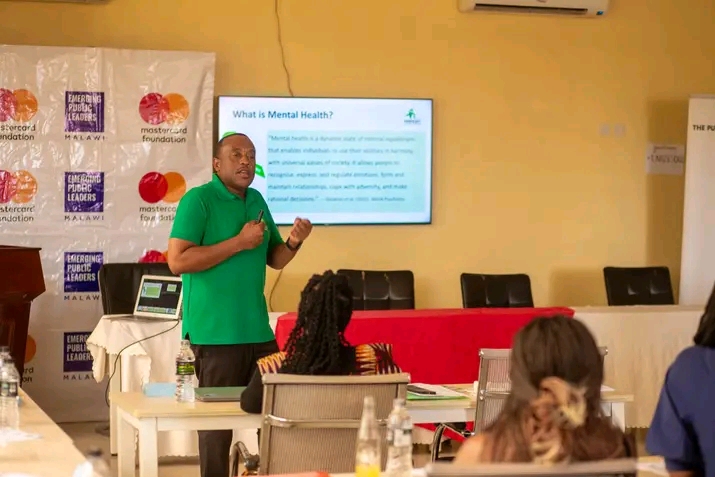
Mental Health: Breaking the stigma around men’s emotions

0

By Rebecca Mumba:

As Malawi commemorates Men’s Mental Health Awareness Month this June, statistics from Zomba Mental Hospital show that men accounted for 80.5 per cent of the 503 admissions recorded between January and March this year.

According to the hospital’s quarterly report, most of the 405 male cases are linked to mental and behavioural disorders associated with cannabis use.

Clinical psychologist Professor Chiwoza Bandawe attributes the high number of mental health cases among men to inability to open up emotionally.

He explains that more men tend to be admitted to mental health facilities compared to women because men tend to hide feelings. 

“Men tend to keep things in for long periods of time. They are socialised that way. From an early age, it becomes ingrained in them that asking for help is a sign of weakness. 

“As a result, it often takes a long time before they can accept that they have a mental health issue that needs addressing,” Bandawe says.

He adds that many men use alcohol and substances more intensely than women, which can lead to mental health issues.

Bandawe warns that there is a link between untreated mental health conditions and substance use which the men turn to as a way of coping.

“Use of substances makes the matter even worse. This often leads to emergency psychiatric admission, compounded by a range of other issues and challenges that men have kept inside and not expressed,” he says.

Observed every June, the Men’s Mental Health Awareness Month is dedicated to breaking the stigma around men’s emotions, challenging traditional views of masculinity and encouraging men to seek help for issues like depression, anxiety and stress.

Although Malawi’s population comprises more females than males at 51.2% and 48.8%, respectively, the Malawi Police Service (MPS) records more suicide cases among men than women annually.

MPS’s Deputy Director for Community Policing, Superintendent Alexander Ngwala, says in 2024 and 2025, the police recorded 597 and 565 cases of suicide, respectively.

“In 2024, 479 victims were men, 54 were women and 64 were children while in 2025, 434 men, 53 women and 68 children committed suicide,” Ngwala says.

Ngwala concedes that the police have a big challenge to deal with the high prevalence of suicide cases because they mostly emanate from unreported gender based violence against men which leads to depression.

“We have heard of men being beaten by their wives and sustaining injuries. Even emotional abuse –where married men are denied conjugal rights; and economical abuse in terms of being controlled by women on household finances.

“However, the men shun to report to police and other points of service delivery for unknown reasons. We read about it in newspapers. They sometimes commit suicide or react in a different way,” he says.

Ngwala advises that such men ought to present themselves at victim support units because the police provide psychosocial support to such men.

“In dire circumstances, we have a network of partners. For instance, we refer them to social welfare offices, hospitals and other relevant points of service,” he says.

To deal with the mental health challenge affecting Malawian men, Bandawe says there is need for practical interventions. 

“Firstly, we really need to educate men and make them aware that there is nothing to be ashamed of. Help is available. They don’t have to go through this alone.

“Secondly, we need men who have been through mental challenges to come forward and speak openly. They are out there. They need not be ashamed,” he says.

Bandawe further says men need support groups where they can hold non-judgmental conversations with one another. 

“When men meet, they typically talk about football, politics, women, and that sort of thing. But for matters of the heart, there are seldom places where men can meet and talk. 

“So we strongly encourage places like churches, mosques, and different community settings where men can meet and actually discuss their issues,” he says.


SKC Mausoleum unveiling Saturday

0

Preparations for the official memorial and unveiling of a Mausoleum for the late Vice President of Malawi Dr Saulos Klaus Chilima at his resting place in Nsipe, Ntcheu on Saturday are in place, family members have said.

Dr Efrem Chilima who is chairing a committee comprising of Chilima family members and close friends organising the event, said in an interview yesterday that all preparations for the event are going on well and they are receiving support from various individuals including government.

“We are set to remember our dear brother, father and friend Dr Saulos Klaus Chilima during his second death anniversary with a memorial mass which will be celebrated by Bishop Alfred Mateyu Chaima of Zomba Diocese at Nsipe Catholic Grounds from 9am before the unveiling of the mausoleum,” said Dr. Chilima.

He said they are expecting a huge turnout for the memorial service considering the friendships and the many people that the late Chilima touched in his lifetime.

“We want to honour the late Dr Saulos Chilima is a dignified and respectable manner and that is why we are asking all those who have been invited to the event at Nsipe that the dress code is Black, white and purple,” said Chilima.

He said after the mass, there will be some speeches by some family members, the clergy, traditional leaders, the late Chilima’s close friends and Minister of Education Bright Msaka who will be the Guest of Honour representing President Peter Mutharika.

Dr. Chilima also said other dignitaries that have confirmed participation include First Vice President Jane Mayemu Ansah, Second Vice President Enock Chihana, Former President Joyce Banda, Former Vice Presidents Cassim Chilumpha, Khumbo Kachali and Michael Usi, Chief Justice Rezine Mzikamanda, Speaker of Parliament Sameer Suleman and other cabinet ministers and members of parliament and members of the diplomatic corps.

Families of the victims of people who were with the late Chilima during the plane crash have also been invited to attend the event, according to Chilima.

Dr. Chilima said the family is aware of another event which the UTM Party has organized in the afternoon of the same day at Ntcheu Stadium.

“We know that Saulos touched so many lives and we want to honour his life and legacy and celebrate his good works and that is why as family we have organized the memorial mass and unveiling of his mausoleum at Nsipe in the morning. We all remember him in different ways but let us honour his memory and legacy with dignity and respect,” said Dr. Chilima.

The late Chilima tragically lost his life together with eight others in a plane crash at Thungwa in Chikangawa on their way to a funeral of lawyer Ralph Kasambara in Nkhata-Bay on 10 June 2024.

UGI contributes K15m to MUBAS Research and Innovation Conference

0

By Takondwa Nyirenda:

United General Insurance Company Limited (UGI) has donated K15 million to Malawi University of Business and Applied Sciences (MUBAS) in support of the upcoming innovation conference scheduled for September under the theme ‘Research and Innovation’, as part of its commitment to advancing innovation and knowledge.

Speaking during the donation ceremony, UGI Chief Operations Officer (COO) McDonald Chibwe said the company was pleased to support the conference.

“Anything that deals with research and innovation attracts our interest, because it is through research we gain knowledge, improve our products and services, and enhance the use of technology to serve customers better,” said Chibwe.

Chibwe said innovation continues to play a key role in the insurance industry, citing the company’s adoption of new technologies, including AI Agent for handling customer claims and Matrix technology in motor insurance operations.

“We are in a service industry where success is measured by value that we give to our customers. Technology is advancing in real time, and with developments in artificial intelligence, we can further improve how we assess and manage risk while enhancing customer experience,” said Chibwe.

He added that technological advancements have potential to provide practical solutions to everyday challenges and transform the way insurance services are delivered.

“With these innovations, we believe insurance delivery can be transformed, while creating opportunities for institutions to partner with us in providing solutions that improve people’s lives,” said Chibwe.

MUBAS representative Professor Bernad Thole commended UGI for its continued support towards research and innovation initiatives at the university.

“We are happy when we approached them, they willingly offered support. UGI has partnered with us for a number of years in research activities and seminars,” said Thole.

Thole said partnerships between academia and the private sector are important as they create mutual benefits through knowledge sharing, innovation and business growth.

“MUBAS has expanded its focus beyond research to include innovation and resource utilisation in order to provide practical solutions to the private sector. While the private sector can benefit from innovations developed by the university, we also learn valuable lessons from industry on how to manage and grow enterprises,” said Thole.

MUBAS is also expected to hold another conference in August under the theme ‘Developments in Infrastructure and Investments (DII)’.

Secondary cities seen as key to easing urban pressure, unlocking Malawis growth

0

By Leonard Masauli:

Every day, Malawis major cities continue to swell under the pressure of rapid urbanisation.

In Blantyre, Lilongwe, Mzuzu and Zomba, growing populations are stretching already strained infrastructure as people flock to urban centres in search of jobs, better services and business opportunities.

But while urbanisation has stimulated trade, transport connectivity, tourism and economic activity, it has also brought mounting challenges including congestion, unemployment, housing shortages and pressure on public services.

Now, government believes the answer may lie beyond the countrys traditional cities.

Through the World Bank-funded Regional Climate Resilience Programme, Malawi is developing Urban Structure Plans aimed at transforming selected towns into secondary cities that can drive economic growth while easing pressure on major urban centres.

The proposed secondary cities include Liwonde, Karonga, Nkhata Bay, Salima, Mangochi, Kasungu, Luchenza and Bangula.

Among the most strategically positioned is Liwonde Township in Machinga District, an area officials and planners increasingly view as a future economic growth hub.

Situated along the Shire River Valley, Liwonde already serves as an important transport and commercial centre connecting routes to Zomba, Lilongwe, Balaka, Machinga and Mangochi.

The town also hosts a railway line linking Malawi to the Port of Nacala in Mozambique, a development experts say places the country in a favourable position to expand trade and industrial activity.

Beyond transport and commerce, Liwondes proximity to Liwonde National Park and the Shire River gives it additional potential in tourism and hospitality.

For years, many development experts argued that Malawis growth has remained heavily concentrated in a few major cities, leaving smaller towns and rural areas lagging behind.

Government officials say the new secondary cities initiative is designed to change that pattern.

Coordinator for Spatial Planning Components for the secondary cities initiative, who is also Deputy Commissioner for Physical Planning responsible for Development Management, Jailos Lungu, says secondary cities are intended to bridge the gap between rural areas and the countrys main urban centres.

These are middle urban areas between the major cities and rural communities. The idea is to create economic centres that can stimulate growth closer to where people live, says Lungu.

He explains that previous development strategies did not fully deliver the expected results.

We initially invested heavily in major cities like Blantyre, Lilongwe, Mzuzu and Zomba with the expectation that development would spread to rural areas, but that did not happen as expected.

We also attempted to promote rural growth centres, but the investments required were too enormous and difficult to sustain, he says.

According to Lungu, the secondary cities concept is expected to create a more balanced development model by promoting industries, processing plants and commercial activities closer to farming communities.

This will create jobs locally and reduce migration to already congested cities. We believe secondary cities will help redistribute the population and ease pressure on housing, employment and public services in major urban areas, he says.

Lungu says Liwonde alone has received K85 million for the development of spatial plans focusing on transit-oriented industrial and commercial development.

The plans are expected to guide future investments in industries, factories, transport systems and urban infrastructure.

National Planning Commission Senior Development Planning Specialist responsible for infrastructure, Maxwell Maida, says secondary cities could significantly contribute to Malawis long-term economic transformation agenda.

He says urban areas already contribute more than 40 percent to Malawis Gross Domestic Product (GDP), and government expects that contribution to rise as secondary cities develop.

Secondary cities are critical in wealth creation. They will stimulate economic activity, create jobs and improve infrastructure while expanding opportunities beyond the traditional urban centres, says Maida.

Economic expert Velli Nyirongo describes the initiative as a positive and forward-looking strategy capable of distributing economic opportunities more fairly across the country.

The targeted towns will attract private investment, stimulate local businesses and create employment opportunities, says Nyirongo.

He says the initiative could also improve market access for farmers and encourage industrial development closer to sources of raw materials.

Over time, this can help reduce regional inequalities and improve living standards in rural and peri-urban communities, he says.

However, Nyirongo cautions that infrastructure alone will not guarantee success.

He says government must complement the initiative with investments in electricity, water supply, roads, digital connectivity, education and healthcare services.

There is also a need to create an enabling environment that encourages private sector participation and investment in these emerging urban centres, he adds.

In Machinga, local authorities are optimistic that Liwondes transformation could unlock new economic opportunities for the district.

District Commissioner for Machinga, Dr. Martha Sineta, says the initiative has potential to promote job creation, improve service delivery and strengthen local revenue generation.

The district stands to benefit because we already have valuable natural resources and tourism potential that can support economic growth, she says.

Traditional leaders have also welcomed the development.

Paramount Chief Kawinga says Liwonde has long been recognised as a strategic location for future urban growth because of its transport links and geographical position.

Liwonde is well positioned because it connects easily to other districts through road, rail and water transport. This gives it strong potential for fast growth, says Kawinga.

He recalls that even in earlier years, planners had identified Liwonde as an area suitable for city status because of its strategic importance.

As Malawi pushes to implement its Vision 2063 development agenda, authorities believe secondary cities could become an important tool in promoting inclusive economic growth while reducing pressure on overstretched major cities.

For many communities, the hope is that development will no longer remain concentrated in a handful of urban centres, but spread more evenly across the country, bringing jobs, industries and opportunities closer to where people live.


From long walks to classrooms nearby: Chibungo CDSS transforms education access

0

By Andrew Mkonda: 

Every morning, 14-year-old Grace Bonifesi now walks a much shorter distance to school, something that once seemed impossible for many children in her community.

For years, learners from Nkhata Village and surrounding areas under Group Village Head Chibungo in Traditional Authority Kalolo faced long and exhausting journeys to access secondary education. Some woke up before dawn to walk for hours to the nearest school, while others eventually dropped out altogether because the burden became too heavy.

Today, however, things are beginning to change.

Grace is among the first group of learners enrolled at the newly opened Chibungo Community Day Secondary School (CDSS), a development that has brought renewed hope to communities that had spent years pleading for a nearby secondary school.

Im very happy to be among the first learners at this school, says Grace, her face lighting up with excitement. We will always remember that we were the pioneers here.

The school officially opened its doors in September 2024 at the beginning of the 2024/25 academic year after years of phased construction supported through the Constituency Development Fund (CDF) and the Governance to Enable Service Delivery (GESD) programme.

For many parents and learners, the opening of the school has eased a long-standing struggle.

Before Chibungo CDSS was established, learners depended on Katsuma Community Day Secondary School, which was located far from many villages in the area. The long distance discouraged school attendance and contributed to high dropout rates, especially among vulnerable learners.

Some learners abandoned their education because they could no longer cope with the daily walks, while others failed to continue due to financial difficulties associated with transport and school requirements.

Among those given a second chance is 20-year-old Denis Phiri.

Phiri dropped out of school nearly two years ago while attending Kachiswe Primary School. He says the distance to Katsuma CDSS and lack of money made it difficult for him to continue with his education.

The coming of this school has changed many things for us, says Phiri. Many learners who dropped out are now returning to school because it is closer to our homes. Even parents are now encouraged to support their children.

Around the school campus, the excitement is visible.

Learners gather in groups discussing lessons, while older students who once lost hope of continuing with school now sit side by side with younger classmates.

Head teacher Victor Kamanga says the return of former dropouts is one of the most encouraging developments since the school opened.

As teachers, we feel motivated when we see learners coming back to school after dropping out, says Kamanga. It gives us hope that this school will transform the future of this community.

He says the school administration has also worked to ensure harmony among learners despite differences in age.

We teach them to respect one another and learn together because education belongs to everyone regardless of age, he explains.

The road to establishing Chibungo CDSS began several years ago.

In 2017, Lilongwe District Council initiated the first phase of construction using Constituency Development Fund (CDF) resources, which funded the construction of a two-classroom block.

The second phase followed in 2019 through the Governance to Enable Service Delivery (GESD) programme, leading to the construction of another classroom block and ventilated improved pit toilets.

By 2024, the school had expanded further with completion of an administration block and a solar-powered water system, while construction of a teachers house was underway.

Community members say the programme would not have succeeded without local support.

Sub-Traditional Authority Chibungo says residents willingly provided 13 hectares of land for the school and remain committed to supporting its growth.

This school is very important to us because it represents a better future for our children, says the traditional leader. We are ready to continue working with government to develop this place.

The school is one of several initiatives implemented through the Governance to Enable Service Delivery programme, which supports councils through Performance-Based Grants administered by the National Local Government Finance Committee (NLGFC).

Lilongwe District Council Director of Public Works, Sydney Chiphaka, says the council has completed 72 initiatives worth K7.6 billion under the programme since 2021.

The initiatives cover sectors such as education, health, transport, trade and security.

We have seen increased learner enrolment where classroom blocks have been constructed, improved access to health services and better economic activity through market infrastructure, says Chiphaka.

He adds that bridge works implemented under the programme have also improved access to markets for farmers while creating employment opportunities for local communities.

For Grace and many other learners, however, the biggest impact is much simpler and deeply personal.

Instead of spending hours walking to school every day, they can now focus on their studies closer to home, carrying with them fresh hope for a brighter future.

Take MacFarlane Ngwirinji’s 2025 elections rigging schemes confession seriously -Mutharika leadership told

0

One of the country’s human rights activists Chimwemwe Mbeya Mhango Ntchindi has urged President Peter Mutharika leadership to take seriously on a computer expert MacFarlane Ngwirinji’s confession on how he worked for opposition Malawi Congress Party (MCP) to rig September 16, 2025 elections.

Mhango told Atlas Malawi on Friday that Ngwirinji’s confession on elections rigging is a serious crime that must be pursued to deter future occurrences.

The activist argues that elections are key and right to choose right leaders for proper governance.

“Stopping citizens to choose the right individuals for positions of power through rigging attempts, is a serious crime and must not be taken rightly.

“This means that if all rigging tactics worked, MCP and Chakwera could be in power by force not by the will of people”, observes Mhango.

The activist however questions other civil rights groups’ silence on Ngwirinji’s confession.

“Elections determine any country’s future but despite that none of electoral stakeholders are commenting on the matter.

“The confession must be taken seriously that Malawi should always have credible elections for better nation”, urges Mhango.

In his 1 hour 30 YouTube channel confession interviews, Ngwirinji disclosed that MCP used all rigging tactics to win elections at all cost including creating ghost police and army officers during polling day, buying and printing national IDs, hiring Nigerias to hack Malawi Electoral Commission (MEC) voting system and among others.

But all the rigging tactics failed that MCP and Lazarus Chakwera lost elections to President Mutharika and Democratic Progressive Party (DPP).

MacFlane however disclosed that he is currently going through financial challenges coupled with life threatening messages from opposition MCP gurus after being used and dumped.

Ngwirinji also revealed that he has been at Maula Prison for a set up unregistered vehicle case against Malawi Revenue Authority (MRA) and Road Traffic Police.

Meanwhile, MCP publicist Dr Jessie Kabwila has acknowledged working with Ngwirinji but disputed elections rigging schemes.

Dr Kabwila therefore challenged Ngwirinji to bring evidence of alleged rigging schemes.

Namalomba commends Huawei for advancing digital transformation in Malawi

0

By Pauline Kaude:

Minister of Information and Communications Technology, Dr. Shadric Namalomba, has described the Huawei Malawi Information and Communications Technology (ICT) Talent Development Programme as a major boost to the country’s digital transformation agenda.

Speaking during the programme’s launch in Lilongwe on Wednesday, Namalomba said the initiative has come at the right time, as it would equip young Malawians with practical digital skills and training opportunities needed to drive innovation and advance the country’s digital transformation agenda.

He said the programme would help develop a future workforce that can contribute to Malawi 2063 by providing hands on learning and exposure to emerging technologies.

“A digitally skilled population is essential for creating high-value jobs and supporting emerging sectors of the economy,” he said. 

He commended Huawei Technologies for its role in strengthening ICT capacity development in Malawi and globally through initiatives such as ICT academies, certification programmes, scholarships, and innovation training noting that these efforts align with government’s vision of building a knowledge based economy.

Namalomba said Huawei Technologies has not only brought technology to Malawi but also opportunity, training, and hope.

“Your investment in ICT academies, certification programmes, and now this Talent Development Programme, is building the very foundation of our digital future. Thank you for believing in our youth,” he said.

He called for stronger collaboration between universities and industries to ensure training is aligned with emerging technological needs and the labour market.

Chinese Ambassador to Malawi, Lu Xu, said the programme is a key milestone in strengthening China-Malawi digital cooperation adding that since 2016, Huawei, with support from the Chinese Embassy, has trained 345 ICT professionals in Malawi. 

According to Xu, the programme will this year train about 500 students in advanced technologies such as 5G, artificial intelligence, cloud computing and digital energy. 

Board Director for Huawei Southern Africa, Jason Xu, said for more than two decades Huawei has partnered with Malawi to expand national connectivity, including the rollout of 2G, 3G and 4G networks across the country. 

He said from 2026 to 2030, the company will train 1,000 Malawian students in professional ICT skills in partnership with the National College of Information Technology (NACIT) under the Ministry of Information and Communications Technology.

Huawei Technologies has also supported the development of key digital infrastructure, including the National Fibre Backbone and Malawi’s first National Data Centre.


PIH announces security, drainage improvements for Lisungwi Community Hospital

0

By Precious Gome: 

Partners in Health (PIH) has revealed plans to construct a perimeter fence around Lisungwi Community Hospital in Neno, along with improvements to the hospital’s drainage system in a move to enhance healthcare services and ensure safety of patients and staff at the facility.

The announcement was made Wednesday during the District Executive Committee meeting held at Neno District Health Office.

PIH Operations Director, Joe Khalani, explained that the initiative was born out of a comprehensive assessment they conducted. 

The assessment identified several pressing issues faced by the hospital, notably security concerns and the frequent invasion of livestock onto hospital grounds. 

“The challenges not only threatened the safety of patients and staff but also posed significant risks to the hospital’s operations,” he said.

Neno District Director of Health Services, Dr Enoch Ndarama, commended PIH for their continued support and commitment to the community’s healthcare needs. 

He highlighted that Lisungwi Community Hospital has been without a perimeter fence for over 12 years, leaving it vulnerable to theft, vandalism and unauthorised access which compromised security for both staff and patients. 

“We experienced situations where members of the community were found in possession of hospital equipment without authorisation. This is largely due to lack of security measures, which allows individuals from the community to move around the hospital premises without restrictions,” he stated.

Ndalama said the installation of the fence, combined with the drainage system improvements, is anticipated to significantly reduce flooding which disrupted hospital operations, delayed patient care and created unsanitary conditions within the facility. 

The project, which is internally funded by PIH, is scheduled for completion by December 2026.