
By Khumbo Msambala Salanje:
On a modest maize field in Santhe, Kasungu District, Gilbert Chibwe walks slowly between rows of underwhelming crops, a visible reminder of what he describes as one of his most difficult farming seasons in recent years.
Like many smallholder farmers across Malawi, Chibwe had hoped for a better harvest. Instead, declining soil fertility and limited access to fertiliser have left him with significantly reduced yields.
His once productive land now requires heavier fertiliser application just to sustain basic output.
“The soil is no longer as fertile as before,” he says. “I only managed to get a small amount of fertiliser, and I applied it late. The maize did not grow properly, and the harvest has been very low.”
Across the country, similar stories are becoming increasingly common as climate change continues to reshape Malawi’s agricultural landscape.
Experts warn that prolonged dry spells, excessive heat, erratic rainfall, cyclones and flooding are not only reducing crop yields but are also steadily degrading soil quality and weakening the resilience of farming communities.
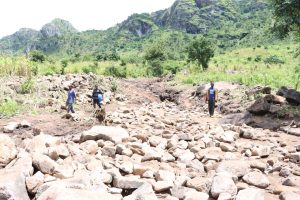
In Lilongwe, the impact of extreme weather is also evident. At Mewa Village in the area of Traditional Authority Mazengera, Stanley Matumbi is still counting losses after part of his farmland was washed away by mudslides triggered by heavy rains.
Matumbi says the rains swept through sections of his farm, destroying crops and leaving the land heavily damaged and difficult to cultivate.
“We lost a significant part of the field after the heavy rains. The soil was washed away together with crops,” he says.
Local accounts indicate that about 36 hectares of land were affected in the village, with roughly 21 hectares of crops destroyed alongside livestock losses.
 The growing climate concerns come at a time when global weather experts are warning about the possible return of El Niño conditions later this year.
The World Meteorological Organization has indicated that El Niño conditions could develop from mid-2026, with potential effects on global temperatures and rainfall patterns.
In Malawi, the Department of Climate Change and Meteorological Services says preliminary forecasts point to the possibility of below-normal rainfall in the upcoming season.
Director of Climate Change and Meteorological Services, Lucy Mtilatila, says while the situation remains uncertain, authorities are closely monitoring developments.
“At this point, we cannot conclusively say Malawi will experience reduced rainfall, but there is a possibility of below-normal rainfall,” she says.
Government has since begun early preparedness measures amid concerns of another difficult farming season.
President Professor Arthur Peter Mutharika, through the Ministry of Agriculture, has directed relevant authorities to intensify preparedness efforts aimed at cushioning households against potential food insecurity linked to El Niño conditions.
Agriculture expert Ronald Chilumpha says climate change has become one of the biggest threats to Malawi’s food security and agricultural productivity.
“Climate change is proving to be a devastating phenomenon, negatively affecting agricultural productivity and ultimately fuelling food insecurity in Malawi,” he says.
He adds that erratic weather patterns have made farming more costly and less productive, while climate-related disasters continue to damage irrigation systems, roads and other infrastructure critical to agriculture.
According to Chilumpha, addressing the challenge requires coordinated action at community, national and international levels.
“We need to invest more in environmental management by building resilient communities. Communities that sustainably generate income are better placed to take care of their environment and adapt to climate shocks,” he says.
Environmental expert Godfrey Mfiti says one of the less visible but growing threats is soil degradation, driven by both excessive rainfall and prolonged dry spells.
Heavy rains wash away nutrients through erosion, while heat stress reduces the soil’s ability to retain moisture and support crop growth.
“Our agricultural system remains fragile because farmers depend heavily on imported inputs and rain-fed systems that are increasingly unreliable due to climate change,” says Mfiti.
He adds that continued reliance on inorganic fertilisers and hybrid seeds has created a vulnerable system exposed to both climate and economic shocks.
Mfiti calls for a shift toward climate-smart agriculture, including irrigation farming, agroecology and improved use of local seed varieties.
“We need to equip farmers with irrigation systems, machinery and climate-smart technologies. Without adopting sustainable farming systems, it will be difficult to withstand the impact of climate change,” he warns.
As climate risks intensify, the Department of Disaster Management Affairs (DoDMA) says government is strengthening preparedness and resilience measures across vulnerable communities.
DoDMA spokesperson Chipiliro Khamula says the government is implementing interventions under programmes such as the Regional Climate Resilience Programme.
He says the initiative focuses on strengthening infrastructure, improving early warning systems and enhancing long-term resilience in disaster-prone areas.
“Through these programmes, we are strengthening infrastructure and preparedness systems to ensure communities are better protected against climate-related shocks,” he says.
Among the interventions, government with support from the United Nations Development Programme has constructed a dyke along the Milole Mwana River between Chikwawa and Nsanje to reduce flood impacts.
Khamula also says Malawi is benefiting from disaster risk financing mechanisms under the Africa Risk Capacity programme, which provides insurance coverage against drought.
He says the country recently received a US$3.06 million payout following prolonged dry spells during the 2025/26 season, funds used mainly to procure and distribute maize to food-insecure households.
Khamula further notes that Malawi has shifted from reactive disaster response to a proactive resilience-building approach following the enactment of the Disaster Risk Management Act of 2023, which emphasises preparedness and risk reduction.
For farmers like Chibwe and Matumbi, however, the realities remain immediate and personal.
With farming becoming increasingly unpredictable and costly, fears of poor harvests and environmental loss continue to grow.
As climate change tightens its grip on Malawi’s agriculture sector, experts warn that the country’s ability to build resilience, modernise farming systems and protect vulnerable communities will determine its future food security.