Tag: mother2mother

  • Counselling keeps sero-discordant couples together

    Counselling keeps sero-discordant couples together

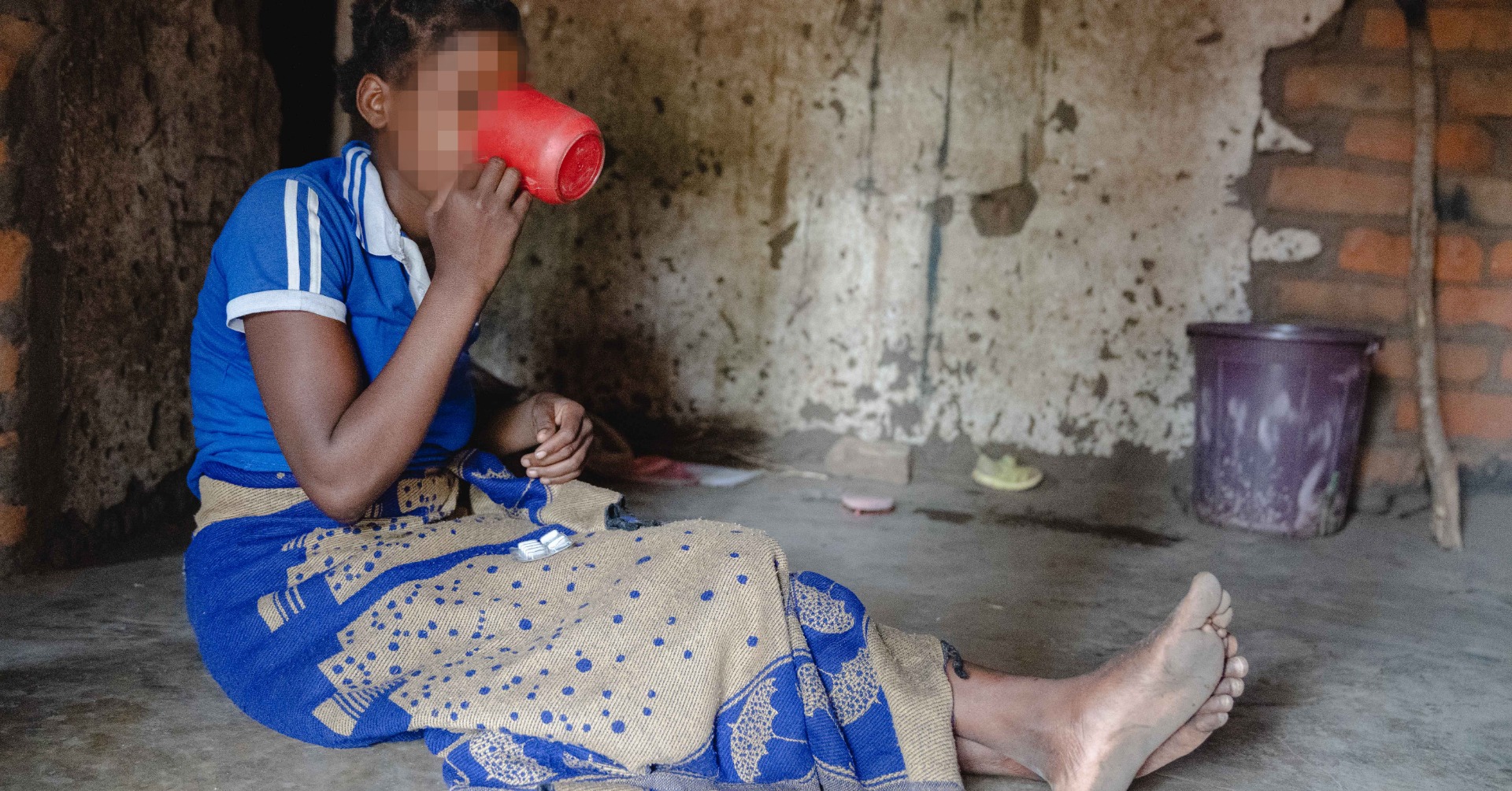
    Prior to March 2023, not much had been going on well for Madalitso (not real name).

    “My husband did not know I was HIV positive. I first knew this status when I took my first child, who was almost one-and-a-half years old, to the health centre where a routine check revealed I was HIV positive. The child’s result came back negative,” she says.

    During her pregnancy with her first-born child, she had attended antenatal clinics and had tested negative for HIV on all occasions.

    However, after testing positive over one year later, she felt an overwhelming urge to confide in her husband about her condition. But instead of revealing her status, she simply motivated him to take an HIV test and take care of his health.

    “He refused to go for a test, saying he was afraid he would soil himself if he tested positive. So, I let it slide, hoping he would find it within himself to make that decision,” she says.

    She then started taking ARVs behind his back, but along the way, she defaulted.

    “After I stopped taking ARVs I had constant headaches,” she says. Her headaches, one suspects, resulted from the weight of her secret taking a toll on both her mind and body.

    Tropical Cyclone Freddy upended her life further after their house collapsed and everything, including her hospital cards, got destroyed. The roads were also impassable. She was also pregnant with her second child.

    “We had no food in the house, so I didn’t know what to take the drugs with even if I succeeded in getting them,” Madalitso explains.

    Amidst the chaos caused by the cyclone, Patricia Chikopa, the site coordinator for Mother2Mother initiative at Namphungo Health Centre in Mulanje, took it upon herself to search for individuals who may have unintentionally missed their antiretroviral therapy (ART) due to the devastating catastrophe.

    “When we checked hospital records at the ART clinic after the cyclone, we realised that one of our clients was 65 days behind schedule. We referred the case to our colleagues working in the community to reach out to her and find out her problem,” she says.

    Annie Kaira, the mentor mother in Madalitso’s community, went above and beyond to connect with and assist Madalitso in her journey.

    “Her excuses for missing her appointments were the impact of the cyclone and fear of her husband as he was not aware of her status. When we disclosed her condition to him, he was surprised and disappointed that she had kept this to herself. We managed to persuade him to get tested as well. He went to the clinic the following day where he tested negative for HIV,” Kaira explains.

    Chikopa, Kaira, and their team offered him guidance, particularly on how to maintain a healthy family dynamic and prevent any future cases of default by Madalitso.

    “As a mother mentor at the facility, I was happy with the outcome. Madalitso has since never missed an appointment and we have visited the family twice to provide them with moral support,” Chikopa says.

    Madalitso’s situation is just one example of the numerous sero-discordant couples in the area whose families remain strong and united, even after revealing their different health statuses.

    “Because of the counsel we give them, most of such spouses are supportive of each other. Some even come to the facility to get drugs for their partners or even bring their children to the facility,” Chikopa explains.

    Madalitso is grateful to the mentor mothers for allaying her fears and bringing her family together.

    “The mentor mothers have been incredibly supportive by frequently visiting us. My husband has also been a great source of support to me. He reminds me every single day to take my medication. Thanks to this, I have regained my strength and can now engage in activities like farming,” Madalitso states.

    Both her children tested negative for HIV.

    With financial support from UNICEF, Mother2Mother implemented an emergency response project from April to September 2023 in Chiradzulu and Mulanje, with the aim of identifying vulnerable populations and people living with HIV, and refer them for testing and services, support client initiation on ART, and provide adherence counselling for retention in care.

    The project also aspired to support access to critical maternal and child health, development and social services as well as create demand for and facilitate access to sexual and reproductive health (SRH) services.

    The project deployed 58 community health workers to provide emergency response services using a family-centred approach at health facilities, community, camps for internally displaced persons and household-level in Chiradzulu and Mulanje districts.
  • Continuous testing key to preventing HIV infections in mothers

    Continuous testing key to preventing HIV infections in mothers

    In 2021, Gertrude’s world transformed into a whirlwind of happiness as she got married to a man of her dreams, setting her heart ablaze with excitement. However, it didn’t take much time for her marital bliss to crumble, leaving her trapped in a living nightmare of emotional abuse.

    Desperate for a way out, she reached out to her mother, who undertook a journey to Mozambique, where she was staying with the husband, and brought her back, along with her abusive spouse. But just when Gertrude* thought her worries were behind her, fate had a different idea and threw her another curveball.

    She had gotten pregnant while in Mozambique. Determined to provide the best care for her unborn child, she promptly began attending the antenatal clinic. Even after returning to Mulanje, she faithfully continued her visits to the health centre in her area.

    Despite her pregnancy, there was no let-up in the emotional abuse, but the couple uneasily stuck by each other. Shortly after their child was born in mid-2022, their marriage came to an end, and the man decided to return home. She soon remarried.

    Just as she thought she had finally discovered peace in her home, her world was abruptly disrupted around eight months after giving birth, thrusting her into a state of upheaval once again.

    “When I went for antenatal clinic, both in Mozambique and here, I tested negative for HIV on all occasions. However, when I went for another visit to the hospital, eight months after the birth of my daughter, I tested positive for HIV,” recounts the 20-year-old Gertrude.

    Upon returning home, she tried to persuade her new husband to get tested as well, but he refused.

    Gertrude’s predicament is known all too well to Gloria Ngulube, a ‘mentor mother’ who worked with Mother2Mother on an emergency response project which was implemented in Chiradzulu and Mulanje from April to September 2023 and aimed to focus on vulnerable populations and identify people living with HIV.

    As a mentor mother, she is tasked with engaging and providing moral support to pregnant women, breastfeeding mothers, and adolescent girls and young women.

    “When a woman is pregnant, we identify her and encourage her to attend antenatal clinics. Some of them are referred to us and it is our duty to hold their hand and counsel them all along the way,” Ngulube says.

    She explains that government policy dictates that women who have given birth must return to the hospital for a check-up six months later. When Gertrude went for her check-up, she tested positive for HIV, despite testing negative throughout her pregnancy.

    Gertrude took immediate action by enrolling in ART, but Ngulube’s concern centred around the potential transmission of the virus to their child.

    “When someone has tested positive, not many people take it well, so it was up to us to visit her to counsel her and provide moral support. Some people refuse to take the drugs, so it was important to encourage her to take the drugs to protect the child,” Ngulube explains.

    Gertrude’s case serves as a reminder about the need to continue providing healthcare services to women after giving birth, she adds.

    “We encourage them to test consistently and to always insist on an HIV test before committing themselves to any man,” she says.

    Under the emergency response project, which was implemented with support from UNICEF, Mother2Mother facilitators referred women for testing and services, supported client initiation on antiretroviral therapy, and provided adherence counselling for retention in care.

    They also supported access to critical maternal and child health, development and social services as well as created demand for and facilitated access to sexual and reproductive health services, including services to address reports of violence and neglect for adolescent girls and young women.

    Gertrude has fully embraced her situation and is steadfast in her determination to experience life to the utmost, with her only concern revolving around the challenges she encounters in finding food.

    “I received the message well even though it wasn’t something I expected, and I am taking the medicine because this is my life and it has to go on,” she says.

    * real name changed

  • Assisting HIV patients with mental health challenges

    Assisting HIV patients with mental health challenges

    Fiona* was a curious case for staff and community health workers at Chambe Health Centre in Mulanje. She was an antiretroviral therapy (ART) client who had transferred from another health centre at Kambenje in the same district.

    From time to time, she would visit the healthcare centre to collect her supply of medications for the upcoming three months. However, it seemed like almost every month, she had to return to refill her ARVs. Upon further investigation by the healthcare professionals, they discovered that she was mistakenly taking the drugs three times daily instead of the prescribed once.

    “We approached her mother and asked her to assist us in looking after her, by ensuring she takes the medicine in the right quantities at the right time,” explains Zione Mphepo, a mentor mother for the area under Mother2Mother programme.

    For a while, it seemed disaster had been averted and the problem had been solved. By and by, however, they realised she still reported to the clinic before her appointed time, and there was genuine fear she had relapsed.

    “When we investigated the matter, we realised she was sharing her drugs with her husband, who hasn’t tested and doesn’t know his status. We have tried to persuade him to get tested and be prescribed proper medicine, if need be, but he has refused,” she explains.

    Holding a meaningful conversation with Fiona, who is struggling with mental illness, can feel like an uphill battle. She would only respond to leading questions with a halting ‘yes’ or ‘no’. It is an experience Zione Mphepo is all too familiar with.

    As she explains, no one knows when Fiona was diagnosed with HIV, but the widely held assumption is that was when she became pregnant with her youngest child, who is barely a year old. Fiona has two other children, aged 12 and four, with her husband.

    She never misses a hospital appointment, even for her child’s under-five clinic. Whenever her drugs run out, which is frequent because of her husband’s actions, she almost always comes to the hospital.

    Her mother and elder sister play a vital role in her support system, ensuring the children’s needs are met and that she remains consistent in taking her medication.

    According to Josephine Njowe, the Site Coordinator for Mother2Mother at Chambe Health Centre in Mulanje, Fiona is one of four individuals with mental illnesses, and two of them have babies.

    From April to September 2023, Mother2Mother implemented an emergency response project with support from UNICEF. Under the project, Mother2Mother identified vulnerable populations and people living with HIV, and referred them for testing and services, supported client initiation on ART, and provided adherence counselling for retention in care.

    It also supported access to critical maternal and child health, development and social services as well as created demand for and facilitated access to sexual and reproductive health (SRH) services, including services to address reports of violence and neglect for adolescent girls and young women.

    Mother2Mother is dedicated to preventing the transmission of HIV from mothers to their children, and individuals like Fiona face a higher risk of passing on the virus to their little ones, Njowe explains.

    “We go above and beyond to provide special treatment to such people when they come to receive their medicine. We offer counselling on the importance of taking their medication diligently and provide valuable advice on caring for their children. Our mentor mothers continue to support them, ensuring they adhere to their medication schedules and come for refills as required,” Njowe says.

    * real name changed