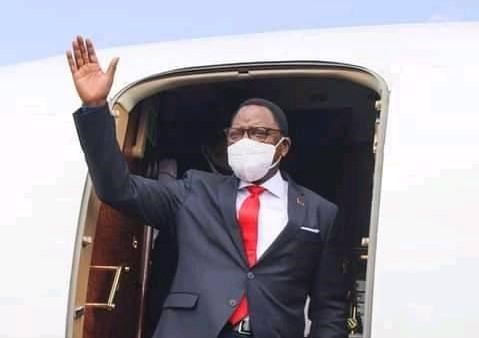
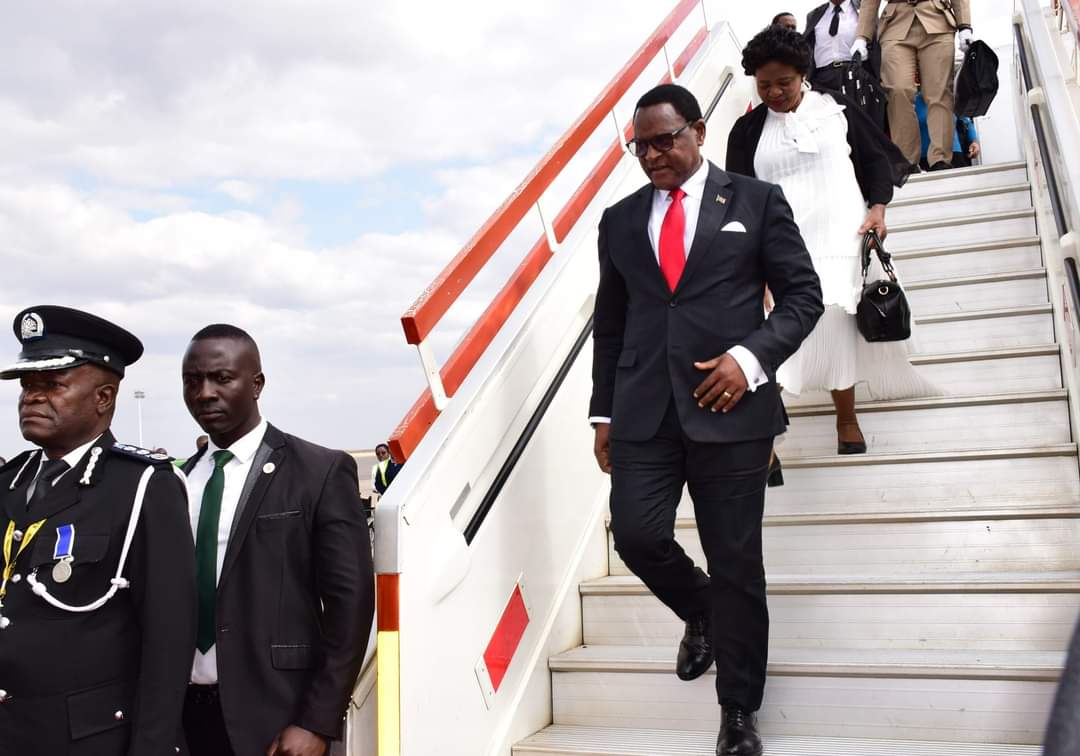
President of the Republic of Malawi, His Excellency Dr. Lazarus McCarthy Chakwera’s presence at the 2023 UN General Assembly (UNGA78) in New York, which is slated for September 18 to 26, 2022, should be seen as a strategic move that can potentially benefit Malawi in various ways.
Many political and economic pundits have expressed their varied opinions about whether or not our beloved Head of State should attend this annual gathering of world leaders. My interest is in some Malawians’ argument that the country’s economic hardships should take precedence over international engagements.
I agree. However, it is equally imperative to consider the long-term advantages and opportunities that can arise from such high-level diplomatic participation.
Here are some of my personal views:
International Cooperation and Partnerships: The United Nations General Assembly provides a unique platform for world leaders to engage in dialogue, foster cooperation, and build partnerships with other nations. By attending this global gathering, our President Chakwera has the opportunity to establish connections with leaders from around the world, including those from countries that could potentially offer assistance or investment in Malawi’s development projects. These partnerships can lead to increased foreign direct investment, technology transfer, and knowledge sharing, which are crucial for economic growth and development.
Promotion of Malawi’s Interests: I have had the privilege of attending UNGA before and I am well aware that the UN General Assembly serves as a forum where countries can advocate for their national interests and influence global decision-making processes. President Chakwera’s presence in New York will provide him with the opportunity to represent our beautiful country on an international stage, ensuring that the country’s concerns and priorities are heard by the global community. This can be particularly valuable for a developing nation like Malawi, as it provides an opportunity to address issues such as climate change, poverty alleviation, healthcare, education, and human rights at a global level.
Access to International Funding and Support: I am also hugely aware that UNGA brings together representatives from various international organizations, including financial institutions and donor agencies. By attending this event, President Chakwera can engage with these entities and explore avenues for securing financial assistance or grants for development projects in Malawi. This is especially important considering the economic hardships faced by the country. Building relationships with potential donors and showcasing Malawi’s commitment to development can increase the chances of receiving financial support, which can be instrumental in addressing pressing issues and driving economic progress.
It is crucial to note that President Chakwera’s attendance at the UN General Assembly does not imply a disregard for the economic challenges faced by Malawi. Rather, it demonstrates a proactive approach to finding solutions and opportunities on a global scale. The potential benefits of this trip, including international cooperation, partnerships, promotion of national interests, and access to funding, outweigh the short-term concerns of austerity measures.
In conclusion, President Chakwera’s participation in the UN General Assembly should be seen as an investment in Malawi’s future. By engaging with world leaders, advocating for national interests, and exploring avenues for international support, the President has the potential to pave the way for economic growth and development in Malawi.
Aspiring Member of Parliament for Lilongwe City Central constituency, Gift Nankhuni on Saturday advised Malawians to be patient enough and continue supporting president Lazarus Chakwera as he is building the country.
He was speaking in areas of Chatata, Kauma, Tambalale and 44, where he met Malawi Congress Party area committee members.
He said the Malawi leader has initiated multiple developmental projects across the country and once all completed, they will change the face of the country for good.
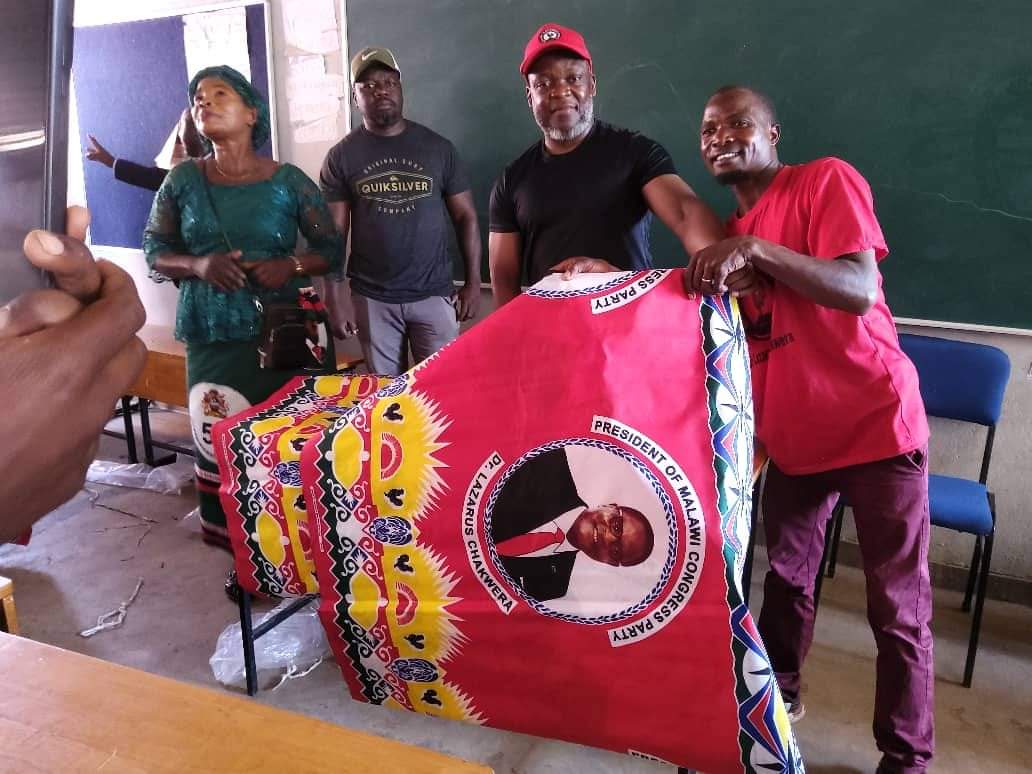
Speaking to the press, Nankhuni, a renowned lawyer said as one way of supporting President Chakwera in strengthening the party, he has distributed party clothes to the area committees.
“As part members we need to support our party, with actions by providing the structures with materials and cash,” he said.
Leader of the opposition (LoP) in Parliament Kondwani Nankhumwa has said President Lazarus Chakwera is failing to take hard sacrifices to fix the economic crisis this country is going through.
He was speaking in Parliament at the end of the 2nd meeting in the 50th session.
Currently, Malawi is riddled with acute shortages of forex and fuel, with comodities prices rising sky high each passing day.
“Many Malawians will agree with me that our economy is currently in ICU. Malawi is currently in a pigeonhole of significant economic challenges including high unemployment rates, high inflation, and a widening wealth gap. Malawians are struggling just to put food on their table.
“A bag of maize is hovering at MK40, 000, and not affordable by a majority of families across the country. Prices of basic commodities such as soap, sugar, cooking oil and everything in between continue to rise. As I am talking, there are long queues at filling stations across the country due to the lack of fuel, as a result of forex scarcity. From the look of things, it appears the problem has come to stay.
“Global challenges have always been there. They will always be there. But as a country, we will not blame anyone for what we did or did not do. Every dark cloud, Madam Speaker, has a silver lining, and we will be overtaken if we do not take our opportunities.
“I am not sure if this is still the prevailing thinking in the former Leader of Opposition. I do not intend this to be a laughing matter but if all of us, Malawians, should rise to help, President Lazarus Chakwera and his government must take hard sacrifices to fix this crisis. At the moment, they are not.
“This is not an afternoon of long speeches, but I wish to firmly ask the President to take decisive measures to stop the bleeding. I am sure he can see it. The least he can do is to walk his own talk,” he said
He called on Chakwera to implement his own government’s austerity measures to prevent spending by reducing or even stopping local and international travelling.
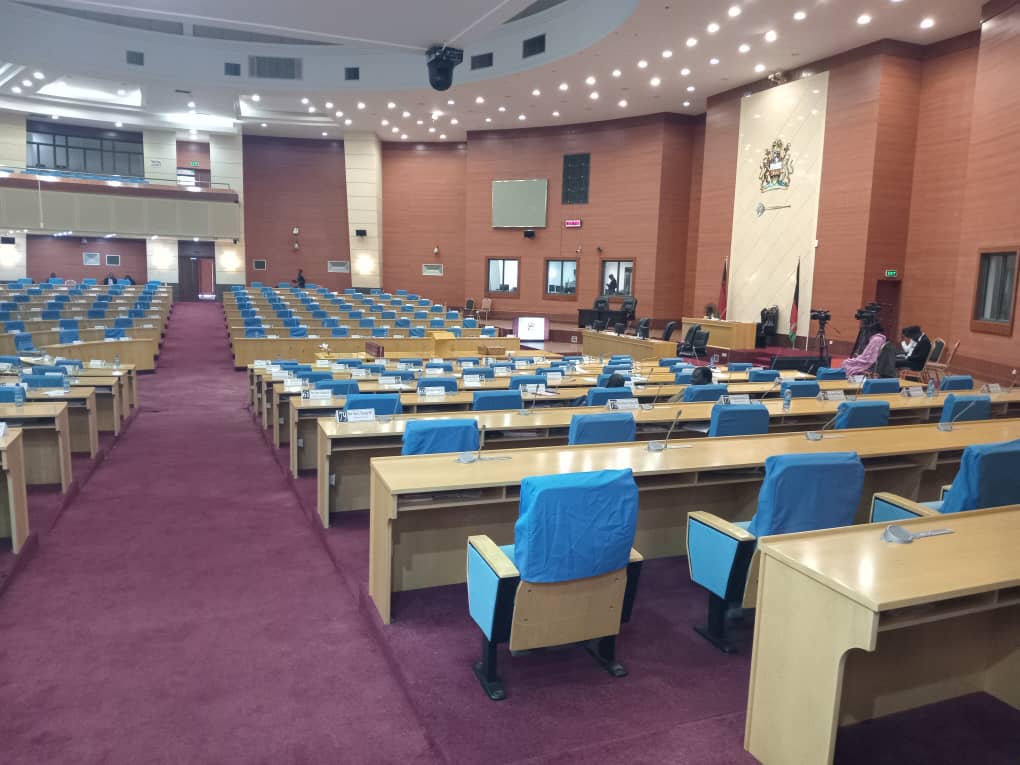
Member of Parliament for Thyolo Thava Mary Navicha has expressed disappointment following the suspension of the Parliament proceedings in the morning by speaker of the House due to malfunction of recording devices.
Navicha further criticized some officials of the house for tricking the speaker with false information about the fault so that they attend other businesses.
“We have been told by the speaker that the morning session will not proceed as the PA system develops a fault but the reality is that some officals has misled the speaker so that they attend other meetings. We have been communicated that 12 MCP MP’s are attending regional elections at thier headquarters so as a concerned member iam really disappointed with what the speaker has communicated,” she said
Navicha added that it’s unfortunate that such things are happening while there’s alot of public interest to be addressed.
“Malawians are suffering, they are waiting for us to discuss very important bills in the order paper we have so many questions to the ministers, so many motions but we are here wasting our time,”
But in his response, Leader of the house Richard Chimwendo Banda refuted the allegations saying no one can disrupt Parliament proceedings.
“It is not true what other people have said and we have reported that to the speaker because it’s him who announced about the fault but if you go to the technical people and find out they’ll tell you since morning there have not been recorded,” said Chimwendo
Kamuzu Banda is resting between the Chinese built Parliament and a 5-star hotel at the heart of Malawi’s capital. Lazarus Chakwera was sworn in a few metres away on that Sunday in June 2020, ending Malawi Congress Party’s 26 years in the wilderness. Kamuzu’s party, which he firmly controlled much like the country he led for 30 years, was finally back in power.
The resting lion man must have growled a few ‘Kwachaaas’ in jubilation. The country experienced a collective orgasm. At last, there was hope. Lazarus had come to resurrect this country, from perpetual poverty. Well, typically of orgasms, this one didn’t last long. Three years later we have moved from ‘itsanana’ to ‘it’s a no-no’. Kamuzu must be growling. Where did they get this Lazarus from?
False dawns are not strange to this country. They began with Kamuzu himself way back in 1964. Our independence was barely a few months old when the infamous Cabinet Crisis happened, and what followed were 30 painful years of dictatorship. In 1994, at the dawn of multiparty democracy we were promised heaven. In truth it was the birth of an ill-disciplined nation, with very little sense of responsibility at every layer of society. Almost 30 years later, we are nowhere near out of poverty nor do we seem to have any idea of where we are heading as a nation.
So when Lazarus and his friend Saulos came along in 2020 to oust a very annoying Peter Mutharika administration, the nation had good reason to be hopeful. Well, our previous leaders have had a fair share of unpleasantries thrown in their direction. Sadly for Lazarus, unless he has a Lazarus moment of biblical proportions between now and 2025, he will go down in history as the biggest disappointment.
The state of the nation today begs a consistent but familiar question: Just how on earth did we get where we are? Just how? No forex. Erratic fuel supplies. Rising cost of living. A general culture of financially insane decisions by Government. If they are not buying fertiliser from a butchery, they are battering off God knows what in Romania. Just who in their right mind goes to Romania for fertilizer? The DPP administration was very annoying, thieving, arrogant and nepotistic. But at least they were smart thieves. MCP is incompetent even at stealing. That’s why they are usually caught very fast.
The lovely accent and nice speeches can no longer mask the glaring failures of this administration. While the picture of the dire state of the nation seems to be clear to everyone else, Lazarus and his close aides seem to be reading a totally different script. The Catholic Bishops came out with a dire statement this week: we cannot continue like this. To any discerning person, this is trouble for Lazarus and his administration. But I have long concluded that they are not the brightest of people. Or else they wouldn’t be making some of these strange, dumb decisions (no, I am being polite) that they are making.
During the week we read stories that our diplomats are on the verge of being destitute because the government is failing to pay them, our dear leader flew out on yet on another foreign trip. Such trips are preceded by a long and winding statement from Ministry of Foreign Affairs explaining how important it is for the president to travel, how the trip will unlock opportunities for Malawi blah! blah! blah! It’s all gibberish. The president has made many trips, at the end of which long statements are made of deals he had struck with all manner of people. Ask me, how many of those so-called deals have materialised?
Anyone who is over 40 years has witnessed the demise of several administrations. The pattern is essentially the same. Before their ousting, those in power never think it can happen to them. The old MCP never thought they would lose in 1994. I mean they were firmly in control. Bakili was on top of the world at some point, but failed in this third term bid. Bingu, after a very successful first term, became so cocky and, as we all know, it ended in tears. Masteni Joyce Banda met her fate, despite succeeding a very unpopular DPP administration. Peter Mutharika and his DPP ensured that every critical institution in Malawi was packed by people from his tribe, to serve his interests. But they still lost.
Right now, Lazarus is probably saying well it can’t happen to me. It will probably happen. And it will be too late to do anything. The problem for him is that he is surrounded by people who watch too much CNN and are so obsessed with image and form, and not substance. Look here, the majority of Malawians don’t give a hoot about tweets and funny statements on Facebook. If their AIP is messed up and there is hunger, that’s what they care about. Not endless summits of endless unlocking of bottlenecks. What matters is the continued forex shortage or erratic fuel supplies. These things have to be sorted.
President Lazarus Chakwera’s Chief of Staff Prince Kapondamgaga is back on his job after a year long suspension.
The Anti-Corruption Bureau (ACB) decided not to continue with corruption investigations after Kapondamgaga after he surrendered a Mercedes Benz he received businessperson Zunneth Sattar.
This contributed to a lot of wild speculations that the Chief of Staff may have been a victim of political machinations within and outside the corridors of power.
Meanwhile, several legal experts have been weighing in on Kapondamgaga’s matter from legal perspective.
Most of the legal experts are of the view that fact that Kapondamgaga voluntarily returned a vehicle he is alleged to have received from Sattar as a gift, does not make him an accomplice of crime unless proven otherwise.
“Mr. Kapondamgaga was well advised when he volunteered to return the vehicle he received as gift from Mr. Sattar back to ACB. For heavens sake, we all receive gifts in one way or the other, as such we don’t know where money for buying such gifts could have come from. If the courts were to be arresting people for receiving gifts allegedly from proceeds of crime then the entire nation would be jailed,” said a Lilongwe based lawyer who pleaded for anonymity.
Also speaking on condition of strict anonymity, another legal practitioner based in Blantyre said: “When ACB summons a suspect, it doesn’t mean that person is guilty. Three things happen after appearing before ACB. Either you get arrested or you are let go while investigations continue or you are cleared out right as what has happened with Mr. Kapondamgaga. In my view, the President has done nothing wrong as far as laws of Malawi are concerned. The President’s Chief of Staff is a free man.”
Meanwhile, news about Kapondamgaga’s return to State House has excited most MCP die Hards who have described the Chief of Staff as “truest and honest character fit to be close to the President serves interests of Chakwera and the party with dedication, commitment and loyalty.”
On 15th June, 2021, I bid farewell to fellow scribes and sources as we call them, the people I worked with for a cool 15 years and counting on.
I left the journalism family and graciously accepted an offer to serve the fourth President of the Republic of Malawi Her Excellency Dr. Joyce Hilda Banda as her Executive Assistant.
3 years and counting on, I feel privileged and consider myself as a reliable source of accurate information about the former president who served the country for two years from 2012 to 2014.
It may take 7 years, 4 months, 3 weeks, 13 days, 47 hours, 11mins and 59 seconds for me to write a chapter about her achievements in the 2 years she stayed in office.
For now, I can only attempt a few paragraphs talking about only 2 things she was able to accomplish in 100 days in office.
Dr Banda
Just within 100 days of her two-year tenure of office, she ended fuel ques which was the biggest problem in Malawi by the time she took over office, her predecessor President Bingu wa Mutharika completely FAILED to deal with it.
When JB took over office, there were long ques across the country with people sleeping on the ques in search of fuel while women slept at maize mills waiting for electricity. The economy was on a death bed as companies scaled down operations.
However, within days after taking office, she normalised fuel availability in the country and life returned to normal.
Secondly, within the 100 days Dr Joyce Banda also ended persistent black outs that characterised the late Bingu administration. Malawians and businesses could stay days without power, and this greatly affected the economy.
But Dr Banda ended these serious problems that she found in government much to the surprise of Malawians who until today do not know the magic that she used to end these crises within a short period of time.
The improved foreign exchange import cover cannot go without notice. There was acute shortage of forex but all of a sudden, there was forex in abundance.
Less than 2 months after assuming office, Dr Banda succeeded in normalizing broken relationships with neighbouring countries and donor partners, the donor confidence was back. I can state that this gift is what I also noticed in President Dr. Lazarus Chakwera, he too can relate well with our neighbours.
Donor confidence was back. The US Millennium Challenge Corporation (MCC), which froze assistance in July 2011 following security crackdown on protestors. resumed programs in Malawi in June 2012.
The suspension, which coincided with aid freezes from other governments including Britain, Malawi’s biggest donor, exacerbated an already acute dollar shortage sending the economy into a spiral.
However, the MCC said then that the change of direction on human rights and economics under new President Joyce Banda – Southern Africa’s first female Head of State – meant the programme should resume.
Bringing back media freedom which Bingu muzzled is another big plus for Dr Banda. A journalist could even be arrested for taking pictures of the President’s house. Freedom of the press and democracy the way we fought for it in 1992 was back.
Few days before her 100 days into office, Banda officially launched the Feed the Future Initiative.
The initiative, one of US former President Barack Obama’s flagships, aimed to support the government and people of Malawi to achieve and enhance food security and agricultural diversification, we all saw the results.
Well, this is not what I want to write. Today, I want to write about the Former Malawi leader, the first female President as I know her and how much I can tell you about her in the 3 years I have worked closely with her.
Dr Banda with the author
For record purposes, the 15th of June 2021 was the official date I started working with her in a formalised setup but before that, I had worked closely with her from 2009, I can confidently say without fear of contradiction that I have worked with her for well over 14 years.
You can call her Dr. Joyce Banda, others call her JB, a certain section call her Msamalia [a good Samaritan] while others prefer calling her masteni [mother], it depends from which angle you are standing.
The international community calls her Madam President. As for me, I don’t know what to call her, Boss? Mum? Madam President? Msamalia? I really don’t know because she has been more than what I can call her to me.
But who is she? Born on 12th April, 1950, Dr. Joyce Banda is an entrepreneur, activist, politician and philanthropist.
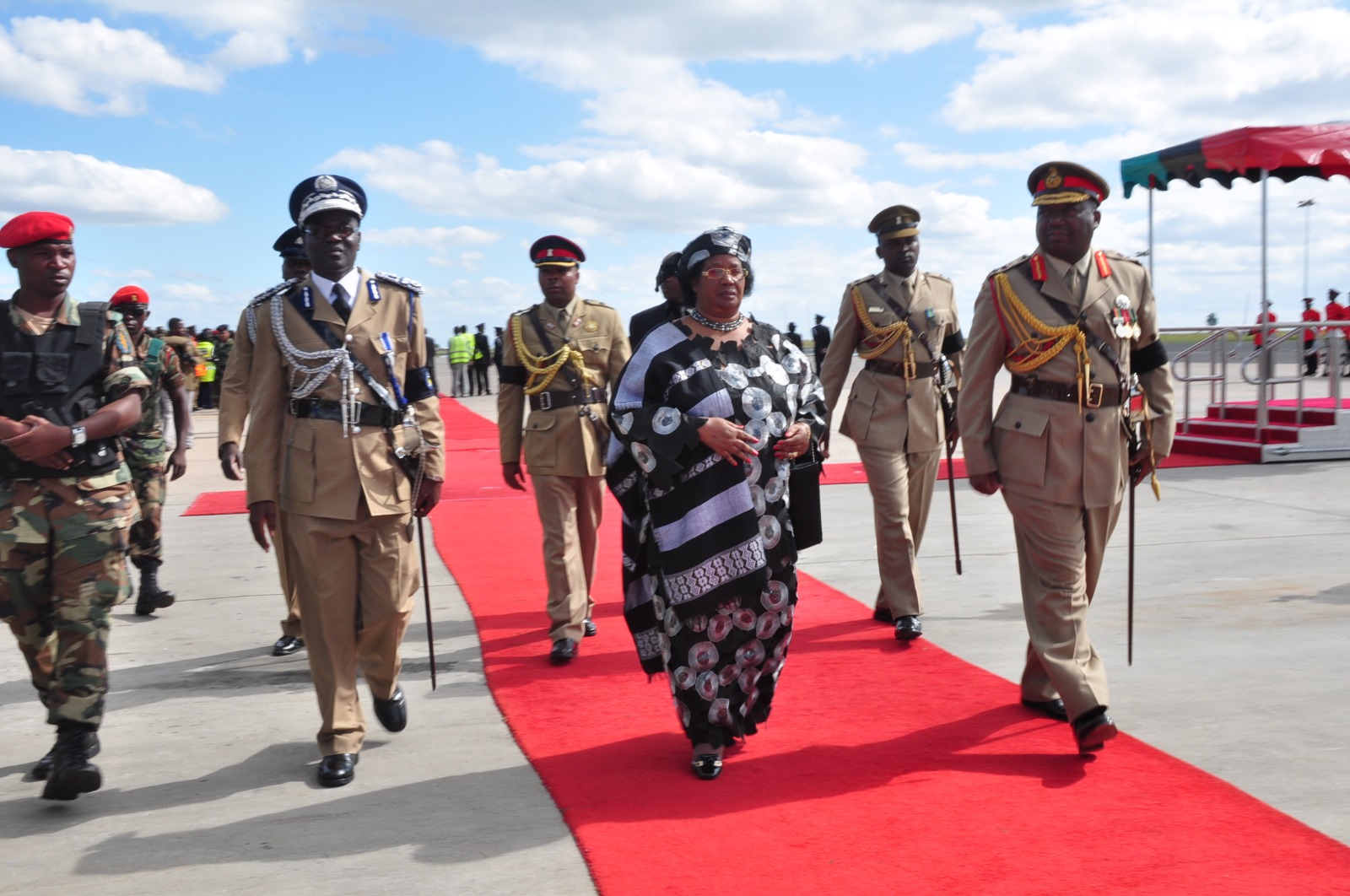
Her Excellency Dr. Joyce Banda served as the President of the Republic of Malawi from 2012-2014. She was Malawi’s first female president and Africa’s second.
Prior to assuming office, President Banda served as a Member of Parliament, Minister of Gender and Child Welfare, Foreign Minister, and Vice President of the Republic of Malawi.
While serving as Minister of Gender and Child Welfare, she championed the enactment of The Prevention of Domestic Violence Bill (2006), which provided the legal framework to support the prevention and elimination of all forms of violence against women and girls.
She faced resistance at the time of ascending to office from the then ruling party but state machinery made it possible for her to take over because the law was clear.
President Banda is credited for turning round an ailing economy which was on the verge of collapse in April 2012.
She instituted a number of economic reforms which led to significant economic expansion; Malawi’s rate of economic growth rose from 1.8% in 2012 to over 6.2% in 2014. Under President Banda, Malawi’s operational industrial capacity improved from 35% in 2012 to 85% in July 2014, and the foreign exchange import cover was increased from one week to three and half months in July 2014.
In the areas of democracy, good governance, and rule of law, President Banda repealed a number of draconian laws which weakened essential democratic institutions, infringed upon civil liberties, and restricted the freedom of the press.
She has successfully played a role in credible elections observation mission in Botswana.
She is a co-lead in a joint National Democratic Institute (NDI) and International Republican Institute (IRI) Election observation mission in 2023 Presidential Elections in Nigeria.
She was appointed as one of the three grain ambassadors to champion Ukraine government’s plan to help African countries facing acute food shortages.
President Banda’s unwavering commitment to the promotion of women’s maternal health and reproductive rights led her to establish the Presidential Initiative on Maternal Health and Safe Motherhood, which spearheaded the fight against high maternal mortality rates and the promotion of safe motherhood in Malawi.
During the two years of her presidency, Malawi registered considerable success in the areas of maternal and child health, reducing the maternal mortality ratio from 675 deaths per 100,000 live births to 460, a reduction of 32%.
As one her first actions after taking office, President Dr. Banda donated 30% of her salary to Malawi Council for the Handicapped (MACOHA), an organization serving individuals with disabilities.
President Banda is an international speaker on leadership, democracy, good governance, and women’s and girl’s rights and motivational speaker. She has delivered numerous lectures at universities including Harvard Medical School and the Kennedy School of Politics, the London School of Economics and Political Science, George Washington University, Kansas State University, among others.
AWARDS AND RECOGNITION
President Banda was named by Forbes as Africa’s Most Powerful woman 2013 and 2014 respectively.
Was voted number 43 most powerful woman in the world by Forbes in 2013
President Banda was named one of the world’s most powerful black woman by Forbes in 2014.
One of the most 100 influential people in the world by both TIME.
In 2014, CNN named her one of the most inspirational woman in politics.
She has won numerous awards for her work on the global stage, and was recently named one of Apolitico’s most 100 Influential People in Gender Policy.
In 1997, after receiving the Africa Prize for Leadership for the Sustainable End of Hunger that she shared with President Chissanu of Mozambique, she used the prize money of $50,000 to establish the Joyce Banda Foundation.
The Foundation seeks to transform villages in Malawi and internationally through its work in supporting women’s economic empowerment, education, maternal health and HIV/AIDS programs, leadership training, and support for human rights.
The Joyce Banda Foundation has reached 1.3 million Malawians with Women’s empowerment, education, maternal health, leadership, and rights.
MEMBERSHIP TO INTERNATIONAL ORGANIZATIONS
Member, Southern Africa Community Development (SADC) Panel of Elders on Conflict Resolution, Peace and Security.
Board member, Nutrition International in Canada.
Board Member of the Tana High Level Forum for Peace and Security in Africa.
Member of Counsel of Former and Serving Female Heads of State
Steering committee member, African Women Leaders Network, responsible for Social Mobilization (A network convened by AU and UN Women)
Member of the Club de Madrid (A Global Network of Former Presidents)
Honorary chancellor of the Akilah Institute in Rwanda.
Member Former Heads of State Network fighting HIV/AIDS pandemic
Served as distinguished Fellow with the Woodrow Wilson Center and Center for Global Development.
Books published:
From Day One: Why Supporting Girls Aged 0 to 10 is Critical to Change Africa’s Path
Dr. Joyce Banda, a life of service to humanity
My favorite quote of her is “Leadership is like a love affair; you must fall in love with the people you serve and the people must fall in love with you”
Currently, the former president serves in more than 26 International boards and is the current champion of climate change and adaptation appointed by the Pan African Climate Justice.
She serves in the panel of elders of the Southern Africa Development Commission (SADC) on Peace and Security. This is the woman who is busy raising funds for the construction of houses for cyclone Freddy survivors in her capacity as good will ambassador on cyclone Freddy.
She is the Board Chairperson of Community Development Initiative (CDI) which she established in consultation with President Dr. Lazarus Chakwera in a quest to address social economic challenges which people in rural areas are facing.
Malawi is a landlocked small country situated in the East Central Africa bordering Zambia, Tanzania, and Mozambique.
With a population of more than 18 million, 85 percent of the people are rural based and live on less than 2 dollars a day. 73 percent of the people can not read and write. 40 percent of the households are women.
11 percent of our children particularly girls are orphans with most being child or elderly headed households. Most of the people live in dire poverty, fail to access to education and live in dilapidated houses.
CDI implements integrated projects around Rural Community Transformation, under this pillar, CDI will construct modern houses for people in remote areas, upgrade some infrastructure like schools, hospitals, markets and one stop women empowerment centers. Environmental management and Agribusiness are another component of the project focusing on production, processing and value addition. Income generation, (Under this pillar, small and medium scale businesses are being assisted with information through which they can use to promote their businesses and be able to export while contributing to the country’s social-economic development through exports. Education, Health, Water and sanitation are some components under implementation by the CDI currently being in Mpasadzi in the Area of Sub Traditional Authority M’nyanja in Kasungu district.
The mission of the CDI Trust is to eradicate poverty by building empowered, independent, secure, safe, self-reliant and resilient rural communities across Malawi.
As I said, it may take me over 7 years to write about this special woman. This is the woman I work for. Ladies, and Gentlemen, I present to you Her Excellency Dr. Joyce Banda seen through my lens.
1. “I took a break from politics for a year. In this one-year recess, I have travelled extensively across nations to listen and learn from international political, business captains and global experts to learn how to lead more effectively……how to transition a country from almost a failed state to a thriving nation. I am back more experienced, more knowledgeable and more confident. We will change Malawi.”
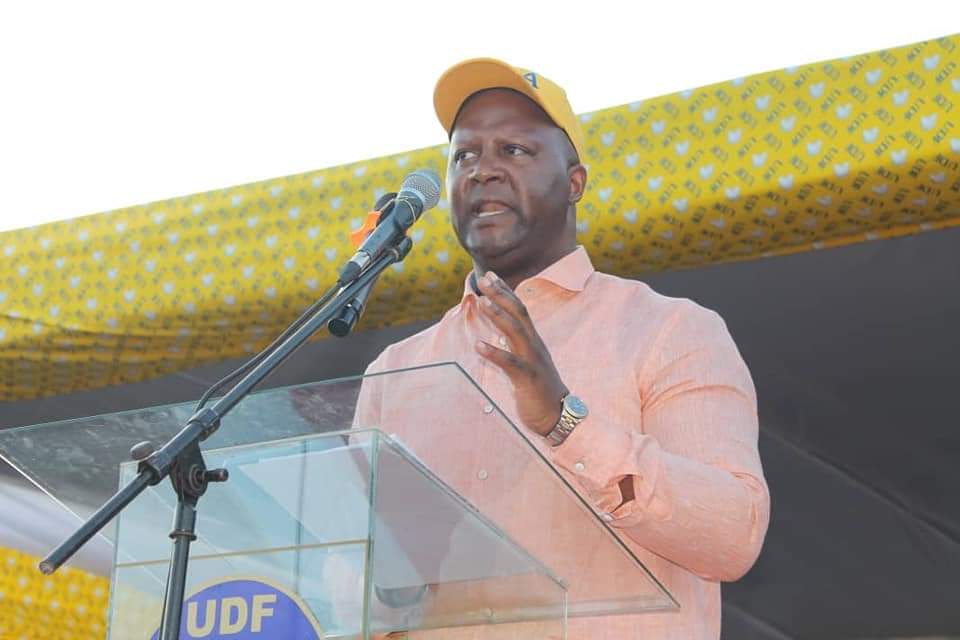
2. “Malawi needs a competent and honest person to lead it through harnessing capabilities of brilliant minds both local and global towards specific immediate and long-term development targets. That person is me, Austin Atupele Muluzi.”
3. “I am currently just a member of UDF. However, I will be presenting myself before the UDF Convention, the party leadership will announce the date, to contest and if I succeed, I will be leading the party in 2025. I advise the UDF not allow to play second fiddle in 2025. ”
4. “I am an example of a competent and honest leader. I am untainted with corruption. I can stand firm and challenge every Malawian to investigate the time I served in various government ministries. They won’t find any corruption because I served with honesty and integrity.”
5. “The number 1 pressing issue in Malawi now is the terrible state of our economy. We are a country with every potential to jumpstart our economy. However, we don’t have the leadership currently that can harness that potential.”
6. “Malawi can learn from how leaders in Gulf States harnessed the potential of their countries. They found oil and gas, made future projections of these resources and created a Sovereign Wealth Fund which they used to grow their economies. Malawi has a variety of natural resources. We need to start a conversation on how, as a nation, we can create Sovereign Wealth Fund from our natural resources.”
7. “Corruption remains the number 1 evil destroying the country. We are not on the right path in the fight against corruption. No week passes without a huge corruption scandal. We have lost local and international confidence. We are a nation that has visibly and evidently failed to deal with corruption.”
8. “We are not decisively dealing with corruption. All key institutions responsible for a for promotion, safeguarding and policing institutions—such as Parliament, Civil Society, Media, ACB, etc—that makes democracy tick have been strategically weakened. Too much lip service; we are travelling dangerously.”
9. “Demokalase yathu sikuyenda. Demokalase ikamayenda imadziwika ndi zipaso zake zomwe zili chitukuko. Anthu alibe ndalama, njala yosatha, ma biziness akusokonekera, umphawi paliponse. Zonsezi zitha kusintha ndi utsogoleri.”
10. “My leadership focus is centered on instilling confidence in the nation. Most Malawians are hopeless, convinced that things won’t change. But I am pushing with a message of confidence mostly targeting the youth and women because they are carriers of generations and destiny. If women are confident, our nation is safe. We will do it.”
“I took a break from politics for a year. In this one-year recess, I have travelled extensively across nations to listen and learn from international political, business captains and global experts to learn how to lead more effectively……how to transition a country from almost a failed state to a thriving nation. I am back more experienced, more knowledgeable and more confident. We will change Malawi.”
“Malawi needs a competent and honest person to lead it through harnessing capabilities of brilliant minds both local and global towards specific immediate and long-term development targets. That person is me, Austin Atupele Muluzi.”
“I am currently just a member of UDF. However, I will be presenting myself before the UDF Convention, the party leadership will announce the date, to contest and if I succeed, I will be leading the party in 2025. I advise the UDF not allow to play second fiddle in 2025. ”
“I am an example of a competent and honest leader. I am untainted with corruption. I can stand firm and challenge every Malawian to investigate the time I served in various government ministries. They won’t find any corruption because I served with honesty and integrity.”
“The number 1 pressing issue in Malawi now is the terrible state of our economy. We are a country with every potential to jumpstart our economy. However, we don’t have the leadership currently that can harness that potential.”
“Malawi can learn from how leaders in Gulf States harnessed the potential of their countries. They found oil and gas, made future projections of these resources and created a Sovereign Wealth Fund which they used to grow their economies. Malawi has a variety of natural resources. We need to start a conversation on how, as a nation, we can create Sovereign Wealth Fund from our natural resources.”
“Corruption remains the number 1 evil destroying the country. We are not on the right path in the fight against corruption. No week passes without a huge corruption scandal. We have lost local and international confidence. We are a nation that has visibly and evidently failed to deal with corruption.”
“We are not decisively dealing with corruption. All key institutions responsible for a for promotion, safeguarding and policing institutions—such as Parliament, Civil Society, Media, ACB, etc—that makes democracy tick have been strategically weakened. Too much lip service; we are travelling dangerously.”
“Demokalase yathu sikuyenda. Demokalase ikamayenda imadziwika ndi zipaso zake zomwe zili chitukuko. Anthu alibe ndalama, njala yosatha, ma biziness akusokonekera, umphawi paliponse. Zonsezi zitha kusintha ndi utsogoleri.”
“My leadership focus is centered on instilling confidence in the nation. Most Malawians are hopeless, convinced that things won’t change. But I am pushing with a message of confidence mostly targeting the youth and women because they are carriers of generations and destiny. If women are confident, our nation is safe. We will do it.”
As Malawi commemorates 59 years of independence on Thursday, July 6, 2023, it is a perfect opportunity for Malawians to reflect on the journey that the country has travelled so far, and how the Malawi Congress Party (MCP) government under President Dr. Lazarus Chakwera fits into the sum total of our social and economic development since 1964.
The MCP belongs to the league of revolutionary political parties that fought for independence in countries across Southern Africa such as the South West Africa People’s Organisation or SWAPO in Namibia; and the Zimbabwe African National Union – Patriotic Front (ZANU–PF) in Zimbabwe.
In South Africa, there is the African National Congress (ANC); the Kenya African National Union (KANU) in Kenya; the United National Independence Party (UNIP) of Kenneth David Kaunda in Zambia, and the Chama Cha Mapinduzi (CCM) of Julius Kambarage Nyerere in Tanzania.
These are the political parties whose indelible imprint on the face of liberation history in countries across Southern and Eastern Africa will be difficult to erase for many years to come. They played a key role in the liberation struggle from colonial imperialism.
Apart from just liberating their countries, these political parties also heralded a new path of sociopolitical drift in their countries towards economic development that has largely been a mixed bag of success as well as failure.
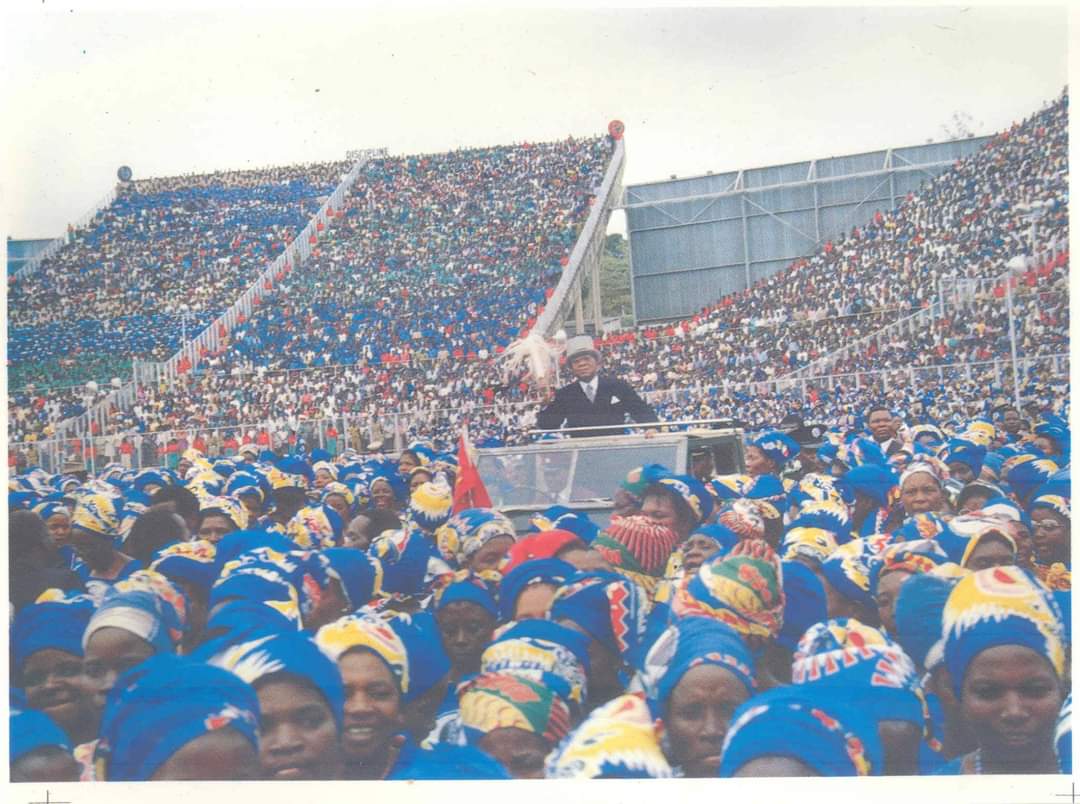
In Malawi, the accolade of being the first and only liberating political party goes to the MCP. And that legacy will stick with us for many more years to come. It was Dr. Hastings Kamuzu Banda alongside some liberation heroes such as Kanyama Chiume, Orton Chirwa, Henry Masauko Chipembere, Yatuta Chisiza, Dunduzu Chisiza and others that fought a gallant fight against British colonial dominance in the 1950s and 60s.
It was also the MCP and Kamuzu who took Malawians on the first genuine social and economic development path after independence. To date, the party’s development footprint is still visible. In fact, most of this country’s telling and landmark infrastructure is the handwork of Kamuzu and his MCP. We ought to just give it to them.
Since the advent of multiparty democracy in this country, Malawi’s social economic progression has been that of three steps forward and five steps backwards. Under the tutelage of the International Monetary Fund (IMF), Malawi adopted wholesale Structure Adjustment Programs under former President, Bakili Muluzi, apparently to devolve more economic control to the private sector, and kick-start rapid economic development.
The SAPs saw most state owned companies such as the Malawi Development Corporation (MDC); David Whitehead and Sons (DWS); Brown & Clappton, and others being sold to private sector players for a song. We later realized that this was hardly the economic panacea that Malawi needed.
Thousands of people were thrown out of employment; the Malawian Kwacha lost massive value amid high taxes and runaway inflation; and corruption became endemic thereby stifling the little gains that may had been made.
Efforts by successive governments to bring about an economic revolution to the Malawian economy on a constant life support have been sparsely, and at the most, negligible to make any significant dent at the jaws of poverty.
Ironically, over 25 years after the change of government to multiparty rule, Malawians decided to hand power back to MCP through the leadership of President Dr. Lazarus Chakwera, who became Malawi’s President after the 2020 presidential election re-run. This was a classical case of ‘let the one who started finish it’. And true to this adage, Dr Lazarus Chakwera did not waste time but get down to work.
Despite facing a triple-whammy of catastrophies like the Covid 19 pandemic; the war in Ukraine and a slumping global economy, the Chakwera government quickly announced a series of measures to cushion Malawi’s economy against external shocks as well as to inject enough gas to put it on a growth path. The measures included spending cuts through stringent fiscal measures to bring about spending discipline in government and departments. In November 2021, President Lazarus Chakwera launched the Malawi Vision 2063, a development blueprint designed to guide Malawi’s development agenda in the short, medium to long term. The objective is to make Malawi a middle income country by 2030, and a full blown economy by 2063.
As we are talking, Malawi is currently almost a construction site with various construction projects sprouting variously from high and low. Currently, negotiations are at an advanced stage for government to qualify for an Extended Credit Facility (ECF) with the IMF, a development, which is expected to help stabilize the economy by among other things making forex readily available.
In the larger scheme of things, it appears it is once again the MCP government through current President Dr. Lazarus Chakwera that are genuinely destined to bring about real and practical social and economic development to Malawi through an empowering vision heralded by Malawi’s founding President, Kamuzu.
It is thus befitting that as Malawi celebrates its 59 years of independence, Malawians must also use the space to reflect on the role that the first revolutionary political party in this country – MCP – played in the total social and economic development of the country.
They say time is the best judge of everything and it seems time has judged that MCP and President Dr. Lazarus Chakwera must continue to guide this country on a social and economic development path in a faithful and time honored quest to uplift the masses out of poverty.



 President Banda is an international speaker on leadership, democracy, good governance, and women’s and girl’s rights and motivational speaker. She has delivered numerous lectures at universities including Harvard Medical School and the Kennedy School of Politics, the London School of Economics and Political Science, George Washington University, Kansas State University, among others.