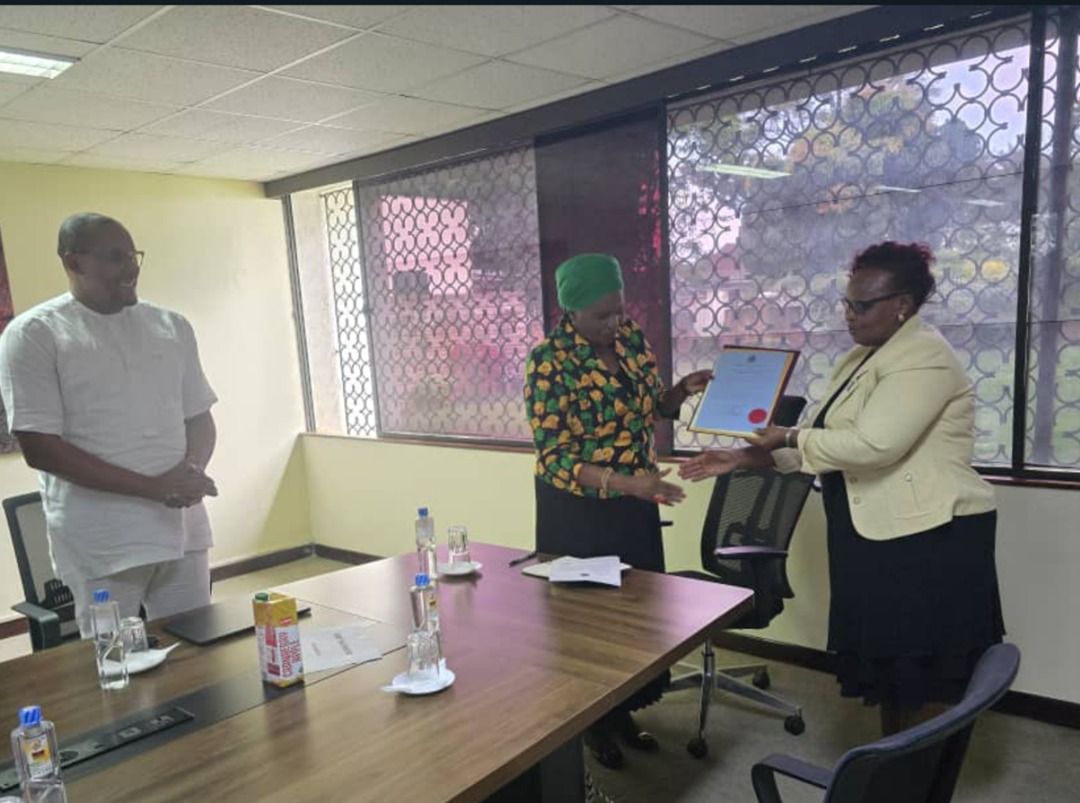
Malawi has renewed its status and strengthened its role as an active and contributing member of the African Telecommunications Union (ATU) following the submission of its Instrument of Ratification to the Constitution and Convention of the ATU on 12 June, 2025 in Nairobi, Kenya.
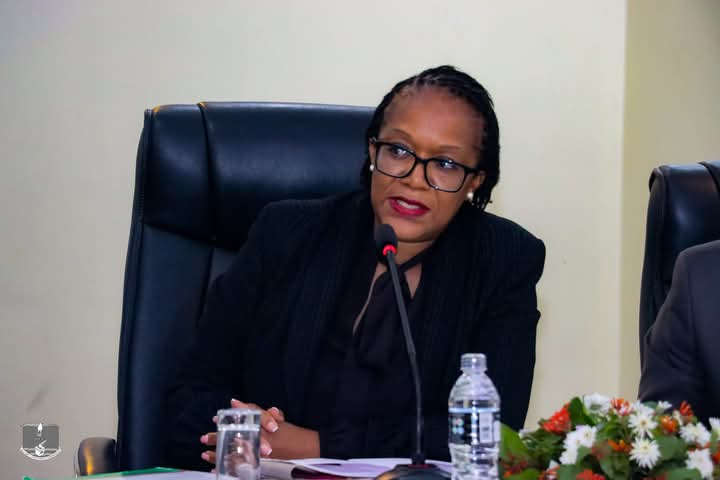
The official submission was made by the Director General of the Malawi Communications Regulatory Authority (MACRA), Daud Suleman, and was received on behalf of the ATU Secretary-General by Alice Koech.
The process was facilitated by the Office of the High Commissioner of Malawi to Kenya, ambassador Callista Mutharika.
The submission included the original copy of the Instruments of Ratification, reaffirming Malawi’s commitment to the objectives and principles of the African Telecommunications Union.
The ATU Secretariat has since acknowledged the timely submission and welcomed Malawi’s reaffirmation of support towards the Union’s mission of fostering the growth of Africa’s ICT sector for sustainable development.
This ratification reflects Malawi’s recognition of the critical role telecommunications play in economic and social development. It also aligns with MACRA’s broader strategic goals of regional integration, policy alignment, and capacity building within the ICT sector.
Speaking during the submission, Suleman said: “The Government of Malawi, through MACRA, looks forward to continued collaboration with the ATU and other member states in promoting inclusive, secure, and innovative telecommunications frameworks that support the continent’s long-term development goals.”
By ratifying the ATU Convention, Malawi gains full participation rights in all ATU activities meetings, conferences, decision-making bodies and can nominate and be elected to the Administrative Council.
This elevates Malawi from observer to active decision-maker, giving it a voice in shaping continental ICT policy.
The African Telecommunications Union is the specialized agency of the African Union (AU) responsible for coordinating the development of information and communication technologies (ICTs) across Africa.
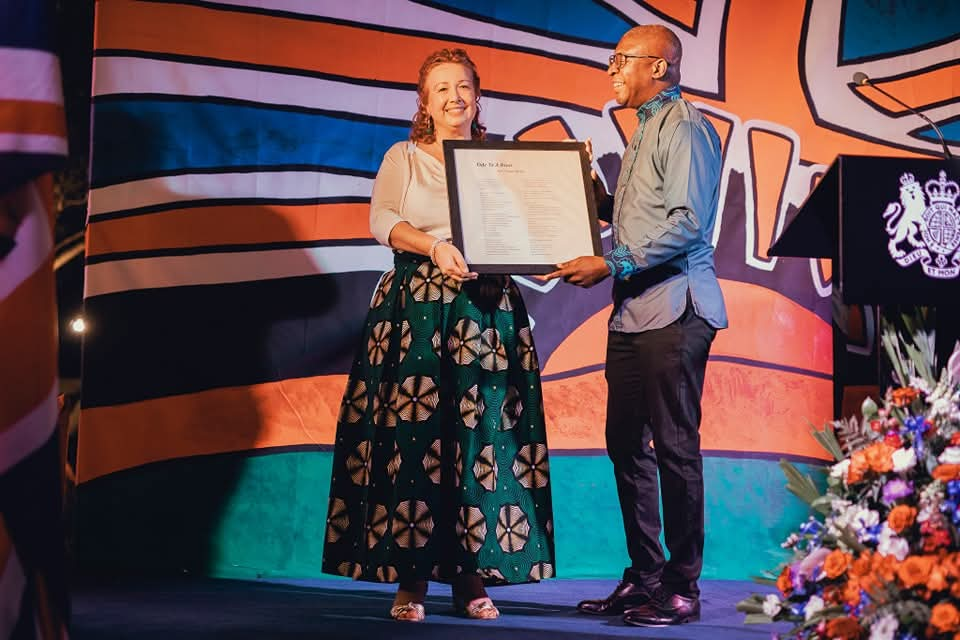
The British High Commissioner, Fiona Ritchie, has said that the Agriculture, Tourism and Mining strategy (ATM) has the potential to revolutionize Malawi’s economic development.
She expressed these sentiments during King Charles’ birthday celebration on Thursday, held at the commissioner’s residence in Area 10, Lilongwe.
The commissioner said that the British government will continue to work with the Malawi government in the future to restore economic stability for the private sector whether it’s through mining, agriculture or tourism in order to help the country grow and develop economically.
“Malawi is currently and will remain for sometime an agricultural depedent economy hence for it to grow it needs to invest in more productive commercial agriculture and mining.
“There is still hope for Malawi to develop in all sectors while working with the British government at the same time promoting the long lasting relationship that begun along time ago among the two countries,” she explained.
She further added that a prosperous and peaceful Malawi is a prize worth striving for, no matter the challenges ahead, and that it is a source of joy for every Malawian, supported by friends and partners.
Minister of Basic Education, Madalitso Kambauwa Wirima, expressed gratitude over the British high commissioners commitment towards helping Malawi to develop in all sectors by providing support and resources.
“Britain has remained Malawi’s major development partner, increasing its official development assistance over the years in all sectors of our society which includes health, education, macro economic stability, climate change, governance and others.
“This support greatly compliments the government’s current initiative of promoting investments in critical sectors of agriculture, tourism and mining as well as other areas like manufacturing, energy and infrastructure development,” she said.
Among the dignitaries at the function were the Leader of Opposition in Parliament, George Chaponda; Chief Justice Rizine Mzikamanda; as well as ambassadors and diplomatic representatives from various countries.
Political parties have expressed commitment towards incorporating issues of improving water, sanitation, and hygiene into their manifestos.
This was stated on Tuesday in Mponela, Dowa, during an engagement meeting with political parties organized by the Water and Environmental Sanitation Network (WESNET).
During the meeting, WESNET presented a position paper that indicated the status of WASH in Malawi. According to the 2023 Joint Monitoring Program by the World Health Organization and UNICEF, 18% of Malawi’s population has access to safely managed drinking water sources, and there is a significant gap between urban and rural areas. Furthermore, only 46% of the national population has access to a toilet that is functional and clean.
In an interview with AfricaBrief, WESNET Board Chairperson Panganani Njolomole emphasized the importance of engaging political parties to include WASH issues in their manifestos. “We want an increase of 5% allocation from the national budget so that we can manage to address some of the gaps in the WASH sector. It’s not that 5% is a low figure, because we are also considering our starting point. The current budget has an allocation of 3%, which is also an increase from previous ones, and we want to have more.”
In his remarks, Center for Multiparty Democracy (CMD) Vice Chairperson and Secretary General for the People’s Party (PP), Ben Chakhame, concurred that WASH services should be prioritized. “It is true that, as political parties, we need to prioritize WASH regardless of our differences. We would like to commend WESNET for bringing us together, and as you’ve heard, we have made commitments to improve WASH in the country.”
WESNET recommends that political parties include, in their manifestos, at least universal access to safe water and sanitation, an increase in WASH budgetary allocation to at least 5% of the national budget, and improved staffing levels in the WASH sector, among other things. Political parties such as the Malawi Congress Party (MCP), UTM, Democratic Progressive Party (DPP), Alliance for Democracy (AFORD), People’s Party (PP), and United Democratic Front (UDF) were present.
Private practice lawyer Bob Chimkango has sued two police officers, Sub Inspector James Tinenenji and Detective Sub Inspector Collins Lemani, from Bangwe Police Substation over the shooting incident which happened during the night of June 10 2025.
Following his arrest, Chimkango was charged and pleaded guilty to the two counts of failing to comply with signal to stop at roadblock contrary to section 39(3) of police Act and drink and drive contrary to section 128 of Traffic Act.
Midima First Grade Magistrate Lameck Mkwapatira slapped him with a K25 000 fine for the first count and K15 0000 for the second count.
The two have been sued in their personal capacity, over what had been reported by the Police as a stray bullet that damaged a motor vehicle belonging to Chimkango during the arrest.
“To James Tinenenji and Collins Lemani, take notice that unless within eight days after the personal service of this summons on you, inclusive of the day of service, you return to the Chief Resident Magistrate at Blantyre the affidavit attached hereto, made and sworn by yourself or your legal practitioner stating that you intended to defend this action and have a good defence thereto and (a) either indicating clearly the grounds of your defence; or (b) stating that you intend to file a defence within seven days” reads the summons issued by the Senior Resident Magistrates Court Sitting at Limbe, on 12th June, 2025 and registered as Civil Cause Number 707 of 2025.
The summons allege that on the 10th day of June, 2025, the plaintiff was driving Motor Vehicle Merecedes Benz Registration Number CZ 3 from the direction of Maravi going towards Limbe when the defendants opened fire, shooting at the Motor Vehicle belonging to the Plaintiff and in the process damaging the front windshield and other crucial parts of the vehicle transmission system, upon which the said motor vehicle switched off and ceased to function.
Chimkango is claiming K45, 000, 000. 00 being the market value of the motor vehicle in question, plus damages for loss of use to be assessed at commercial car hire rate from the date of incident to the date of payment.
Malawi has registered 153 cases of suicide between January and March 2025.
In 2024, the country recorded 597 cases between January and December, while in 2023, 527 cases were registered.
This was disclosed during a Mental Health Workshop in Lilongwe organized by Alliance for Children Everywhere (ACE) in collaboration with the Ministry of Health, under the theme “Advancing Mental Health and Trauma Recovery for Professionals and Children.”
Dr. Michael Udedi, Assistant Director of Curative Medical Rehabilitation Services in the Ministry of Health, said many people are experiencing mental health and psychosocial issues, leading to a worsened situation of suicide, as evidenced by the suicidal behaviors between 2021 and 2025.
He identified socioeconomic factors, exposure to suicide, relationships, and family issues as contributing factors to the rise.
” We have put in place various interventions, such as training people in the community and health providers to help with psychological first aid when individuals experience mental health issues” Dr Udedi Explains.
Meanwhile, Chisangalalalo Mtonia, Country Director for Alliance for Children Everywhere (ACE), in a separate interview, stated that there is a need to do more in advocating for children’s mental health, as certain cultural practices are contributing to the problem.
He said, “The country is moving at a snail’s pace, hence he called upon stakeholders, including the government, to join forces to deal with cultural practices that contribute to mental health issues among children”.
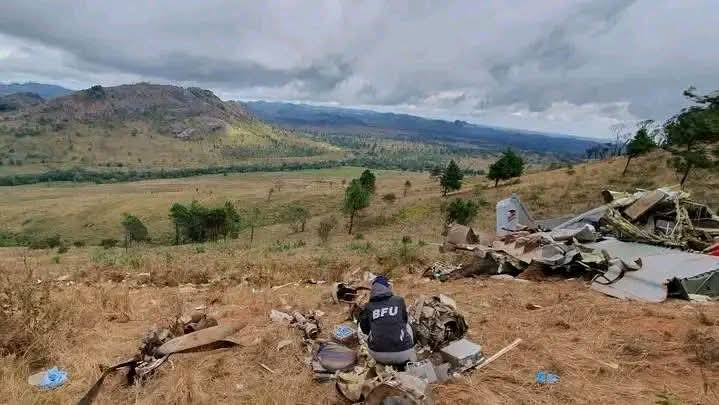
A final report by German investigators who probed the aircraft crash that killed then Vice-President Saulos Chilima and eight others has attributed the accident to poor judgement, lack of awareness and inadequate pre-flight preparation.
The accident occurred on June 10 last year when the military aircraft, a Dornier 228-202K, went down in Nthungwa, a section of Chikangawa Forest in Nkhata Bay.
The German Federal Bureau of Aircraft Accident Investigation (BFU) conducted the investigation at the request of the government of Malawi to the German government.
Regarding the causes of the accident, the BFU says: “The accident occurred because the crew flew into instrument meteorological conditions [IMC] during flight under visual flight rules [VFR] and the aircraft collided with the ascending terrain.
“The following contributed to the accident: the decision to continue the flight to the destination at low altitude in marginal weather conditions; lack of situational awareness; and inadequate pre-flight preparation.”
According to aviation authorities such as the Federal Aviation Administration, the United States’ national aviation authority, VFR into IMC means pilots navigate based on visual references in weather conditions that require instrument navigation.
And according to the report, weather conditions on the day were too poor, with low visibility to fly safely without instruments.
It states that due to poor visibility and low altitude, the aircraft struck rising terrain, a hill in this case, a scenario known as controlled flight into terrain, where a properly functioning aircraft is unintentionally flown into the ground.
Experts point out that a pilot’s decision to continue flying at a low altitude despite marginal weather, instead of diverting, turning back or climbing to safer altitudes, creates a continuation of risky actions.
The report adds that the crew likely lost awareness of their exact position, altitude relative to terrain and the weather ahead.
Additionally, it implies that the flight may have been poorly planned, possibly lacking updated weather briefings, proper route planning or terrain awareness, suggesting a lack of contingency planning for worsening weather conditions.
The report also states that the aircraft was not equipped with a cockpit voice recorder or flight data recorder, apparently because these were not mandated by Malawi’s aviation regulations.
Additionally, no radar data from the day of the accident was available from the Lilongwe air navigation service provider.
However, GPS position and altitude data were retrieved from the “onboard Garmin Aera 760 navigation system, which recorded the flight from 08:46:48 to 10:16:14, ending shortly after the crash due to battery depletion”.
The report says analysis of this data, using Garmin BaseCamp software, an application that helps users plan and manage outdoor activities and trips, revealed that the aircraft flew at altitudes below 1,000 feet above ground level (AGL) on multiple occasions, with the lowest altitude being 185 feet AGL.
After briefly climbing to around 2,000 feet AGL, the aircraft descended again and remained under 1,000 feet AGL until impact, the report says.
It adds that during the final 16 minutes of flight, the average ground speed was 128 knots, potentially lower due to wind from the south to southeast.
Chilima and the eight others were on their way to Nkhata Bay to attend the burial ceremony of former Cabinet minister and lawyer Ralph Kasambara when the accident occurred.
“According to the Malawi Air Force, in the evening of June 9, the flight crew received the order to pick up the Vice-President of the Republic of Malawi and his entourage the following day in Lilongwe and fly them to Mzuzu,” the report says.
It adds that the plan also included flying Chilima back to Lilongwe after the funeral, which was scheduled to begin at 10:00.
“Afterwards, the crew should have flown to Mzuzu again to bring the family members of the deceased [Kasambara] back to Blantyre-Chileka,” the report adds.
Meanwhile, the government has organised a memorial service scheduled for June 10, 2025 at the accident site to commemorate the nine victims of the crash.
In parallel, Chilima’s family is holding a separate memorial service at Nsipe in Ntcheu, where he was laid to rest.
The Malawi Electoral Commission (MEC) has rejected a request from key opposition political parties who sought an independent audit of the country’s Electoral Management System (EMS) ahead of September 16, 2025 tripartite elections.
The parties, namely, Alliance for democracy (AFFORD) , Democratic Progressive Party (DPP), United Democratic Front (UDF) , Peoples Party (PP), and UTM collectively demanded MEC to allow them use an independent information and communications technology ( ICT) auditors to audit scrutinize the EMSs, contending that the move would clear out any fears that MEC’s servers might have been compromised at the time the official voter registration was commencing.
But in response to the request, MEC has cited concerns over system integrity and institutional control as the major reasons to turn down the parties request.
In a three-paged letter addressed to political parties, MEC Chairperson Justice Annabel Mtalimanja states that the proposed audit deviated from the normal standard ICT assurance protocols.
Mtamalimanja argued that there is no evidence to warrant an audit, saying the request by the political parties does not indicate any irregularities within the system.
“The submitted scope resembles a structured forensic investigation rather than a professional ICT assurance exercise. Such a process risks compromising system security, undermining institutional control, and weakening the Commission’s ability to safeguard the integrity of the electoral process,” reads the statement in part.
In an interview DPP Secretary General Peter Mukhito said the commision has lost an opportunity to regain the voters trust.
Mukhito said the parties would meet to map the way faward.
He said; ” this is a lost opportunity on the part of Malawi Electoral Commission. We, the opposition, have been raising quite a lot of issues and we believed that these independent auditors could build the lost trust and enhance the credibility of MEC. Unfortunately, MEC has chosen to look on the other side. This is confirming our fears and what we have been saying that MEC’s system is adulterated.
We will sit down as political parties, consult as much as we can and see what we can do next.”
In a separate Interview AFROD spokesperson Amatula Rajab said she would the party would comment yet after meeting it’s co- requestees.
“First of all we need to meet and discuss because we sent the request as parties not AFORD,” She said.
UTM publicity secretary Felix Njawala said described the news as “very unfortunate”.
Njawala said ; “It is very unfortunate that we have to sit here and answer these questions. But we will sit down and see what to do.”
Both UDF spokesperson USuf Mwawa and PP Secretary General Kelvin Chakhame’ s phones could not be reached by the time we went to press.
Reacting to the development, Political commentator Victor Chipofya said the decision was ideological.
He said; ” Political are key players in an election, therefore, they deserve to know how the system is operating. So what MEC has done raises alot of questions as to why they don’t want the system to be checked.”
In march this year, a private investigator, Phillip Zuze, wrote MEC seeking to independently audit MEC’s system to ensure its integrity and reliability with less than six months to the tripartite polls.
In a similar fashion, MEC turned down the demand.
In December 2024, ICT experts also queried MEC’s system for failing to detect double registrants.
The reactions came against the background of the arrest of a voter in Lilongwe who had registered twice.
Previously, MEC came under fresh scrutiny following the missing of names in the preliminary voters register, including that of MEC commissioner Francis Kasaila.
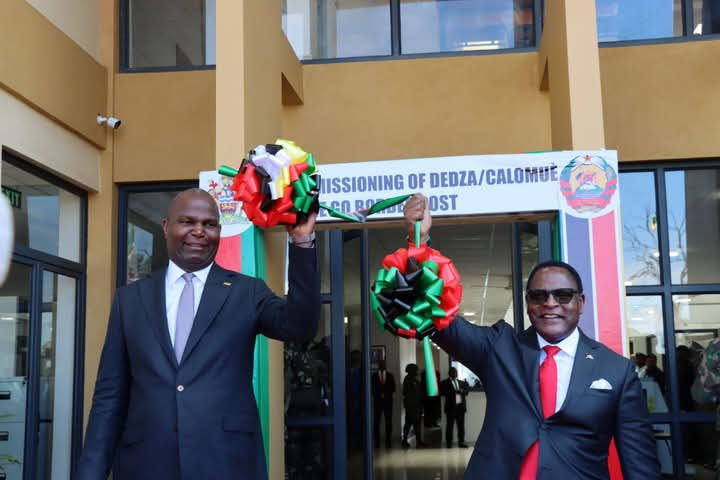
In a significant step towards enhancing regional integration and trade facilitation, the president of Malawi, Lazarus Chakwera, and the president of Mozambique, Daniel Francisco Chapo, on Friday jointly officially commissioned the Dedza/Calomue One-Go Border Post (OGBP).
The World Bank funded US$9.6 million OGBP aims to streamline border clearance procedures, reduce transit times, and boost trade between Malawi and Mozambique.
Speaking at the event, President Dr Lazarus Chakwera, said apart from celebrating the 50 years of existence between the two countries, the OGBP was another positive development for rejoicing.
“Mozambique and Malawi agreed that this should be named a One Go not One Stop post, and this goes to all borders across the country,” he said.
The president further thanked the World Bank and other partners for making it happen, adding that the facility will improve trade and investment.
“As we celebrate the 50 years of Mozambique and Malawi ties, we are happy to take our relations to higher levels and we want to celebrate this as a starting point of greater things to come, building from strong foundations that have already been laid,” he added.
According to Chakwera, Malawi and Mozambique will continue to cooperate in many areas of co-existence for the prosperity of Africa.
The Mozambican President, in his corresponding remarks, expressed gratitude for the invitation, and he described the ceremony as historical.
“This One-Go Border Post shows the relationship between the two people. The 50 years are a lifetime achievement and we are here to confirm our relationship and improve the living conditions of our people,” said Chapo.
He called on the African continent to improve its infrastructure so as to ensure free trade is a reality, and to also boost economies.
“We are one people, we are brothers and sisters. Let’s remove the barriers among our people because this is what they want. To more developments of One-Go so that our people can do rapid business,” Chapo said.
World Bank, Country Manager, Firas Raad, said, apart from celebrating 50 years of existence between the two countries, the day marked a new beginning of fast trade as well as regional cooperation between the two countries.
“This improves the system, digitises it, and also improves the waiting time. All this has been made possible through the good relations between Malawi and Mozambique,” said Raad.
A 14-year-old girl, known as Agnes (real name withheld), from Area 23 Township in Lilongwe is pursuing justice in a case involving her impregnation by an older man.
Agnes had been enduring prolonged sexual harassment from her elderly neighbour, who is in his late 60s, before becoming pregnant.
“This has been happening for a long time; I can’t remember the exact year. He would bribe me with K500 or k1,000 to keep quiet,” Agnes disclosed.
The elderly man would repeatedly request Agnes to meet him at the back of the house, near the outdoor bathroom, when she went to fetch water, where he would sexually abuse her. This traumatic experience has deeply affected Agnes’s mental well-being, leaving her with enduring emotional wounds.
In July 2024, 14-year-old Agnes, a Standard 4 pupil, started showing signs of pregnancy. Her school friends noticed her condition and mocked her through the window.
“I didn’t realize I was pregnant, but I noticed my friends at school were laughing at me. I felt very embarrassed and confused,” Agnes recounted.
An older man impregnated Agnes and warned her not to disclose it to anyone, cautioning her that the community would harm him if she did.
This threat kept Agnes silent about her pregnancy until a month after she gave birth at Kawale Health Centre in Lilongwe.
Agnes resides with her grandmother Martha(not her real name), who has faced community accusations.
Some community members believe that the grandmother was aware of Agnes’ situation with the older man and was benefiting from it.
“We are not happy with the situation, despite what people are saying about my granddaughter’s case. We’re seeking justice from the police; I’ve reported the matter to them. They’re working on it,” said Martha
Martha expressed her sorrow over the elderly man exploiting the child, which could impact her future, especially her education.
“It’s disheartening to see an elderly man taking advantage of a child like this. During a play session with friends, I overheard her saying ‘Kuzipha kosavuta,’ which means ‘Killing yourself is easy,’” Martha shared.
This troubling statement underscores the depth of trauma she endured due to her situation.
To ensure the child’s safety, Martha has sent her to stay with her uncle until the situation is resolved.
“I have sent her to stay with her uncle until everything is sorted out, while waiting for the police to take action,” she clarified.
Martha believes that her granddaughter will return to school once the child is a bit older.
Sub Inspector Precious Mabvuto Phiri, Public Relations Officer (PRO) for Kawale Police Station
In response, Sub Inspector Precious Mabvuto Phiri, Public Relations Officer (PRO) for Kawale Police Station, confirmed the defilement case, stating that it was well-wishers who alerted the Area 23 police unit under Kawale Police Station.
He stated that investigations are ongoing, though facing challenges due to the reluctance of the guardian to pursue the case.
“We issued a Medical report to pursue the case, but the guardian and the victim did not return with the medical report from the Hospital, which helps police to file a proper charge and secure a conviction,” Phiri elaborated.
Memory Chisenga, a child rights activist, expressed frustration that children experiencing sexual harassment and abuse are not receiving justice, allowing perpetrators to escape punishment.
“We are not making progress in Malawi in handling rape and defilement cases. The courts and police are delaying us; action needs to be taken,” Chisenga emphasized.
Chisenga vowed to pursue Agnes’ case until justice is served.
She emphasized the urgency for courts to expedite the handling of such cases, which are alarmingly prevalent in Malawi.
Andrew Mphongolo, District Youth Friendly Health Services Coordinator for Lilongwe District, noted that the hospital receives numerous cases of children impregnated at an early age, leading to complications like obstetric fistula.
“We need to increase awareness among girls about preventive measures, including contraceptives,” Andrew emphasized.
Malawi is making progress in combating Gender-Based-Violence against women, with a decrease in sexual offenses in the country, resulting in a 28 percent drop in rape cases and a 15 percent decrease in defilement cases.
According to statistics from the Malawi Police Service, in 2023, they recorded 208 rape cases and 1691 defilement cases, while in 2024, they registered 150 rape cases and 1435 defilement cases.
The Penal Code in Malawi categorizes rape under “Offences against morality” (chapter XV) with the following punishment: “Any person who commits the offense of rape shall be liable to be punished with death or with imprisonment for life.”
Violence against women and girls in Malawi is a harsh reality, and sexual violence is no exception.
As Agnes seeks justice, her story serves as a poignant reminder of the need for collective action to safeguard Malawi’s children from sexual abuse and exploitation, ensuring that perpetrators are held accountable and young girls can reclaim their futures.
Community Health Rights Advocacy (CHeRA), in partnership with Kenya-based Kenya Ethics and Legal Issues Network (KELIN), has called on Malawi’s health sector stakeholders to utilize Intellectual Property (IP) flexibilities to improve access to affordable, quality healthcare for all Malawians.
Speaking during an interview at a recent national dialogue, CHeRA Executive Director Aniz Mitha highlighted that IP is a promising and necessary area for advocacy, especially as the organization expands its focus beyond key populations to broader national health equity.
“For us at CHeRA, this is an exciting space. We’ve come to realize that access to healthcare is not just a concern for key populations; it affects everyone. With medicine prices skyrocketing and global funding for health dwindling, it’s time Malawi uses IP strategically,” said Mitha.
The initiative comes at a critical time for Malawi’s health system, which faces increasing pressure from foreign aid reductions and systemic vulnerabilities.
In his presentation, public health expert Dr. Benjamin Azariah Mosiwa warned that the country’s dependence on imported pharmaceuticals is unsustainable.
“Foreign aid is no longer reliable. Without investing in local pharmaceutical capacity and using IP tools like TRIPS flexibilities, we will keep losing ground,” Dr. Mosiwa said. “This is no longer just a legal debate—it’s a matter of survival, particularly as international donors scale back their health funding.”
CHeRA’s project, supported by KELIN, sheds light on how Malawi’s legal framework—especially the Patents Act (Cap. 49:02)—can be adapted to improve medicine access.
Under the WTO’s TRIPS Agreement, Least Developed Countries (LDCs) like Malawi are permitted to delay patent enforcement, issue compulsory licenses, and import more affordable generics. However, these flexibilities remain largely underutilized.
Chifwayi M.K. Chirambo, Deputy Registrar General of Industrial Property
Delivering the keynote address, Chifwayi M.K. Chirambo, Deputy Registrar General of Industrial Property, noted that Malawi has not fully exploited the IP tools at its disposal.
“The majority of essential medicines are off-patent. The question we must ask ourselves is: why have we failed to take advantage of this for local manufacturing?” asked Chirambo.
He added that Malawi’s current legal framework needs urgent revision:
“Our Patents Act does not explicitly mention the transition period for pharmaceutical patents. This is a missed opportunity. We need to amend our laws to clearly state that pharmaceutical patents are not enforceable until 2033, as allowed for LDCs.”
Chirambo also called for strengthening the country’s capacity to issue compulsory licenses:
“We must create a fast-track process for situations where medicines are unaffordable or in short supply. It’s about saving lives, not protecting monopolies.”
Mitha noted that the dialogue has already begun unlocking new avenues:
“We’ve started something that never existed before—getting IP rights discussed at community level. Now it’s time for the government, regulators, civil society, and private sector to act.”
Participants at the forum urged ministries—especially Health, Trade, and Justice—to work in unison, aligning strategies and providing investment incentives to local pharmaceutical firms.
Recommendations included reforming patent review systems, training regulators, and supporting the use of parallel importation to bring in more affordable medications.
In his concluding remarks, Chirambo underscored the urgency of the matter:
“This isn’t just a legal issue—it’s a public health emergency. Intellectual property must serve the people, not stand in their way.”
As the conversation around IP and public health intensifies, CHeRA, KELIN, and government institutions appear united in one message: the time for action is now—for the health, rights, and dignity of every Malawian.