WaterAid Malawi has reaffirmed its commitment to supporting women in the Water, Sanitation, and Hygiene (WASH) sector in the country.
Speaking at the launch of the Professional Women in Water Sector Network (PROWIWS) in Lilongwe, WaterAid Malawi Country Director Peter Phiri emphasized the importance of women’s roles in promoting sanitation and hygiene practices.
“Women can be effective advocates for improved sanitation and hygiene practices, particularly in communities where they play a key role in childcare and household management,” Phiri said.
He added that women can take on leadership roles in WASH initiatives, mobilizing communities and promoting behavior change.
PROWIWS President Engineer Phideria Clara Moyo highlighted the network’s mission to champion women’s participation in WASH initiatives. “PROWIWS aims to provide a platform for women to amplify WASH messages, complement government efforts, and ensure women are not left behind in decision-making,” she said.
Moyo added that the network will continue to provide a platform for women to take on leadership roles and contribute to decision-making processes, ultimately driving progress in the WASH sector.
By supporting women in the WASH sector, WaterAid Malawi and PROWIWS aim to promote sustainable development and improve the lives of communities across the country.
The partnership underscores the importance of empowering women to take on leadership roles and drive change in their communities.
Hallmark Limited, a leading company specializing in water treatment and management solutions, has launched an initiative to tackle the pressing issue of non-revenue water (NRW) and illegal water usage in Malawi.
According to Managing Director Gift Gondwe, the company’s primary objective is to reduce NRW, which results in significant financial losses for water utilities.
“Utilities incur costs to produce and treat lost water without generating corresponding revenue, affecting industries like agriculture, manufacturing, and services,” Gondwe explained.
Raymond Macheli, Head of Business Development at Hallmark, highlighted the severity of the issue in Lilongwe, where NRW stands at 38%. “Our goal is to reduce non-revenue water to 25%,” Macheli said.
“We’re leveraging technological advancements to address this challenge and plan to partner with all water boards to achieve our objective.” Macheli emphasized that NRW is a continental problem and Hallmark is committed to finding solutions.
As a company focused on water issues, Hallmark Limited has developed expertise in water treatment and management.
“With its new initiative, the company aims to make a significant impact on Malawi’s water sector by reducing NRW and promoting more efficient water management practices. By doing so, Hallmark hopes to contribute to the country’s economic development and improve the lives of its citizens.
“With a strong background in water treatment, Hallmark Limited is well-positioned to address the complex issue of NRW in Malawi.
“The company’s initiative has the potential to benefit not only the water utilities but also various industries that rely on water, such as agriculture, manufacturing, and services.”
By reducing NRW, Hallmark aims to help Malawi’s water sector become more efficient, sustainable, and profitable.
In an effort to achieve Sustainable Development Goal 6 which aims to ensure universal access to safe drinking water, sanitation and hygiene, Malawi’s Lilongwe Water Board (LWB) will from next week July 21 – 24 host the 95th Strategic and Technological Council (STC) conference of the Africa Water and Sanitation Association (AfWASWA).
This comes when UNICEF reports that 1 in 3 children approximately 739 million globally live in areas with high or very high water scarcity, putting them at risk from waterborne diseases and other health issues. Climate change is exacerbating this crisis, with droughts and floods further impacting water access.
LWB Chief Executive Officer CPA Silli Mbewe says Malawi which currently holds the Vice Presidency of AfWASWA through his organisation is aligns well with the broader strategic agenda to strengthen the Boards influence, not just in infrastructure development, but in knowledge leadership, innovation, and sector transformation.
The AfWASWA conference which is scheduled to be held at Bingu International Convention Centre (BICC) in the capital, Lilongwe is under the theme: “Green Economy and Climate Resilience in Africa.”
Briefing members of WASH media forum, CPA Mbewe says this theme speaks to the current realities we face, where the effects of climate change are no longer abstract, they are here with us.
“From prolonged droughts to frequent flooding, the resilience of our water system is under pressure, and there is urgent need to accelerate our shift towards sustainable, adaptive, and environmentally sound solutions,” he said.
This year’s event will mark the second time for Malawi to host the AfWASWA STC. The first time was in 2016. This year, more than 200 delegates from over 20 African countries, representing water and sanitation utilities, government ministries, academic and research institutions, private companies, NGOs, and financing partners are expected to tackle water solutions during the conference.
Director of Water Supply Services in the Ministry of Water and Sanitation, Prince Mleta highlighted the conference’s importance in addressing continental water and sanitation challenges.
He said Malawi has made notable strides in aligning itself with the agenda of a green economy and climate resilience. As such, this conference provides a timely platform for Malawi to showcase its progress, learn, develop partnerships and attracts investment.
The Minister of Water and Sanitation, Abida Mia has expressed the need of empowering women across Africa in order to address challenges faced in Water, Sanitation and Hygiene (WASH) sector.
Mia made the appeal on wednesday during the official launch of Professional Women in Water Sector Network – PROWIWS which was held at Bingu International Convention Centre-BICC in Lilongwe.
Mia said women are the most vulnerable interms of challenges regards to to WASH issues hence a need to empower them in order to improve Water accessibility in the communities.
She said that most of the times, women in rural areas are harrased and sometimes abused as they wake up early in the morning fetching Water therefore, a need to empower them.
As women, when we have other women that we know that they are capable and have technical knowledge and are educated enough to lead a certain department, give them that opportunity to lead. Don’t pull them down, dont be jelous and as women, we need to grow and we need to support each other for the better “, said Mia.
In her remarks, PROWIWS President in Malawi, Phideria Moyo lamented that women should be in the forefront taking lead in addressing water challenges.
She said that Africa wide, only 16% form part of Women leaders an issue that is worrisome.
She cited that culturally, the burden of fetching Water rise with a woman but interms of decision making women take a back seat.
“Water Affairs affects more a woman but interms of decision making you will find that a woman takes a back seat hence miss the element of ferminehood at time of Innovations or solutions that are developed”, said moyo.
Moyo then emphasized on the need that women should be part and parcel in decision making in order to facilitate the production of Innovation that are sustainable and userble for a long time in WASH sector.
The Malawi Electricity Access Project (MEAP), being implemented by the Electricity Supply Corporation of Malawi (ESCOM) with funding from the World Bank, is changing the lives of Malawians through mass electricity connections, allowing people to embark in small scale businesses.
MEAP was launched in December 2022, with USD 71 million funding by the World Bank through the Malawi government, as part of a national energy access expansion initiative.
The aim of the project is to connect 180,000 new on-grid customers by December 2025, targeting households within 500 metres of existing transformers and ready electrical infrastructure.
However, by 21 July 2025, close to 160,000 customers had been connected to electricity, representing an approximate 88 % completion rate of the original target.
Escom worker interacts with a customer
During a media tour of the project in the Northern region this week, some of the beneficiaries of the project gave testimonies of how the MEAP project has transformed their lives and businesses.
Chikondi Masiyano, from Chimkusa in Mzimba had this to say about the project;
“Since my house was connected to electricity, I now run a hairdressing salon at home and sell cold drinks. Through this project, ESCOM has changed my life, I’m now able to earn an income through my businesses.”
Another beneficiary, Sharon Nyasulu applauded the quick turn around by ESCOM to connect electricity.
“The speed of the connection from ESCOM was supersonic. I followed all the procedures, and now my life has completely changed because of this initiative.”
Pastor Alinafe Kamzinga of the Amazing Love of God Pentecostal Church in Mzimba says MEAP has made it easier for his church to mobilise members.
“For over five years, we lived without electricity, which created major challenges… electricity is essential to engage the youth. The connection has made it easier to mobilize our congregation. We are fully benefiting from this development, and our members have expressed great gratitude.”
Similar sentiments were shared by Aggrey Phiri of Londowala village, Traditional Authority Mzikubola in Mzimba who said electricity has brought entertainment in his home because family members are able to watch television and movies.
In Mzuzu peri-urban areas like Sonda, beneficiaries shared testimonies of ESCOM has improved economic activity and security in the area.
“My kids can now study at night. I have started a small scale business after being connected to electricity. We thank ESCOM for this project,” said Etinala Kamange of Sonda – Manthaki.
The testimonies highlight the impact of MEAP and how electricity access directly powers small businesses, community hubs, and spiritual engagement.
Innovations ideas under the project such as deposit payment plans and Ready Boards ensure the program is inclusive, thus reaching women-headed families, low-income households, the elderly, and people with disabilities
Additionally, increased connections under the MEAP project help accelerate education, entrepreneurship, public health services, and overall community resilience.
Pilirani Phiri
Speaking during a media tour of the project in the Northern region, ESCOM’s Chief Public Relations and Communications Officer, Pilirani Phiri highlighted MEAP’s impact in transforming lives and livelihoods through affordable and inclusive access to electricity.
“The aim of the media tour was to amplify the voices of the beneficiaries and showcase the positive impact of the MEAP project on people’s lives. The impact is phenomenal. Close to 160,000 connected to the grid so far from the 180,000 target by December. When we say electricity is a key stimulus for economic development, this is what we are witnessing under the MEAP project,” said Phiri.
MEAP strategic objectives include raising on-grid electricity access from 12 % in 2020 to around 30 % by 2030 and expanding off-grid access to 20 % by 2030, spearheaded by the Ministry of Energy, achieving an overall national access goal of 50 % by 2030.
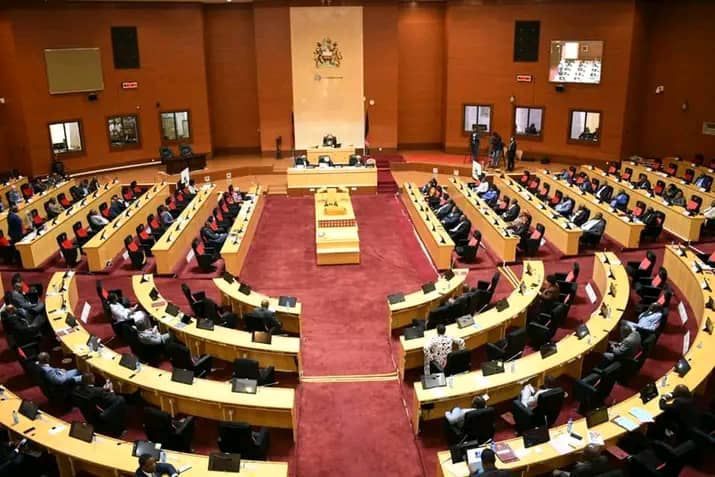
Speaker of the National Assembly, Catherine Gotani Hara has announced the dissolution of the 2019-2025 Parliament.
According to a statement released on Tuesday, the move is in accordance with Section 67 (1) of the Constitution.
“The Office of the Speaker of the National Assembly wishes to inform the general public that the 2019-2025 Parliament has been dissolved. This is in accordance with Section 67 (1) of the Constitution, which states that the National Assembly shall stand dissolved on the 23rd of July in an election year pending a General Election.
“To this effect, this year’s General Election will be held on 16th September, 2025. Following the dissolution, all operations of the National Assembly involving Honourable Members of Parliament as stipulated in the Constitution, which include legislation, oversight and representation, have ceased.
“However, section 67 (4) of the Constitution further states that if, between the dissolution of the National Assembly and the General Election that follows, the President is of the opinion that a constitutional crisis or emergency has arisen, he may reconvene the National Assembly for that purpose alone.
“The general public is being notified that the new Assembly shall be constituted following the Tripartite Elections to be held on 16th September, 2025,” reads the statement in part
The Commissioner of Police for the Eastern Region, Chikondi Cham’bwinja Mkwate Chingadza, has urged stakeholders to work together to strengthen security and reduce crime in the region.
Cham’bwinja made the call on Tuesday during a bi-annual regional executive committee meeting at Zomba Police College, attended by representatives from political parties.
The Commissioner emphasized the importance of collaboration among stakeholders in promoting security, citing that the police cannot manage alone and require the support of other parties.
She revealed that the crime rate in the region has remained stagnant in the first half of 2025, neither increasing nor decreasing compared to the same period last year.
To address this, Cham’bwinja advised police in the region to increase patrols and visibility in crime-prone areas to deter perpetrators and reduce crime rates.
“During the first six months of 2025, we have done well in crime management, but I’m not impressed because we haven’t reduced crimes or increased safety. This means we’re at the same level as last year. We’ll put measures in place to ensure crime rates are reduced by the end of this year. Let’s join hands, all stakeholders, to reduce crime in the region,” she said.
Regarding the upcoming elections, Cham’bwinja assured that the police in the Eastern Region are ready to discharge their duties professionally, ensuring the protection of all citizens.
She also warned political leaders against mobilizing youths to incite violence during the campaign period or after the elections, stating that the police will arrest anyone involved in violence, regardless of their political affiliation.
“We ask political parties to be drivers of peace and unity during this campaign period and after the elections. No political party is above the law, and if anyone is found inciting violence, we’ll act accordingly,” Cham’bwinja added.
Ephron Mvarajembe Mphande, a community policing representative, echoed Cham’bwinja’s sentiments, highlighting the significance of stakeholders working together to ensure a safe and protected environment.
He noted that the police sometimes face challenges in discharging their duties due to limited resources and appealed to other stakeholders with the potential to help address these challenges.
Senior Group Village Headman Chikanda praised the police in the region for their tireless efforts to reduce crime, saying communities are ready to support the police in their daily endeavors.
He assured that communities are committed to providing security, emphasizing that it’s their responsibility to tip off the police about any suspicious activity in their localities.
With the increase of motorcycle accidents and crime, the Malawi Coalition for Kabaza Stakeholders Association (Macokasa) has rolled out a nationwide registration campaign to improve road safety for operators.
Macokasa chairperson Moses Mwalabu said the campaign will also help to reduce crime linked to unregistered Kabanza operators.
He said the association will embark on a sensitization campaign from July 24.
“We have partnered with the Malawi Police Service and the Directorate of Road Traffic and Safety Services (DRTSS) on the campaign, which will involve community outreach, inspection points, and engagement with kabaza operators in major townships.
“This is a national effort to restore order on our roads. The number of accidents and crimes involving unregistered motorcycles is alarming. We want to ensure kabaza operators understand the importance of compliance with traffic regulations,” he said.
Regional Traffic Officer of Road Traffic and Safety Services, Leonard Ntonya said the campaign is very important since it will ensure that a lot of operators, who missed the June deadline, will now be able to register.
Government granted a moratorium for Kabanza operators to be registered up until June, but it was later extended to December this year.
Mwalabu said that failure to register by the new deadline will attract strict enforcement, including impounding of motorcycles and penalties.
The President of African Water and Sanitation (AFWASA) Mahmood Lutaaya says its high time for Africa to start solving its water challenges issues rather than relying on other people who always have different interest.
Lutaaya made the remarks on Monday during the official opening of the 95th Strategic and Technological Council comference for African Water and Sanitation Association which Malawi is hosting.
Lutaaya cited that he believes that African problems can be best solved by Africans because resources are always available.
“As Africa we have resources. What is needed is for us to start believing in ourselves that these challenges present opportunities for us and as Africans, we have expertise and this is what the comference is trying to bring on board “, said Lutaya.
Commenting on the matter, the Minister of Water and Sanitation , Abida Mia emphasized on the need of Africans to find solutions to water problems amongst themselves.
Mia said there is need for African continet to make sure that finances are found within Africa
” we can not always rely on Non- Governmental Organizations – NGO’s to fund us dealing with water problem issues. But we have to look for solutions within Africa’, said Mia.
In his remarks, the Chief Executive Officer of Lilongwe Water Board, Silli Mbewe commended the Malawi government for hosting the comference citing that it has provide the platform where new ideas within Water sector is being discussed.
He lamented that climate change has greatly compromise their service deliverly hence a need to develop climate resilient strategy
Police in Lilongwe have arrested three people in connection with the recent series of tragic deaths and attacks in Lilongwe’s Area 25.
National Police Spokesperson, Peter Kalaya, has confirmed that Dyson Sinedi was arrested in Area 43 while Adam Tsoka and Felix Magaleta were picked at Mgona over the weekend, after weeks of investigations.
Kalaya explained that the trio have confessed to have carried out the attacks with the intention of stealing from the victims.
Sinedi, 28, hails from Kaumbata Village, Traditional Authority (TA) Kapeni in Blantyre; Tsoka, 21, is from Tawi Village, TA Kaphuka in Dedza and Magaleta, 26, is from Likwawa Village, TA Sitola in Machinga.
Police reported 13 cases of attacks, five deaths and uncountable severe injuries between May and June this year a development that threatened Area 25 residents and other surrounding areas.