National Bank of Malawi (NBM) plc, in partnership with the Malawi National Women’s Football Team, The Scorchers, have donated assorted food items to Mai Mbambande Shelter Home for the Elderly in Lilongwe as part of the Bank’s corporate social investment (CSI) initiatives.
The donation, made on Monday, include, bags of maize, rice, beans, sugar and cooking oil, items identified as essential for the daily care of the elderly residents.
NBM plc, the official sponsors of the tournament and the Scorchers, made the donation alongside the Three Nations Women Football Tournament underway in Lilongwe where the teams also took part.
Speaking after handing over the items, South End Service Centre Manager, Nguwachi Selemani, said the initiative demonstrates the Bank’s ongoing commitment to supporting vulnerable groups and strengthening community welfare.
“As a Bank, our partnership with the Scorchers goes beyond football. It is about impact, community, and ensuring progress reaches every Malawian, especially the most vulnerable,” said Selemani.
She added that the donation addresses the home’s pressing needs and reminds the elderly that they are seen, valued, and not forgotten.
Selemani also commended the shelter’s founder, Deborah Mbale, who established the home in 2020 at the age of 25, describing her as a shining example of youth leadership and compassion.
“The Scorchers represent strength and unity, and their presence here shows that women can inspire change both on and off the pitch,” Selemani added.
The Scorchers were represented by Jetu, whose song ‘Ona Pangolin’ is NBM plc’s Women’s Championship theme song.
Receiving the donation, Mbale expressed gratitude to NBM plc and the Scorchers, noting that the support would greatly improve the welfare of the residents.
“These food items will go a long way in supporting the elderly under our care. We also call on other well-wishers to offer support,” she said.
Scorchers Captain Tabitha Chawinga also thanked NBM plc for the gesture, highlighting the importance of collaboration in uplifting communities.
“We thank National Bank for remembering the elderly. As Scorchers, we are proud to stand with partners who uplift our communities,” said Chawinga.
Leading telecommunications company Airtel Malawi plc, through the Airtel Africa Foundation, on Tuesday donated MK300 million to the Department of Disaster Management Affairs through the Ministry of Finance.
The donation comes in response to the declaration of a state of national disaster by the State President, Arthur Peter Mutharika, in all 28 districts of Malawi in October this year.
The donation, which is expected to be delivered through food relief, will be delivered in partnership with the Malawi Red Cross Society (MRCS).
Speaking during the handover ceremony, Airtel Malawi Managing Director Aashish Dutt said Airtel Malawi is not just a network but part of the community; therefore, they feel duty-bound to support vulnerable Malawians affected by hunger.
“This donation reflects Airtel Malawi’s belief that during moments of national hardship, standing together is the greatest strength a country can have. It underscores the company’s enduring commitment to the well-being of Malawians and its promise to show up where the need is greatest. The hunger crisis is affecting the lives of so many families and children across our country. As Airtel Malawi, we feel this pain deeply. When our nation hurts, we hurt. And when our nation needs us, we step forward,” said Dutt.
Commenting on the donation, the Minister of Finance, Economic Planning and Decentralization, Joseph Mwanamvekha expressed appreciation, saying the gesture is more than just support to the Malawi Government.
Mwanamvekha added that the donation will go a long way to alleviate the problems being faced by vulnerable people affected by hunger.
“We welcome this generous donation from Airtel Malawi at a time when many families are struggling. This assistance will directly support vulnerable communities and ensure children are not going to school on empty stomachs. As a government, we remain committed to working with the private sector to ensure urgent relief reaches all the Malawians who need it most,” he said.
The Malawi Vulnerability Assessment Committee (MVAC) report indicated that about four million people are at risk of hunger during the 2025/26 consumption period, representing 22 percent of the country’s projected population of 18.5 million.
The Rotary Club of Lilongwe has successfully raised MK37 million through a fundraising Bed Race competition held in the capital on Saturday morning, exceeding their initial target by MK7 million.
The event, which took place along the Memorial Tower stretch in Area 18 from 8:30 to 11:00 AM, attracted seven competing teams and support from major corporate sponsors.
Speaking after the event, Rotary Club President George Naphambo expressed gratitude for the overwhelming support. “Our target was to raise about MK30 million and we have managed to get MK37 million. We are grateful for the financial support from the sponsors,” he said.
The National Bank of Malawi emerged as the leading sponsor, contributing MK16 million in direct sponsorship and an additional MK3 million through participation fees for three teams. FDH Bank also made a substantial contribution of MK10 million to the cause. The remaining funds came from participation fees, with teams paying MK1 million each to compete in the race.
Out of ten registered teams, seven participated in the competition. MDF Team Two won the race, with MDF Team One finishing second and QuickTlak taking third place.
Other participating teams included National Bank of Malawi, Malawi Revenue Authority, and Umodzi Park.
According to Naphambo, the funds will support several community initiatives, with a primary focus on the Area 25 Women Waste Management Group. “The project that we have is waste management which is aimed at empowering women in Area 25. These women process waste into manure and sell it,” he explained.
The funds will also support a dental camp offering treatment services to members of the public, among other community projects.
Major William Namboya, Staff Officer 32 from the Joint Headquarters at the Malawi Defence Force, explained their motivation for participating.
“When Rotary invited us to participate in the tournament and explained the main agenda of the competition, we thought it wise to respond positively by sending two teams to raise funds for charitable causes,” he said.
The event was held under Rotary International’s global theme “Unite for Good” and demonstrated strong corporate and institutional support for community development initiatives in Lilongwe
The Green Economic Transition Facility (GETF) has opened applications for its Window 2, Round 3 funding cycle, offering grants of up to $300,000 to investors and entrepreneurs developing climate-smart business solutions in Malawi.
The launch, held Wednesday in Lilongwe, marks the continuation of a multi-partner initiative led by UNDP with support from the German Development Cooperation through KfW Development Bank, the Embassy of Ireland, and the Royal Norwegian Embassy.
GETF provides matching grants ranging from $40,000 to $300,000, plus up to $35,000 in technical assistance, for private sector projects that deliver environmental and socio-economic benefits.
UNDP Programme Coordinator Cinzia Tesse said the facility targets urgent environmental challenges facing Malawi, including deforestation, soil degradation, and biodiversity loss.
“Malawi is losing about 5.6% of GDP due to environmental damage,” Tesse explained. “We are losing about 32,000 hectares of forest every year, making us the second-worst affected country in Africa and fifth in the world.”
The initiative aims to incentivize private sector solutions that reduce pressure on natural resources while improving agricultural productivity for smallholder farmers.
“We want farmers to have a better understanding of what to plant, how to address soil degradation, and how to increase productivity levels to ease pressure on forests so the population has alternatives to cutting trees,” Tesse said.
German Development Bank Country Director Daniela Bese emphasized Germany’s commitment to supporting Malawi’s climate and economic priorities through private sector engagement.
“Promoting the private sector here in Malawi has a long history for us. Our journey started back in 2016 when we engaged for the first time with the private sector,” Bese said. “We hope to see more businesses providing green solutions that are accessible to poor people in Malawi.”
Since 2016, KfW has financed marketplaces throughout the country to provide economic infrastructure that helps businesses grow.
The program has already demonstrated success. Berias Unyulo, Managing Director of Mundawathu Limited Company and a beneficiary of a previous GETF window, said the funding transformed his business and surrounding community.
“I have grown exponentially since receiving the funding,” Unyulo said, urging other entrepreneurs to apply for the grants.
Project Manager Tambulani Chunga said 22 projects from previous funding rounds are currently at various stages of implementation, with the first 10 already operating in the market.
To qualify for funding, applicants must address specific environmental pressure points while prioritizing sustainability and conservation. The projects should create jobs and improve livelihoods, particularly for low-income groups, while reducing negative environmental impacts. They must promote scalable green initiatives through local partnerships, behavioral change campaigns, or innovative distribution models.
Proposals should clearly demonstrate affordability, accessibility, and acceptability among targeted communities and contribute to UN Sustainable Development Goals.
Chunga said GETF will engage extensively with the private sector to identify promising ideas and help develop full proposals.
The Expression of Interest (EOI) submission window opens November 26, 2024, at 7:00 p.m. Central Africa Time and closes January 10, 2026, at 11:59 p.m. CAT. Submissions outside this period will not be accepted.
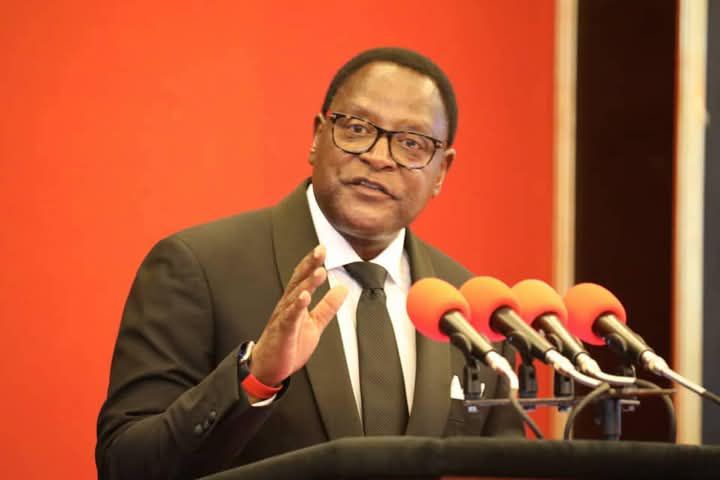
Malawi Police Service (MPS) has confirmed that a search warrant against former president Lazarus Chakwera has been obtained.
According to MPS Deputy National Public Relations Officer, Superintendent Alfred Chimthere, the marrant is in relation to reports of property looting from Kamuzu Palace, one of the State Residences.
He however, refuted reports that they have also obtained an arrest warrant for the Chakwera.
The issue comes after former Director of Security at State Residences, Godfrey Jalale was arrested on suspicion of theft of Police Dogs at the Palace.
He has already appeared before the Court and is currently on remand.
“Police obtained a search warrant in pursuing evidence by the suspect that the Police Dogs are being kept at the former President’s residence in Area 10. Lilongwe. MPS dispel rumours circulating on social media alleging the arrest of the 6th President of Malawi.
“There is no arrest warrant for the former President. We are reminding all to confirm their stories with our official spokesperson to avoid circulating false and misleading stories in the social media. The Malawi Police Service assures the public that the investigation is progressing smoothly,” said Chinthere in a press statement
Flore-Annie Kamanga was only 22 in the early 1990s when her father, a career miner recently retired from his work in the Democratic Republic of Congo (DRC), introduced her to mining.
At the time, she was working with IndeBank, with no intention of making a drastic career shift. Mining, she thought then, was merely something to pursue on the side.
“Having returned from the DRC, my father came across young men mining in Mzimba district. He was excited because he thought there were no miners in Malawi at that time. That’s when he decided to introduce me to the extractive sector,” said Kamanga, who has eight siblings, four girls and four boys.
“I instantly fell in love with the industry, and my passion grew day in and day out. Despite the perceptions people had towards small-scale miners, giving us bad names such as crooks, I fell for it.”
Since then, Kamanga has been into small-scale mining and has never looked back.
In 2022, she was elected president of the Federation of Women and Youth in Mining (FWYM), which was subsequently registered in 2024.
“FWYM was born to address issues that affected women and youth in the extractive sector. Among others, there were no gender-responsive and youth-friendly mining policies, difficulties in accessing funding and legal opportunities. Hence, the federation was formed to help women and the youth to break such barriers,” Kamanga said.
FWYM membership has individuals, youth groups and women’s cooperatives.
Its current membership includes 35 groups for gold, 28 groups for gypsum and MECRAZ Cooperative, whose 20 members mine limestone.
Challenges
The main challenge for the federation, according to Kamanga, is lack of support from the government.
“We are not supported by the government like how our friends in Mozambique, Tanzania and Zambia are. For us to get information or even an authorisation to start mining in a particular area, it takes ages. No matter how much we push, they look down upon us, maybe because we are small-scale miners.
“But if the government gave us adequate support, we could make a significant contribution to the country’s economy. For example, if the 35 gold-mining groups received proper support, each could produce more than 200 grams every two weeks, as the sites they work on have the potential to yield up to 12 grams per tonne of ore,” she explained.
The artisanal miners sell their gold to the Reserve Bank of Malawi (RBM) through its subsidiary, the Export Development Fund (EDF).
Further, Kamanga said, the groups find it difficult to access loans from commercial banks: “Because we started working as a federation, we are hoping this situation will change. We are pushing for the growth of small-scale miners in Malawi.”
Nyson working on a site
Nyson Phiri, one of the artisanal miners who is a member of the federation, started mining some years ago in the Kadoma area in Zimbabwe.
“I joined the federation this year after Kamanga approached me and introduced me to their programme of helping locals register their mines. It is a concept I loved immediately.
“The federation has been helpful since I joined. I have learnt a lot about mining policies in our country, especially about the process of claiming and formalising my own mine. I was previously poorly informed about how to properly mine in this country, but the federation has filled the knowledge gap significantly,” Phiri said.
Among other issues, Phiri highlighted the financial challenges facing start-ups and the mining laws that restrict small-scale miners to using only hand-held tools, as if we were still in the 18th century.
“We need to revise that situation. The government concentrates on large-scale miners while neglecting small-scale miners, most of whom are young people. There are many areas the government needs to address to support and encourage youth to venture into mining, which could become one of the biggest solutions to unemployment,” Phiri said.
He added that the youth need proper guidance on how to navigate the mining business, including awareness programmes across the country.
“For those already involved, like ourselves, we are calling on interested stakeholders and anyone willing to support young people in mining so they can grow, succeed and ultimately make the sector profitable,” Nyson said.
Small-scale mining in Malawi is a significant source of livelihood, particularly for those in rural areas, and involves the extraction of various minerals such as gemstones, limestone, coal and gold.
While it has the potential for poverty reduction, it is often informal, unregulated, and faces social and environmental challenges, including poverty-driven decision-making, safety hazards, and environmental degradation like deforestation.
In September this year, the government reported to have finalised the drafting of the Artisanal and Small-Scale Mining (ASM) Policy, which aims to formalise and regulate the sector to boost its contribution to poverty alleviation while mitigating negative social and environmental impacts.
Key policy goals include providing an enabling framework, facilitating access to capital and technology, promoting marketing centres and offering extension services to artisanal and small-scale miners.
National Bank of Malawi (NBM) plc has donated sanitation and maintenance equipment worth K15 million to the Mzuzu City Council (MCC) as part of its K200 million Corporate Social Responsibility (CSR) initiatives.
Speaking during the handover ceremony, NBM plc’s Accounts Relationship Manager Gift Patsanja said the Bank remains committed to giving back to the communities in which it operates.
“Apart from banking aspect, we also feel compelled as good corporate citizen to assist and give back to the community we are operating in,” said Patsanja.
He explained the gesture followed a request submitted by MCC officials.
“We requested proposals from various city councils, and Mzuzu City Council asked for support in the form of sanitation and maintenance equipment, and that is why we are here donating these items,” said Patsanja.
Mzuzu City Council Mayor Councillor Chiyembekezo Moses expressed gratitude for the donation, noting that the city has long struggled with waste management.
“We are very happy. It is an honour to receive these items. We have had waste management challenges for a long time, and NBM plc’s support will help to mitigate the problem,” said Moses.
He urged residents and businesses to use and take care of the equipment to keep the city clean.
“These items are for us; we need to take care of them. We are asking communities, business people, vendors to use these items efficiently,” said Moses.
The donated items included waste bins, wheelbarrows, shovels, gloves, and other sanitation tools.
The Malawi Law Society has raised serious concerns about a proposed hotel acquisition by the Public Service Pension Trust Fund, calling for an immediate suspension of the transaction and an independent investigation into allegations of financial impropriety.
In a press statement issued today, the Society outlined multiple irregularities surrounding the deal, including dramatic price inflation, potential conflicts of interest, and suspicious timing of personnel changes at the Fund.
According to the Law Society, the Fund’s Board initially rejected the hotel purchase in January 2024 at a proposed price of MK47 billion, following expert advice that the transaction was not viable.
However, the decision was reportedly reversed after the seller’s finance advisor contacted another Fund Manager, who subsequently recommended the purchase.
The price has since ballooned to between MK115 billion and MK145 billion—representing an increase of up to 208% from the original valuation.
The Society’s statement, signed by Chairman Davis Mthakati Njobvu and Honorary Secretary Francis Ekari M’mame, alleges that critical safeguards were ignored during the due diligence process.
Most notably, the organization claims that the entity which produced a second, favorable “Viability Business Analysis Report” may have ownership links to the hotel itself.
“The information further alleges that critical safeguards were ignored, including an absence of independent due diligence by a hotel expert and no identified strategic partner,” the statement reads.
The timing of recent events has also drawn scrutiny. The Law Society notes that the Fund’s Principal Officer was suspended on October 27, 2025, pending an investigation. An Acting Principal Officer was appointed the following day, and a signed resolution authorizing the acquisition was produced shortly thereafter.
Additionally, a new Board of Trustees was reconstituted in September 2025 and allegedly has not been given adequate time to properly assess the deal’s contentious history before being pressured to approve it.
The Malawi Law Society is calling on several oversight authorities to intervene:The Anticorruption Bureau, The Minister of Finance and The Attorney General.
“Based on the foregoing allegations, there are serious concerns that this transaction is being concluded under suspicious circumstances, which could pose a significant threat to the financial security of the Fund’s contributors,” the statement warns.
The Public Service Pension Trust Fund was established to safeguard retirement benefits for Malawi’s public service employees. The Malawi Law Society, which has a statutory mandate under the Legal Education and Legal Practitioners Act to protect matters of public interest, emphasized that it will continue monitoring the situation to ensure public servants’ pensions are not compromised.
The Society’s statement concludes with a commitment to taking “all necessary steps within our mandate to ensure that the pensions of Malawian public servants are not sacrificed for a questionable and potentially detrimental investment.”
As of press time, neither the Public Service Pension Trust Fund nor government authorities have issued a response to the allegations.
Malawi’s Universal Periodic Review (UPR) is underway today, and human rights groups are calling on the government to translate its international commitments into meaningful domestic action, particularly in relation to laws affecting the LGBTQI+ community.
At a Diversity Forum meeting held in Dedza, National Coordinator Dunker Kamba delivered a strong message on the need for genuine legal and policy reform.
The meeting formed part of a preliminary scorecard engagement process conducted through a consultant, which will be followed by a full public dissemination. The scorecard is supported by the Urgent Action Fund.
“We’ve seen some progress here and there, but the devil is really in the details,” Kamba said. “Some of the laws in our Penal Code remain outdated and problematic. If we’re serious about human rights, then these laws must go.”
Kamba noted several concerns ahead of the UPR.
“Since we are late with implementation, our biggest concern is the absence of wider consultation before the UPR,” he said. “There has been a lack of wide and open sharing of the national report before the review. That defeats the purpose of inclusivity and transparency.”
The consultation gap was a recurring issue raised at the meeting. Participants also noted that although CHRR and CEDEP had been invited to engage in earlier processes, the government’s approach remained narrow and selective.
Kamba stressed that Malawi’s commitments to protecting LGBTQI+ persons must be backed by real action rather than symbolic gestures.
“As a country, we cannot commit to protecting LGBTQI+ persons at the UPR and then come back home and do the opposite,” he said. “We need to walk the talk. Transgender Malawians and others in the LGBTQI+ community continue to face stigma, discrimination, and even violence. That is unacceptable.”
He further criticized what he described as double standards in government action.
“The government cannot keep reneging on its promises,” Kamba emphasized. “Malawi must show that it values the dignity of all its citizens, not just on paper, but in practice.”
On punitive legal provisions, Kamba was firm:
“We still see people being arrested under draconian laws that belong in another era,” he said. “These laws are not only oppressive, they actively endanger the lives and safety of key populations.”
He added that political will remains the decisive factor.
“The government must demonstrate real commitment. Aligning our laws with human rights standards is not optional, it is our obligation,” Kamba said. “Promises are no longer enough. Malawians deserve real action, not lip service.”
Aniz Mitha
Aniz Mitha, Executive Director for Community Health Rights Advocacy, added that Malawi risks falling behind if it does not implement UPR recommendations with urgency.
“It’s high time Malawi stepped up its game,” Mitha said. “People continue to be arrested under draconian laws, and it feels like we are stuck in the past. The government needs to reform these laws and align them with international human rights standards.”
On the UPR process itself, she added: “The UPR is a valuable platform for Malawi to showcase its commitment to human rights, but at the end of the day, it is about taking concrete action. The people of Malawi deserve better than repeated promises.”
As Malawi’s review continues in Geneva, the Diversity Forum is urging the government to seize this moment to demonstrate that human rights protection for all citizens, regardless of sexual orientation or gender identity, is a true national priority.
Nagwira Primary School in the area of Traditional Authority Chakhaza in Dowa district for a long time continued to register school dropouts due to lack of water supply.
A visit to the school found that, learners travel 5 kilometers to a stream to fetch water from contaminated sources because the school has never been supplied with water since it was established in 2013 and is 20 kilometers from Mponela Township.
Headteacher of the school Chiyanjanitso Pitilosi said the development was heavily affecting education standards.
“The school was registering 5 to 10 dropouts every term due to the situation. We had no solution to this, until World Vision came in and provided water taps. Its not only learners who were struggling, even the community. I thank God that our team’s work with the community has now beared fruits.” She said
some of the learners at Nagwira Primary School
Maureen Chiyambi ( not her real name) a standard five learner lamented that “ We were just hearing from colleagues that their schools have water and sanitation facilities but not ours. It was very painful to be learning in such an environment. Imagine learning without safe water, no descent toilets and hygiene in schools and as girls we face additional challenges in getting an equal chance of good education.”
Caroline Lumbalu, World Vision’s Development Facilitator for Kadangadzi Area in Dowa district said “Providing access to clean water at Nagwira Primary School is a game-changer for the students and staff. After 13 long years without a reliable water source, we’re thrilled to bring this essential resource back to the community. The lack of clean water at Nagwira Primary School has been a significant challenge for far too long. We’re proud to partner with the community to bring this vital resource back and support the students’ education and well-being. Access to clean water is a fundamental human right. We’re honored to play a part in ensuring Nagwira Primary School has a reliable water source, and we look forward to continuing our work with the community to address other pressing needs.”
During the time of the interview, James Kumwenda, who was the Public Relations Officer in the Ministry of Water and S anitation ( before the ministry was split) said “ The main issue is salinity. Efforts gave been made to drill to boreholes, but it has been failing to pass the water quality. However we thank World Vision for intervening.”
However the Water and Environmental sanitation Network Acting Executive Director Hopeson Chaima, accused authorities for neglecting the school.
“its very unfortunate that a school which was constructed in 2013 had no any water supply. Why punishing Innocent kids? Government needs to ensure that essential services and facilities are available in schools.”
According to Chaima “Studies have demonstrated that drinking water can improve students’ readiness to learn by increasing their level of cognitive functioning. Students who are properly hydrated feel and perform better at all levels. It helps them to concentrate, elevate their physical activity and reduces the frequency of illness, among other benefits.” he said.
According to UNICEF, 1 in 3 schools in Malawi lack access to safe water, unsafe water is one of the top causes of illnesses in children under 5 and every $1 invested in water returns up to $4 in economic benefits.