I had sat for many hours thinking of what to grow. Starting from the types of vegetables and crops, since almost all of them required chemical fertiliser to grow well, and a bag of the same was going at almost K200,000.
I had no cows nor goats, and the chickens we had could not count up to ten. Everything really looked very difficult and hard. I had no ideas that would straight away give me answers.
I decided to join my friends to go and watch football in a nearby village. Whilst I was going there, I passed by a short earth road and at the corner someone was selling watermelon.
Remember, I couldn’t buy one. But a friend whom I accompanied to watch football together had K5,000 and he bought one watermelon. He broke it into three parts, since we were three, and shared a piece with each one of us.
I told the guys, I always feel pain in the stomach and someone told me that watermelon seeds are natural medicine, therefore I asked them that when eating they should keep the seeds safe. After eating, I collected the seeds and put them in an old used sugar pack.
By the way, I couldn’t finish watching football. Instead I returned back home with the seeds in hand. I kept them safe in the house and they dried up after a few days. I asked my old mother if I could remove the Mnkhwani (pumpkin leaves) planted on her half an acre land at her Dimba, for me to plant the watermelon seeds. She resisted, but I convinced her till she accepted.
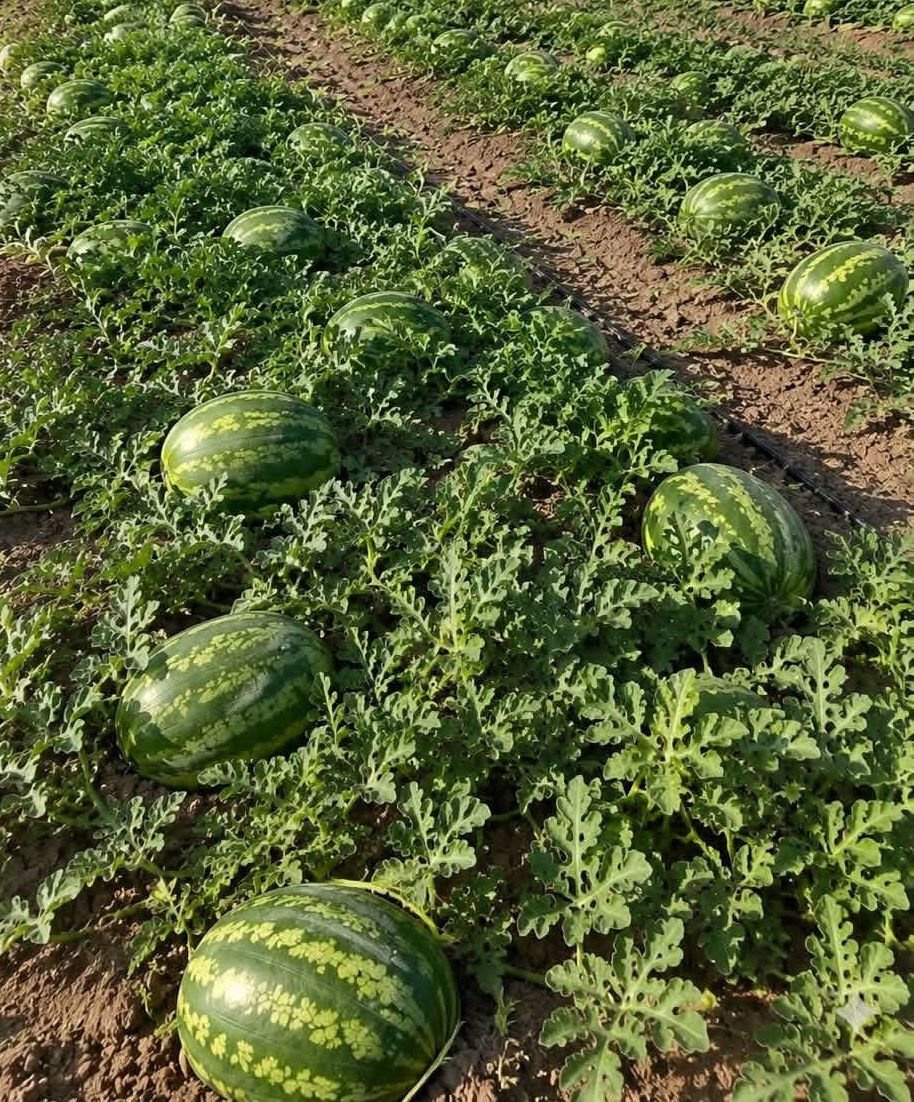
I planted half an acre of watermelon seeds. I used the manure from our rubbish pit, popularly known as Nkhuti. I kept on watering and caring for the watermelons.


Though the germination wasn’t all that good, I had over 70% germination. After 2 and a half months, I started seeing fruits coming out. 5 to 6 fruits per plant, and some were blessed even with at least 10 per plant. I kept on watering them and adding some more manure. The colour of the fruits started changing, showing signs of maturity.
I tried to harvest 6 watermelons and sold them. Cheerfully, a village tycoon bought all of them at K3,000 each. I had K18,000. I used K15,000 to hire a push bike to take more watermelons to a nearby market, where I sold 52 watermelons at K2,500 each, and they were sold like hot cakes.
A shabbily dressed town man in tattered jean trousers, popularly known as nyotsonyotso, told me to try taking the watermelons to a nearby town, for he said these watermelons were making a lot of money there.
Remember, after selling 52 watermelons I realised K130,000. So I went to the same village tycoon who had an old ramshackle vehicle to take my watermelons to the nearby town.
We had packed 875 watermelons, and in town each one of the big-sized watermelons was going at K5,000, and since we only used manure from our Nkhuti, the watermelons tasted naturally. I remember one customer saying, “Oluzuna mwachikalekale.”
I sold all of them and realised K4,375,000. This is how manure turned into money, and watermelon seeds turned me from a poor village man into a village millionaire.
Now I grow 4 acres of watermelons. I sell in most supermarkets. I have hired 8 guys who help me in this farming enterprise. We harvest on average above 4,000 plants and sell at an average of K5,000, and make an average of K20 million and more.
For a year now we have intensified use of manure in watermelon farming. We grow three times a year, and there are now more than two tycoons in my village: the one who helped me hire his ramshackle the first time, the one in Mtedza growing, and me, Mwana wa Namuleri, selling watermelons.
I have managed to buy a one-and-a-half tonner vehicle that I use. I am planning to expand my garden to around 10 acres, and all that will be dedicated to growing watermelons. I plan to enter into sustainable contracts of supplying organically grown watermelons to supermarkets.
Manure turned into money, and watermelon seeds I collected from my friends on our way to watching football became my capital.
It doesn’t matter where you are, and whether you have capital or not. What matters is how you turn your environment and whatever surrounds you into money and capital. Today, students from Bunda and other universities are coming to do their internship at my watermelon farm.
Remember, even those who came seeking refuge in our country and stay at Dzaleka have seen this opportunity and have turned Nkhuti manure into capital and grow a lot of vegetables, and are now supplying in most of our supermarkets. If you are going or coming from Mzuzu direction going to Lilongwe, and you see a lot of watermelons at Dzaleka or Dowa turn-off, just know that you are seeing what I am telling you now.
Sometimes you don’t need sophisticated technologies to turn your misfortunes into opportunities. Start with the manure around you and the seeds you get from anyone, provided you have a piece of land to plant them.
Remember, a man who spends expensively on watermelons and other fruits and vegetables, whilst he has a piece of land where he can plant and grow the same, is not only regarded as a rich man, but rather a man in hard-to-reach areas with ideas, for he doesn’t know that the rubbish pits around their areas are their future watermelons if they use them purposefully. Water your own watermelon to become a watermelon millionaire in the shortest period of your time.
Mulungu anazibisa zimenezi in 1 Corinthians 1 verse 27 – “But God chose the foolish things of the world to shame the wise; God chose the weak things of the world to shame the strong.”
About the Author:

Apart from being Leader of the Opposition, Hon. Simplex Chithyola Banda finds time to author a book advising people to use practical solutions to move from poverty to prosperity using simple solutions that bring about big changes and make life better.
In LIFE AFTER POLITICS: The Practical Guide for Prospective Candidates and Serving Politicians, he turns from politics to the general public with a simple but powerful message: you already have what you need to create wealth.
Having watched once-powerful Ministers sell their cars to pay school fees, former MPs drink from morning to evening because they had nothing else to do, and families lose houses to banks, he decided he would not be that man — and he does not want you to be that man either.
With practical, real-life examples, he shows how an iPhone 16 Pro Max worth over $1,500 (MWK 2,626,500) could have been 5 cows, growing to 8 cows or more in 3 years, or 20 goats in two years, while K3 million spent boozing in one weekend is like eating 6 cows in one weekend. His advice is clear: do not eat your capital, invest it.
Think local and act global. No one will be famous by what he has eaten and drunk, but by what he has built over the years. Start small and grow big. Look at what you have and turn it into a capital