MC Promy Matatiyo asked a question on Facebook yesterday: “IS MALAWI REDEEMABLE?”
I answered yes. But I added that huge sacrifices would have to be made.
He then asked two questions that deserve a national conversation: “Where do we start from? Are the sacrifices going to be worthwhile in the end?”
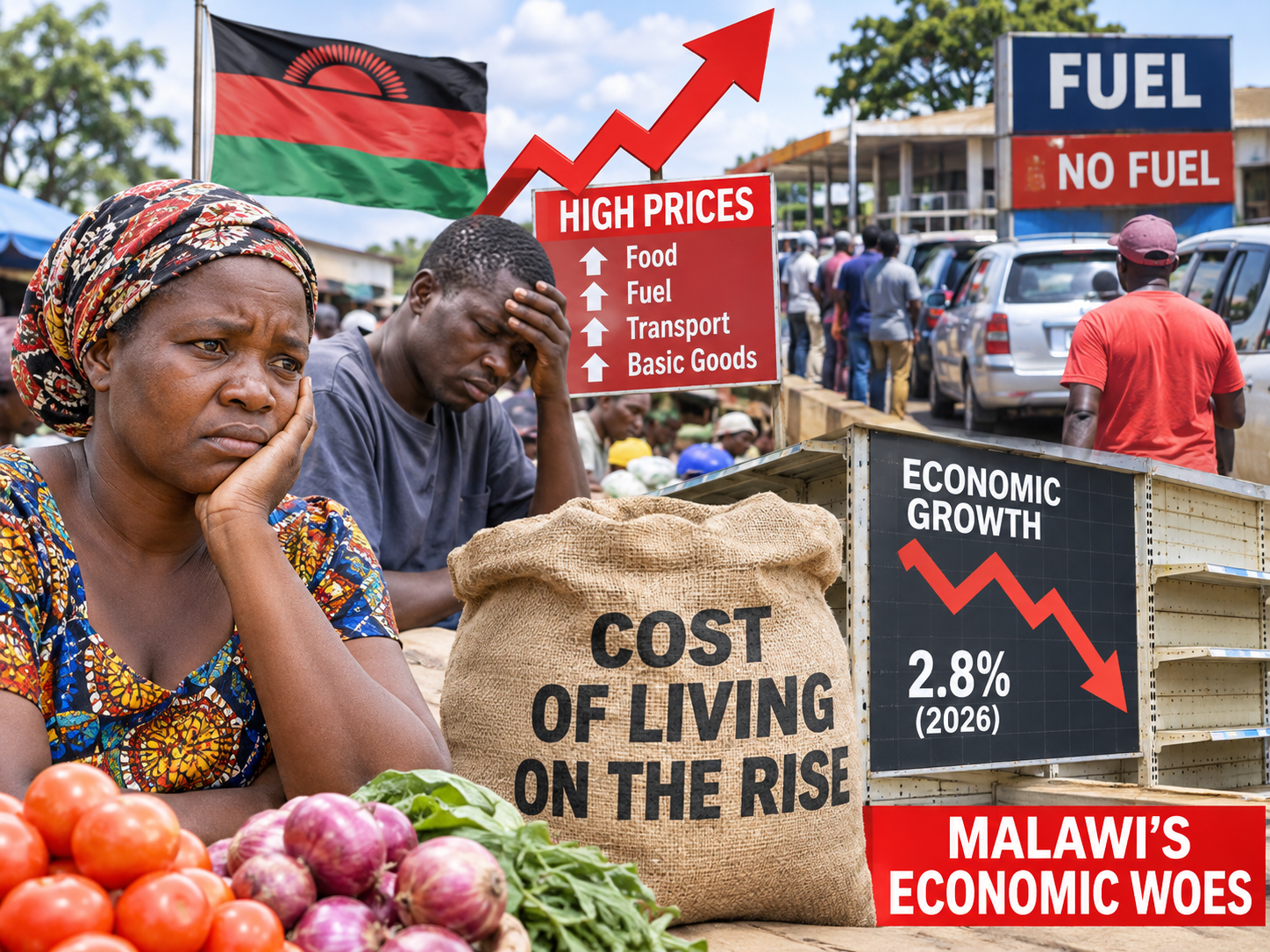
Let me begin with an uncomfortable observation. Malawians have already sacrificed enough. We have sacrificed productive hours searching for fuel. We have sacrificed businesses to forex shortages. We have sacrificed opportunities to unreliable electricity and failing public services.
We have sacrificed public resources to governance failures and, too often, to corruption. We have even sacrificed political loyalties, repeatedly voting out governments in the hope that their replacements would deliver something better.
And yet the fundamental problems keep returning. So perhaps the question is not whether Malawians are prepared to sacrifice. It is what we are being asked to sacrifice for.
If the sacrifice is merely to remove one President and install another, history gives us little reason to believe that the outcome will be fundamentally different. If the sacrifice is to replace one political party with another while preserving the same arrangements through which political power controls public institutions, then we should expect the same governance failures to reappear under different colours.
Malawi’s problem is not simply that we have repeatedly chosen the wrong people. It is that we have repeatedly expected different people to produce different outcomes through substantially the same governing system.
That is where redemption must begin. Not with another promise of better leadership, but with a determination to change the conditions under which leadership operates.
We must be prepared to surrender the culture of presidential supremacy. We must stop treating public office as an opportunity for private reward. We must abandon the expectation that access to Government should depend upon political connections. We must demand institutions whose authority does not disappear whenever political power finds them inconvenient.
And perhaps the most difficult sacrifice of all will be giving up the hope that one extraordinary individual will arrive and save us. Because a nation that depends upon finding a good President every five years has not yet built a sufficiently good system of government.



This is what the Governance Reset proposes. Not another political saviour. A different constitutional and institutional arrangement in which public power is constrained, public resources are accountable, and the ordinary citizen does not have to negotiate personal access to the powerful to obtain what should be available through functioning institutions.
Will the sacrifices be worthwhile?
That depends upon whether we are prepared to make them for lasting institutional change rather than another temporary political victory.
And where do we start?
By recognising that Malawi cannot be redeemed through the very political habits that have repeatedly brought it to this point.
We must stop asking only: “Who should govern Malawi next?” And begin asking: “What kind of governing system should the next President inherit?” Because Malawi’s redemption will not be measured by the day we finally celebrate another change of government. It will be measured by the day changing governments no longer means gambling with the future of the Republic.
Malawi is redeemable. But redemption requires more than changing the people who operate the machine.
We must be prepared to change the machine itself.