Analysis By Jack McAdams
You would agree with me that there is a necessary difference between holding public officials accountable and manufacturing factious narratives about their personal lives. The former is democratic vigilance; the latter is an abuse of the freedoms that democracy otherwise guarantees.
Alexious Kamangira, the architect and principal amplifier of some of the country’s gloomiest presidential health rumours, recently posted: “My contacts can’t confirm if APM is in the air [i.e. in transit flying back to Malawi], but we are certain if he is to come to Malawi, it won’t be a public event”.
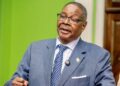
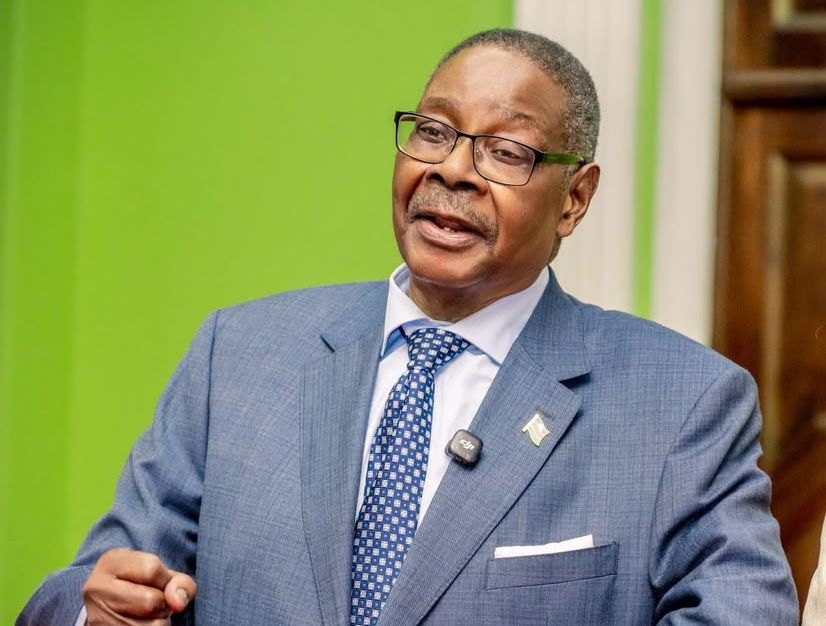
Reality Check: The President’s return to Malawi was duly communicated to the public by the Chief Secretary. More significantly, the President subsequently appeared before Malawians in LIVE interviews conducted by his State House Press Officer. His return was, therefore, neither clandestine nor shrouded in secrecy. It was publicly communicated, openly demonstrated and accessible to the very citizens whose supposed uncertainty had become fertile ground for online speculation.
One would have expected this development to provide an appropriate moment for intellectual honesty. If Kamangira had even the slightest inclination towards responsible public commentary, this was an opportunity to acknowledge that his false preaching had been overtaken by reality. Unfortunately, in the business of manufacturing public anxiety, an apology may be less profitable than another controversy. So, he has opted for further hallucinations, claiming that the President’s public appearance through the LIVE interview is not real but Artificial Intelligence (AI). Truly, Kamangira is exhibiting a sort of a grade-A shamelessness!
Barely a week ago, Malawians were being invited to believe that the President was bedridden, allegedly suffering from cancer, losing his hearing and barely holding on to life. These were not presented as casual suspicions. They were advanced with remarkable confidence, accompanied by assertions of possessing undisputable and reliable interior sources. The President has since appeared publicly and engaged in live interviews. His demeanour and speech in that appearance provide an observable basis upon which Malawians can independently assess the earlier claims. Malawians can now ask themselves: Has the President miraculously recovered from the grave medical circumstances they were describing, or were those claims simply never supported by credible evidence in the first place?
If someone claims to possess reliable hospital sources, the least that responsible journalism and public commentary demand is verifiable evidence. One cannot reasonably expect the public to accept extraordinary medical allegations merely because an individual insists that unnamed contacts have confirmed them. At least sharing of pictures showing the President ridden in the supposed hospital bed should have been the basic evidence. They never shared any.
There is also something intellectually unsound about the expectation that an 86-year-old President must demonstrate the physical energy and activity levels of a person several decades younger to satisfy public curiosity about his wellbeing. Malawians went to the polls knowing that they were electing a veteran of State leadership who was already 86 years old. His age was neither concealed nor discovered yesterday. It was an observable fact at the time of the electoral decision.
And guess what? Ageing is a biological reality, not a political scandal. Conor Cunningham and three other researchers, in their study, “Consequences of Physical Inactivity in Older Adults: A Systematic Review of Reviews and Meta-Analyses”, as published in volume 30, issue 5 of the Scandinavian Journal of Medicine & Science in Sports, examine the relationship between physical inactivity, ageing and declining health among older adults. Their work provides an important scientific context for understanding why physical activity and health patterns may change with advancing age.
Similarly, Ian Patterson and Adela Balderas-Cejudo, writing in the Tourism Review, volume 78, issue 2, explored the significance of lifestyle and spiritual retreats, including meditation and relaxation, in promoting positive experiences of wellbeing among older persons. Further, Zhou Lingqiang and colleagues, in their 2018 study, Seniors’ Seasonal Movements for Health Enhancement, published in volume 38 of The Service Industries Journal, examined the relationship between older persons’ travel experiences, environmental settings and health enhancement.
These studies are illuminating a broader point that ageing individuals may reasonably pursue rest, recreation, relaxation and environments conducive to their physical and psychological wellbeing. There is nothing inherently suspicious about an elderly person taking time away from demanding public responsibilities.
In my view, therefore, the President’s decision and opportunity to rest should not automatically become a political conspiracy theory. In any case, the administration was upfront that the President’s visit to South Africa was private. In other words, it was personal.
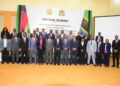

I cannot think of any personal purposes an 86-year-old senior citizens can undertake other than those bringing health benefits as hinted by the cited scholars above. But the opposition being opposition, they fabricated laughable insinuations that the President had gone shopping. The online engagement farmers being empty of any meaningful content resorted to fabricating lies that the President was in terminal condition. Well, one should see eggs in their faces now.
Lamentably, I think, there is an unfortunate incentive structure within today’s digital information environment: sensationalism attracts attention, controversy generates engagement, and alarming claims travel faster than sober explanations. For those who have made online visibility a political enterprise, the temptation to manufacture a crisis can become greater than the commitment to establish the truth.
The President cannot be expected to continuously demonstrate his physical condition to satisfy every online commentator. Those who made extraordinary claims about his health should be prepared to account for the evidence upon which they relied. A country facing genuine economic and environmental challenges does not need additional crises manufactured through unverified claims about the health of its Head of State. The President is entitled to his dignity. Malawians are entitled to truthful information. And public commentators, regardless of their political orientation or digital following, have an obligation to desist from falsehood and malicious gossip. The President has returned. The public has seen him.